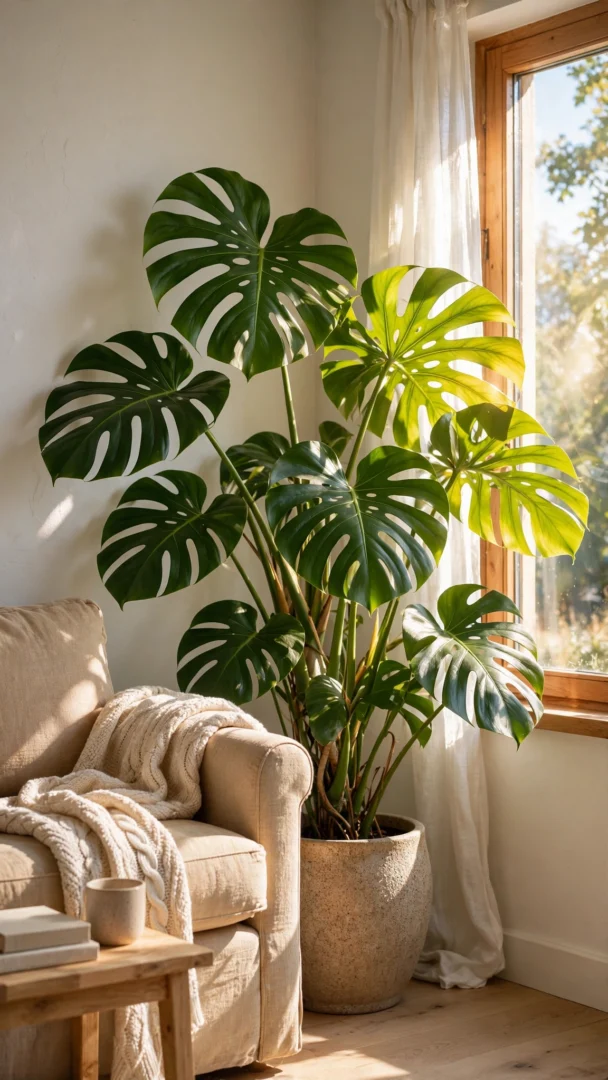
One of the freshest 2026 Pinterest micro-trends is the botanical corner — a curated, vignette-style plant display that turns an empty nook into a designated relaxation zone. Instead of scattering plants randomly around your home, you group them intentionally: layered greenery, textured pots, natural accents, and maybe a cozy chair or a warm lamp. These 26 cozy botanical corner ideas will show you how to build your own lush little retreat, no matter how much space (or sunlight) you have.
Sunlit Monstera Reading Nook
Anchor the corner with one large, dramatic monstera in a textured ceramic pot, then add a comfortable reading chair, a small side table, and a soft throw. The big split leaves become living art, and dappled light through the foliage makes the whole corner feel calm and alive.
This suits anyone with a bright corner near a window and a love of slow afternoons. It works beautifully in living rooms, bedrooms, and sunrooms where you already like to curl up with a book.
Styling tip: place the monstera slightly behind the chair so the leaves frame you from above, and rotate the pot a quarter turn every few weeks so it grows evenly.
Tiered Plant Stand Display
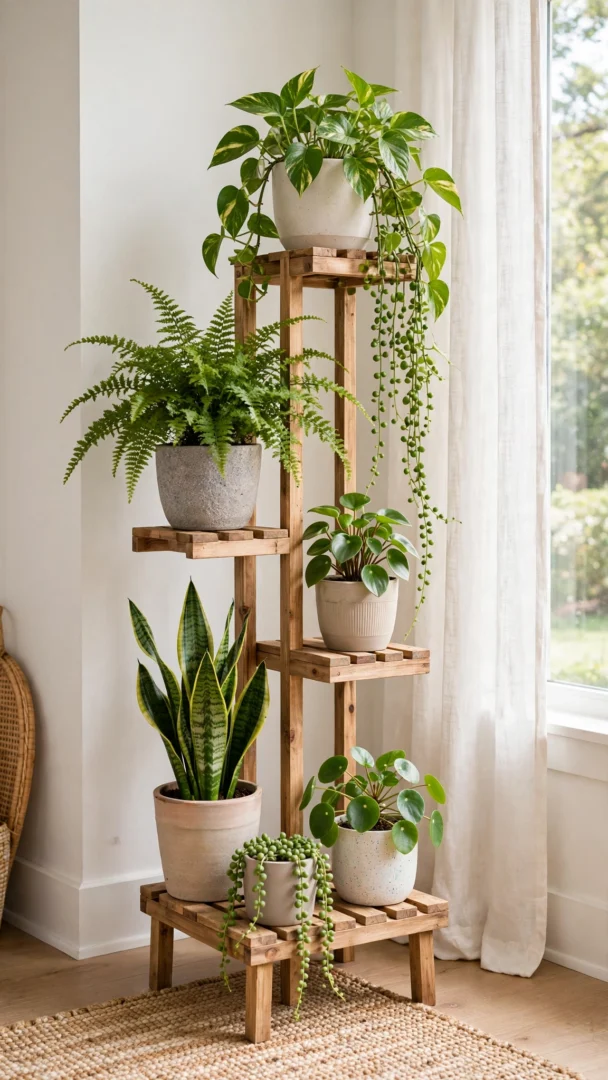
A tiered plant stand — wood, bamboo, or black metal — lets you stack five or six plants at different heights in a single square foot of floor space. Mix trailing, upright, and bushy plants so each level has its own personality, and vary pot colors for a collected feel.
This suits small-space dwellers and renters who want maximum greenery with minimum footprint. It works in entryways, bedroom corners, and beside sofas.
Styling tip: put the tallest plant on the bottom tier and the trailing ones on top so vines cascade down the stand; keep pots in one color family so the display reads cohesive rather than cluttered.
Hanging Plant Canopy Corner
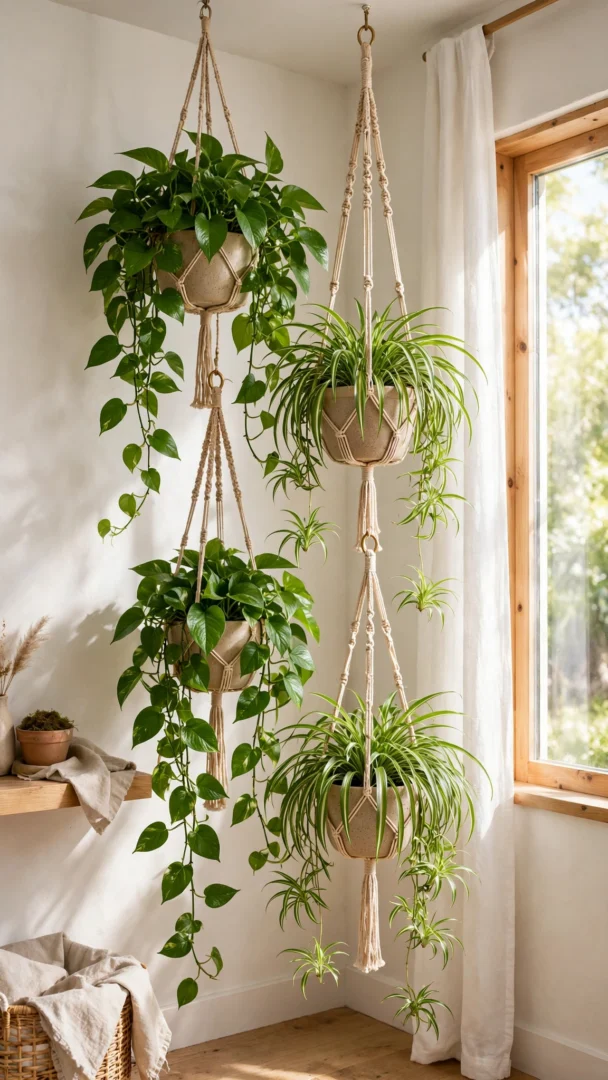
Suspend three to five hanging planters at staggered heights from the ceiling or a wall-mounted bracket to create a leafy canopy over the corner. Pothos, spider plants, and philodendrons drape downward and soften the whole area into a green cocoon.
This suits rooms with high ceilings or awkward corners that feel bare at eye level. It works wonderfully over reading chairs, window seats, and breakfast nooks.
Styling tip: vary the hanger lengths by at least six inches so the plants layer like a chandelier, and choose lightweight macramé or rope hangers that won’t fight with the foliage.
Terracotta and Stone Pot Collection
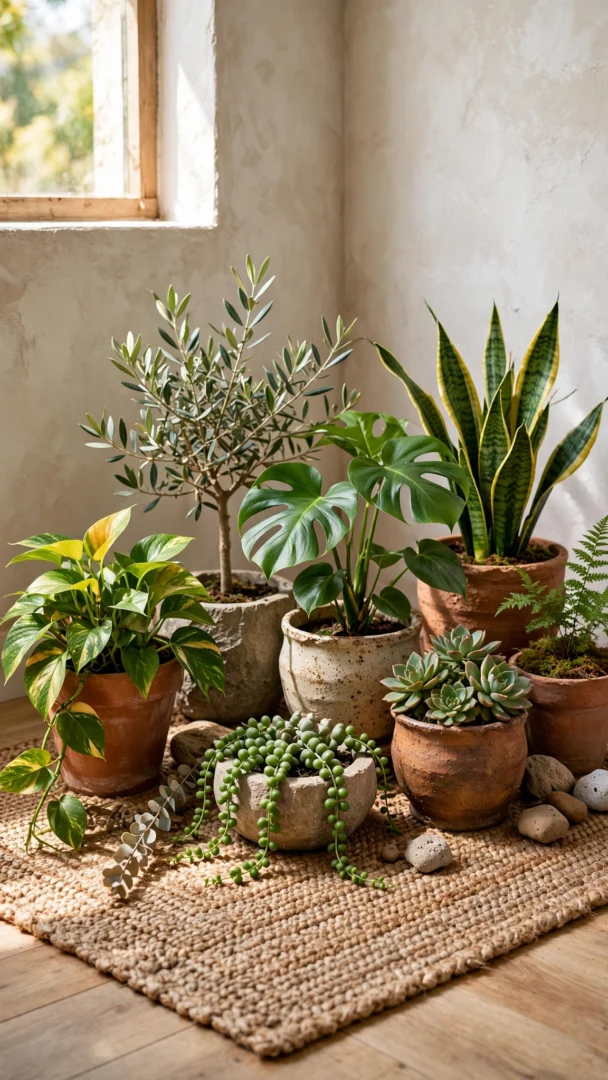
Group plants of different sizes in warm terracotta, raw stone, and handmade ceramic pots for a corner that feels earthy and artisan. The natural materials age beautifully, developing patina that makes the whole display feel established rather than newly bought.
This suits lovers of Mediterranean, boho, and rustic interiors, and anyone who prefers warmth over stark minimalism. It works in kitchens, living rooms, and covered patios.
Styling tip: let the pots be the pattern — keep the plants simple greens and let the terracotta tones carry the visual interest. A jute rug underneath ties it all together.
Botanical Window Seat Jungle
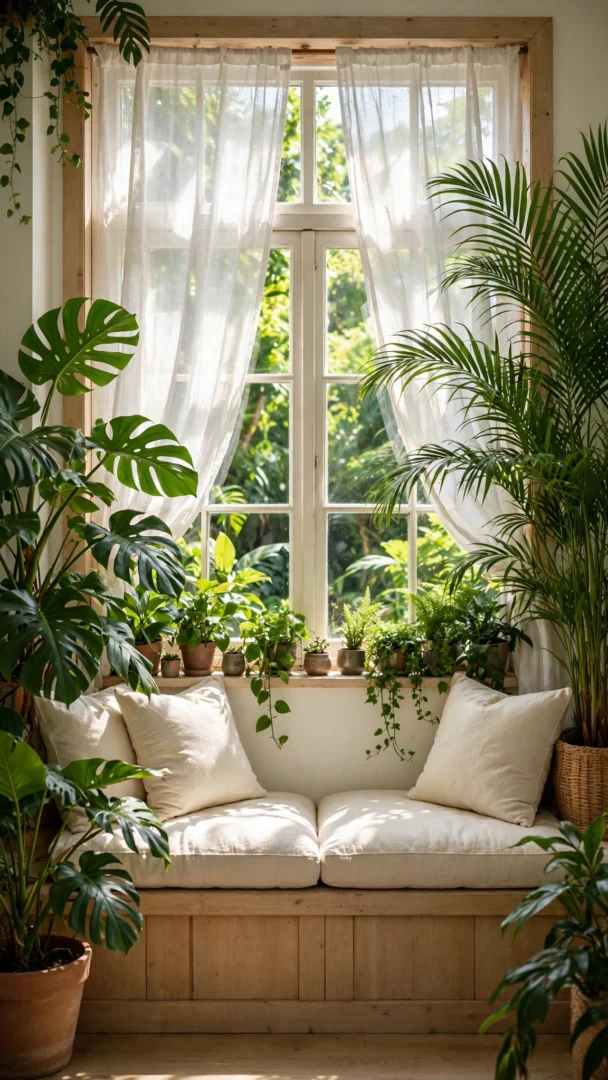
Turn the corner beside a sunny window into a jungle seat: line the sill with small potted plants, place a large leafy plant on each side of a cushioned bench or window seat, and let the light stream through the leaves. It becomes the sunniest, happiest seat in the house.
This suits homes with a wide window or bay corner and plant lovers who want their greenery where the light is best. It works in living rooms, kitchens, and home offices.
Styling tip: use sheer curtains so the plants get bright indirect light without scorching, and add a small watering can as a permanent, pretty resident of the sill.
Rattan Chair Green Retreat
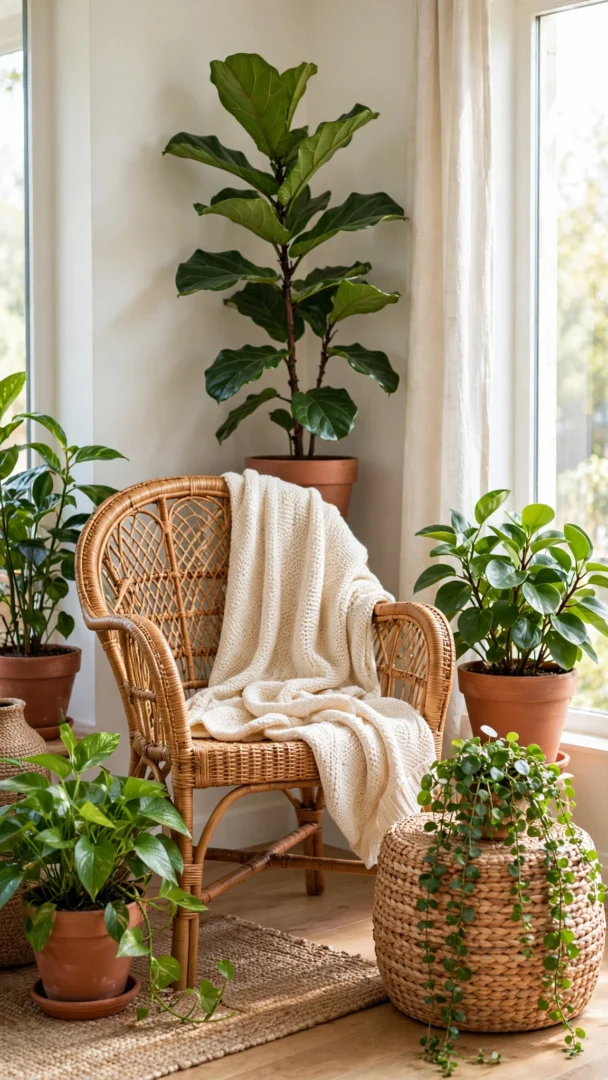
Place a rattan or wicker accent chair in the corner, then surround it with plants at three heights: a tall floor plant behind, medium pots flanking the chair, and a trailing plant on a nearby stool. The natural rattan texture echoes the organic feel of the leaves.
This suits boho and coastal interiors and anyone who wants their botanical corner to double as a meditation or morning-coffee spot.
Styling tip: drape a cream knit throw over the chair and add a small woven side table for your cup — the corner instantly reads as a retreat, not just a plant display.
Minimalist Single-Statement Plant
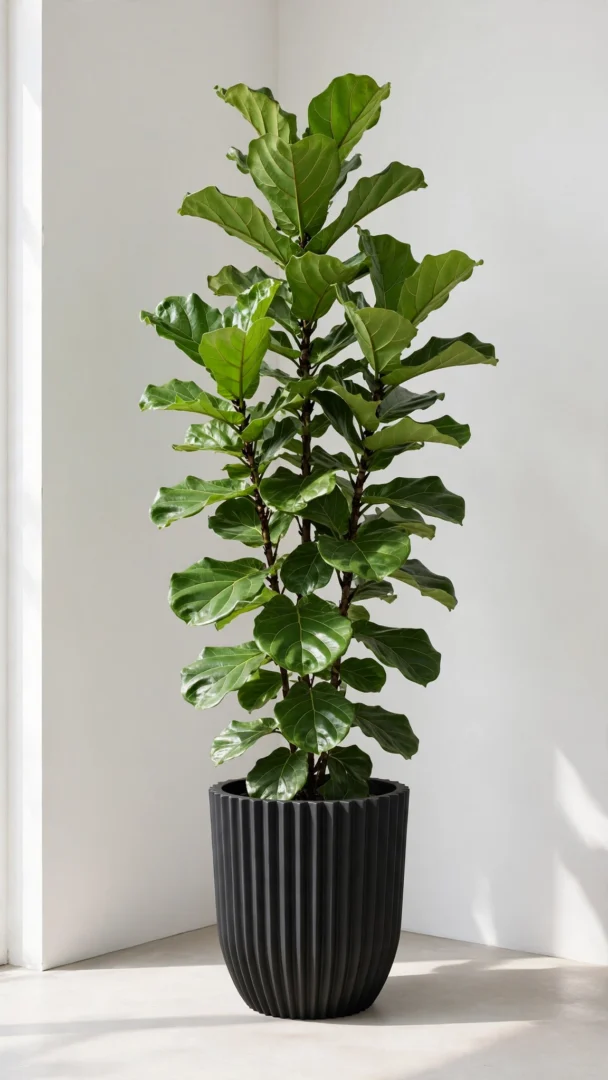
Sometimes one perfect plant is enough: a tall fiddle-leaf fig, bird of paradise, or olive tree in a beautiful sculptural pot, set against a clean wall with nothing else competing. The negative space makes the plant feel like gallery art.
This suits minimalists and modern interiors where less is more. It works in hallways, beside fireplaces, and in any corner that needs one confident focal point.
Styling tip: choose a pot with architectural interest — fluted, ribbed, or matte black — since it’s doing all the supporting work, and keep the floor clear around it for maximum impact.
Woven Basket Plant Grouping
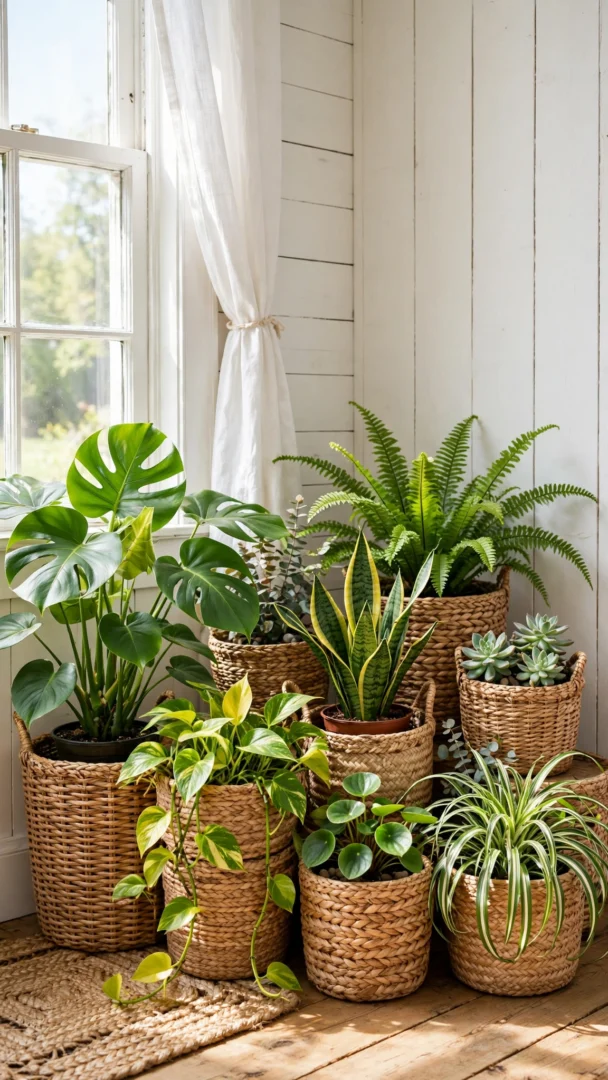
Slip nursery pots inside woven seagrass, rattan, or jute baskets of varying sizes and cluster them in the corner. The baskets hide plastic pots instantly and add warm, handcrafted texture that makes even beginner plant collections look styled.
This suits budget decorators and anyone who rearranges often, since baskets make it easy to swap plants in and out. It works in farmhouses, cottages, and casual family rooms.
Styling tip: keep the basket weaves in the same tone family — all honey or all natural — and line them with a plastic saucer so watering doesn’t damage the fibers.
Botanical Corner with Floor Lamp Glow
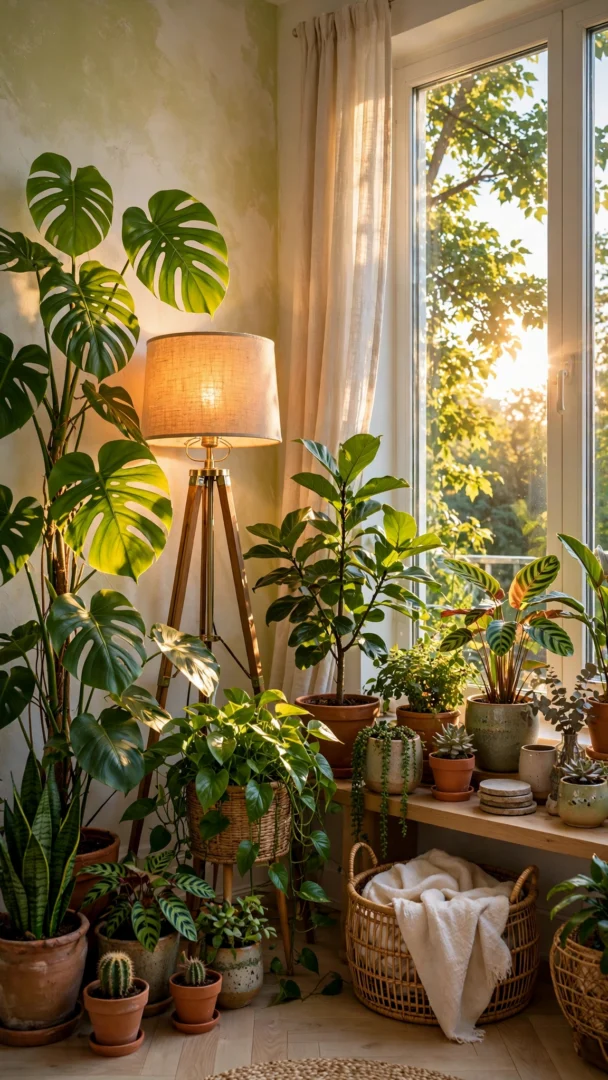
Add an arc or tripod floor lamp with a warm bulb behind your plant grouping so the leaves are backlit in the evening. The glow through the foliage turns the corner into a moody, magical spot after dark and extends its enjoyment past sunset.
This suits living rooms and bedrooms where the corner should feel inviting at night too. It works especially well in darker rooms that need both light and life.
Styling tip: use a warm 2700K bulb and position the lamp so light filters through the leaves rather than blasting directly at them — you want a glow, not a spotlight.
Shelfie Wall of Greens
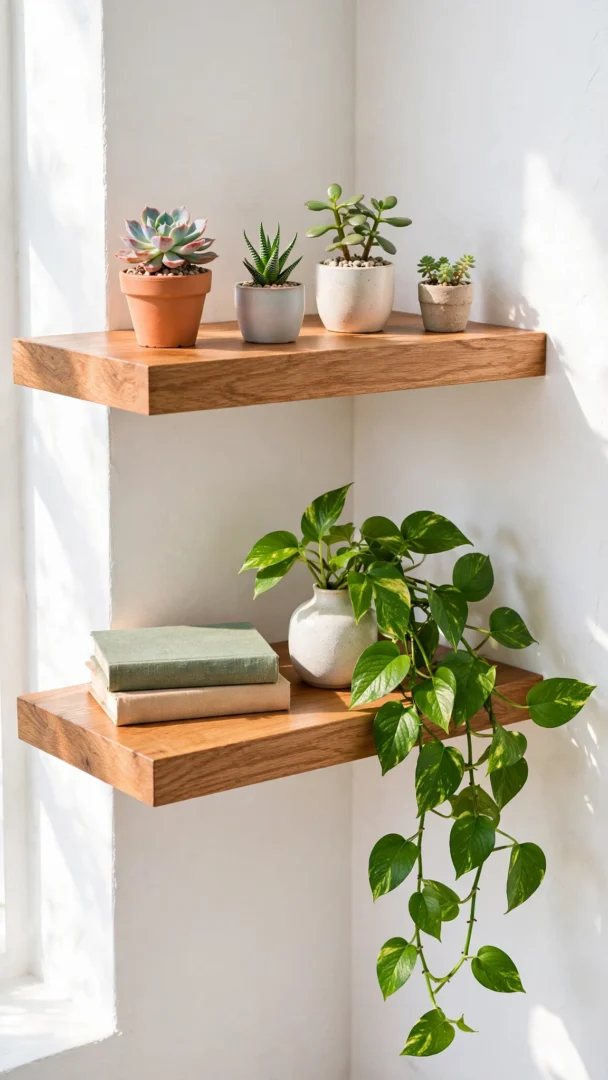
Mount two or three floating shelves in the corner and style them with small potted plants, trailing vines, and a few books or ceramic objects. The vertical arrangement draws the eye upward and turns a plain wall into a living display.
This suits collectors of small plants — succulents, baby ferns, tiny cacti — and renters who can’t spare floor space. It works in home offices, kitchens, and hallways.
Styling tip: let one or two trailers spill over the shelf edges for movement, and leave some breathing room between objects so each plant gets its moment.
Vintage Wooden Crate Plant Display
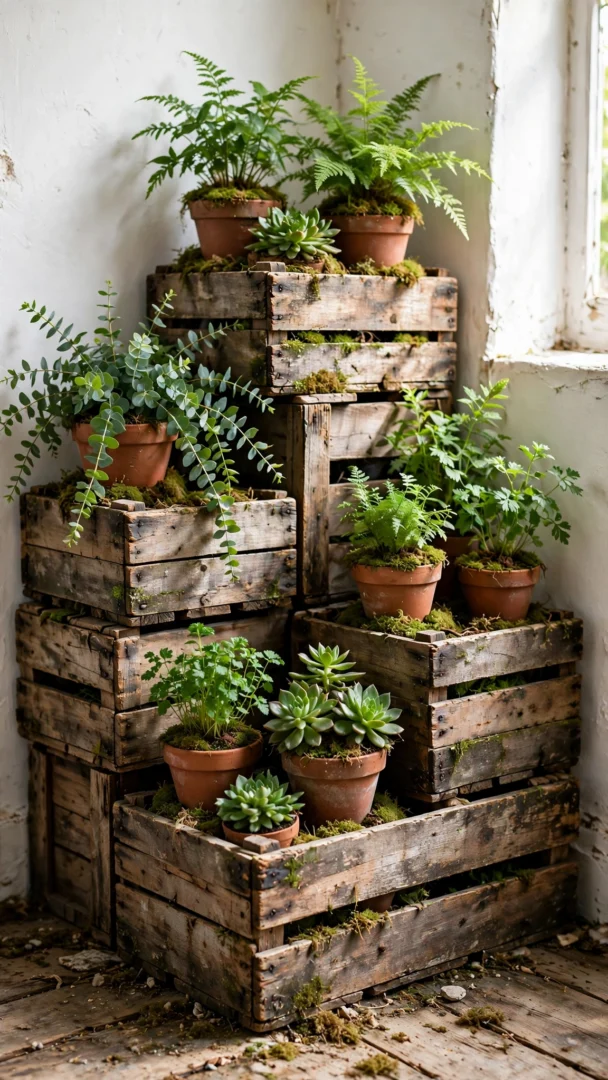
Stack vintage wooden crates or apple boxes in the corner at different heights and fill them with potted plants. The weathered wood adds instant character and the cubbies create natural compartments for grouping plants by size or care needs.
This suits vintage lovers, farmhouse interiors, and DIY decorators who like furniture with a story. It works on porches, in living rooms, and beside rustic dining tables.
Styling tip: sand any rough edges and add a clear matte sealant so the crates survive watering splashes, then tuck moss around the pot bases for a finished look.
Cozy Floor Cushion Plant Hideaway
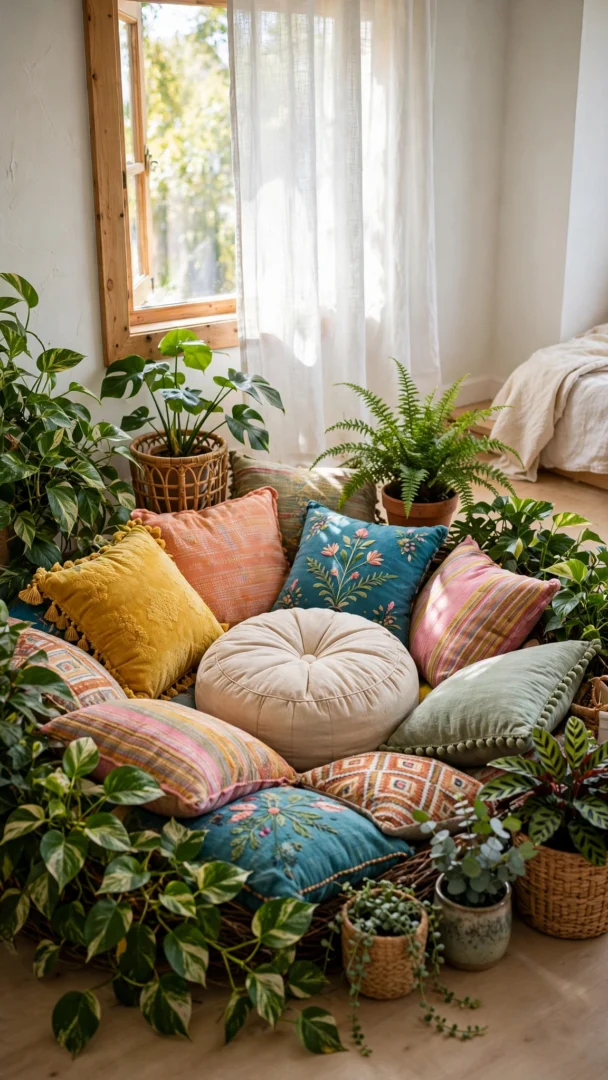
Ring a low pile of floor cushions or a pouf with leafy plants to create a nest-like hideaway. The plants form a soft green enclosure that makes the seating area feel private and cocooned, perfect for reading, journaling, or phone-free time.
This suits kids’ rooms, dorm-style spaces, and anyone who loves floor-level lounging. It works in bedrooms, playrooms, and meditation corners.
Styling tip: keep the plants in the outer ring and the cushions in the center so you don’t knock anything over, and choose sturdy, non-toxic plants if little hands or paws are around.
Trailing Pothos Curtain Wall
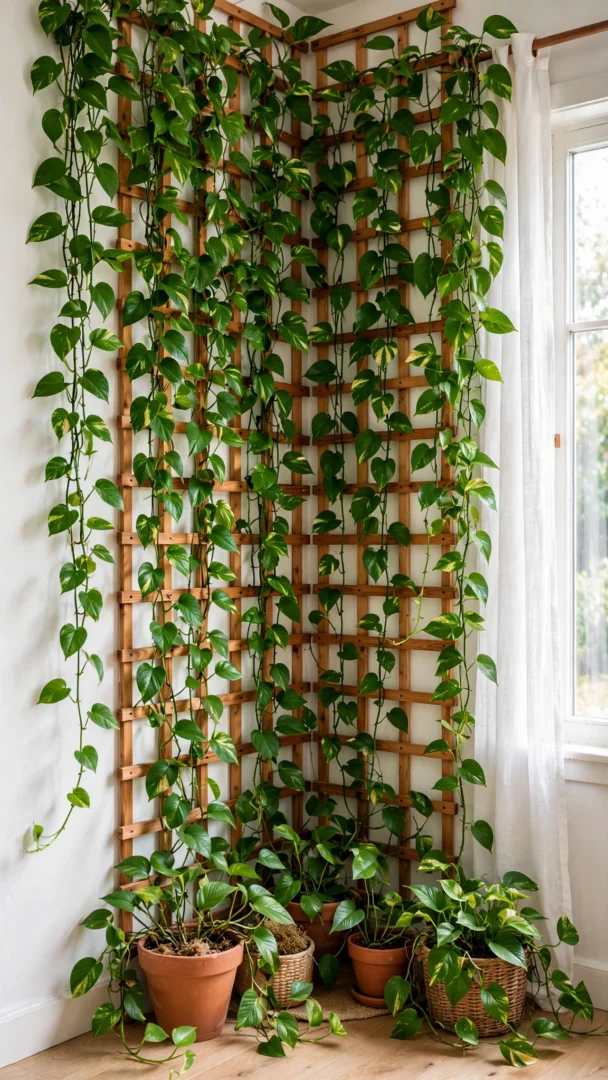
Train long pothos or philodendron vines up a wall trellis or across a tension rod to form a living curtain in the corner. Over months the vines weave into a lush green screen that softens hard angles and adds serious drama.
This suits patient plant parents and dramatic interiors — it takes time but costs almost nothing. It works as a room divider, behind a desk, or framing a doorway.
Styling tip: use clear removable vine clips to guide the growth along your chosen line, and trim regularly to encourage branching so the curtain fills in thick rather than stringy.
Ceramic Pot Color Story
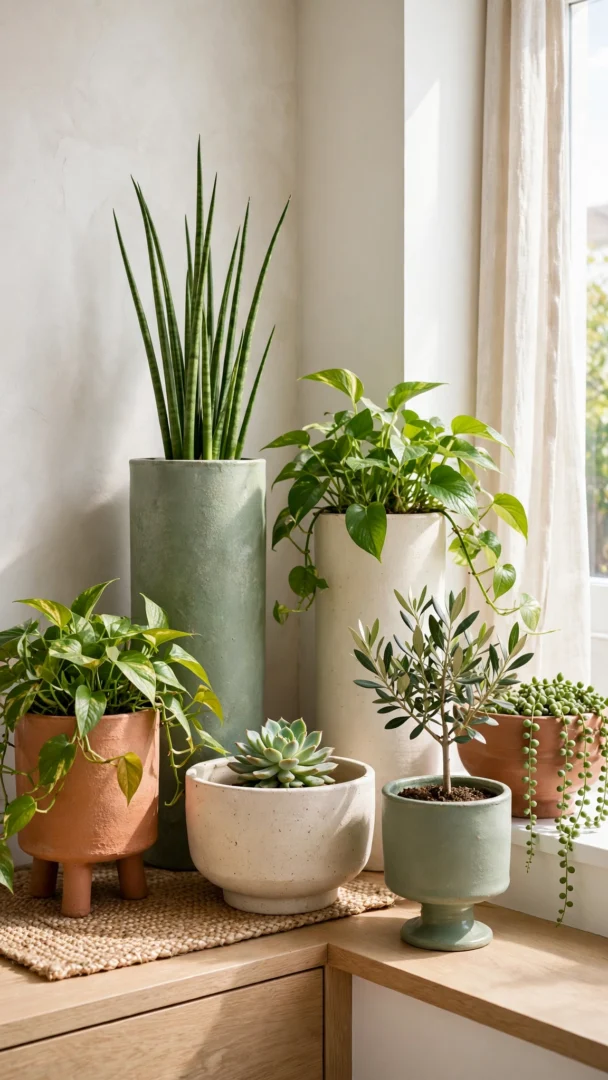
Build the corner around pots, not plants: choose handmade ceramic pots in one color story — sage, cream, and clay, for example — and let the unified palette make a mixed plant collection look intentional and designer. The pots become the decor; the plants are the bonus.
This suits design-minded decorators who already own a jumble of plants. It works in modern, Scandinavian, and Japandi interiors where cohesion matters.
Styling tip: vary the pot shapes — tall cylinders, squat bowls, footed planters — so the single color story still has visual rhythm and doesn’t read flat.
Botanical Corner for Small Apartments
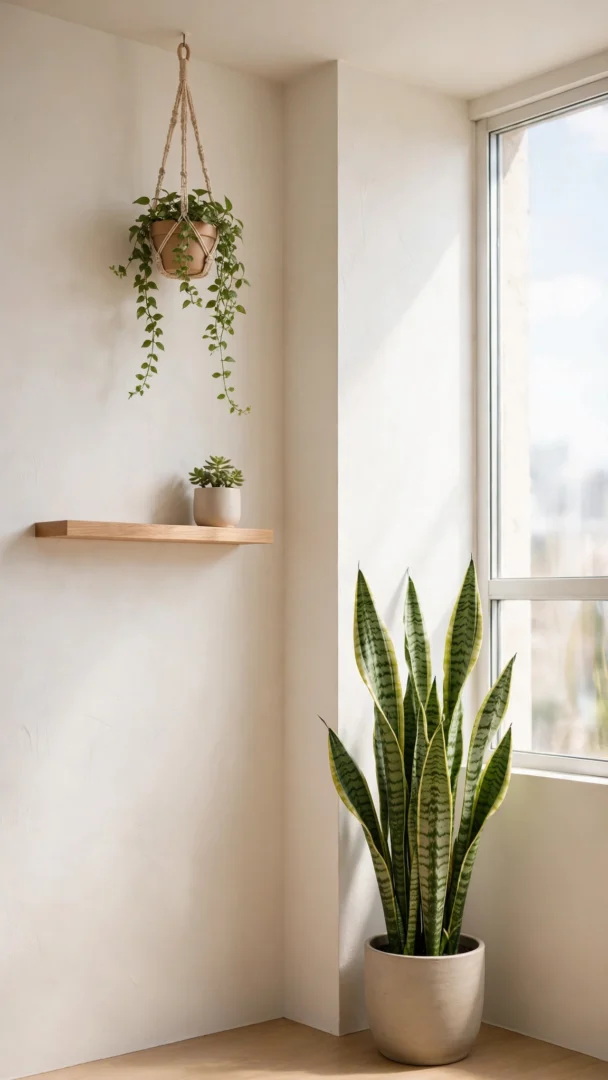
Even a two-foot corner can go botanical: one tall narrow plant like a snake plant, one hanging planter, and one small pot on a wall shelf create a complete layered corner without eating floor space. Vertical thinking is everything.
This suits apartment dwellers, studio renters, and dorm rooms. It works beside a bed, at the end of a hallway, or in that dead corner by the front door.
Styling tip: choose a corner near a window so all three plants share the light, and keep the palette tight — green plants plus two neutral pot tones — so the small display feels calm, not cramped.
Boho Macramé Hanging Garden
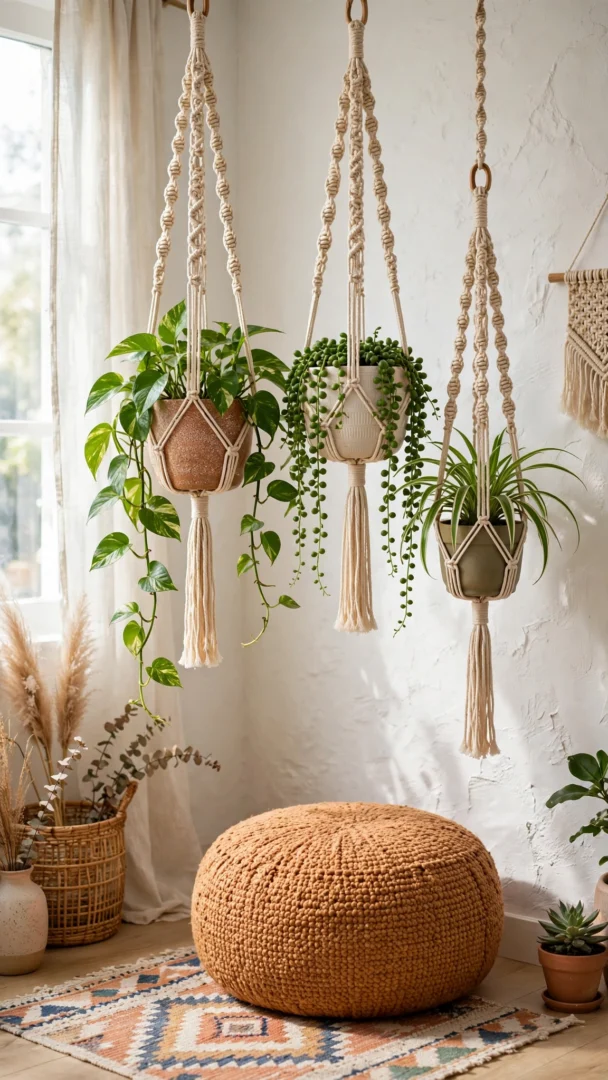
Fill the corner with plants suspended in handmade macramé hangers at different lengths, anchored by a low pouf or rug below. The knotted cotton adds craft and softness, and the floating plants keep the floor clear and airy.
This suits boho and eclectic interiors and renters who want impact without drilling into walls — a sturdy tension rod or ceiling hook does the job.
Styling tip: mix hanger styles — some long fringe, some simple knots — and water with a long-spout can so you don’t have to take each plant down every time.
Moody Dark Green Backdrop Corner
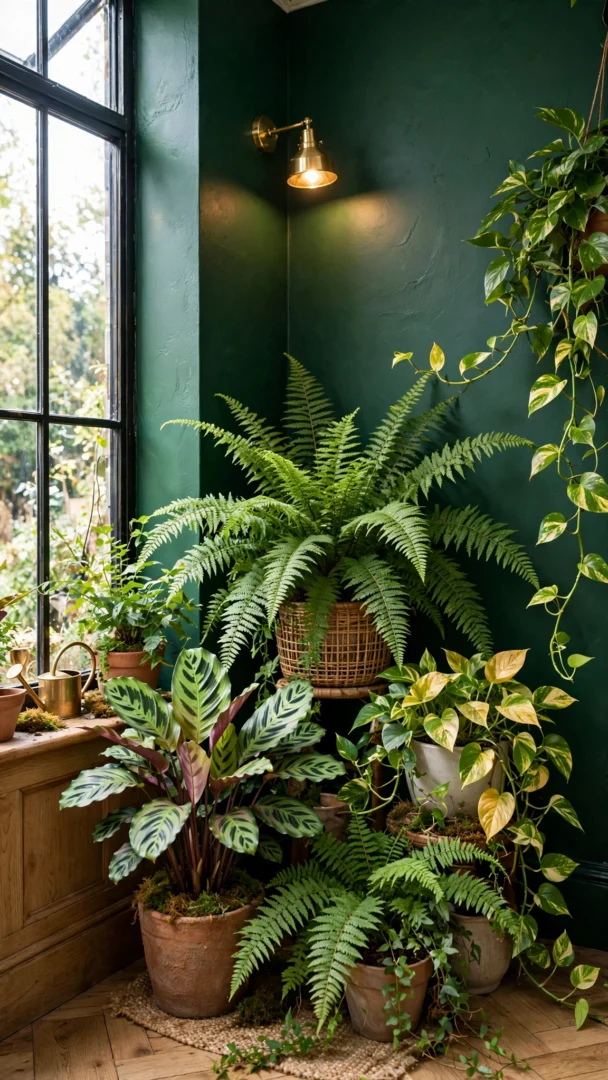
Paint the corner wall a deep botanical green, then layer in plants with lighter foliage so they pop against the dark backdrop. The effect is rich, cocooning, and incredibly photogenic — like a Victorian conservatory in miniature.
This suits maximalists, moody-interior lovers, and anyone with a north-facing room that never gets bright light anyway. It works in studies, dining rooms, and powder rooms.
Styling tip: add a brass picture light or small spotlight aimed at the foliage; the contrast of warm light on dark green is what makes this corner feel luxurious.
Herb and Edible Plant Kitchen Corner
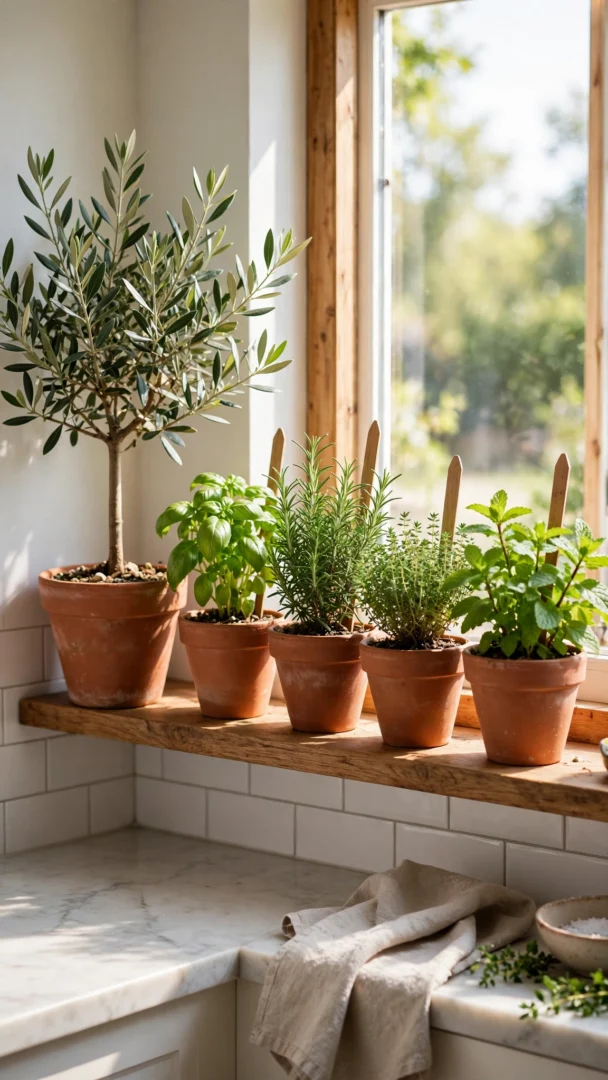
Make the botanical corner earn its keep: group culinary herbs — basil, rosemary, thyme, mint — in pretty pots on a sunny kitchen corner shelf or windowsill, with a small olive tree or bay laurel as the anchor. Beautiful, fragrant, and dinner-ready.
This suits cooks and anyone who wants their greenery to be practical. It works beside the stove (with good ventilation), on a kitchen island end, or in a breakfast nook.
Styling tip: label each herb with a small wooden plant marker for a cottage-garden feel, and snip regularly — harvesting is pruning, and it keeps herbs bushy.
Bedroom Botanical Sanctuary
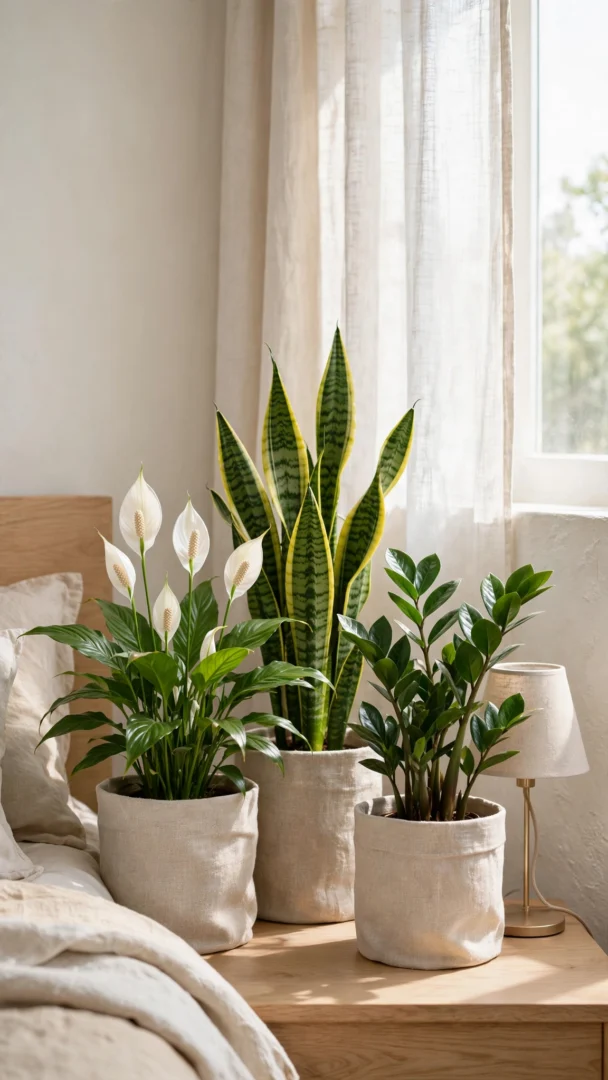
Soften the bedroom corner with low-light-friendly plants like peace lilies, snake plants, and ZZ plants in soft linen-toned pots. The greenery brings a calm, restful energy that makes the whole room feel like a retreat, and many of these plants are famously unfussy.
This suits light sleepers and slow-morning people who want their bedroom to feel serene. It works in the corner opposite the bed or beside a nightstand.
Styling tip: keep fragrances subtle — skip heavily scented plants in sleeping areas — and add a small dimmable lamp so the corner glows softly in the evening.
Bathroom Spa Plant Corner
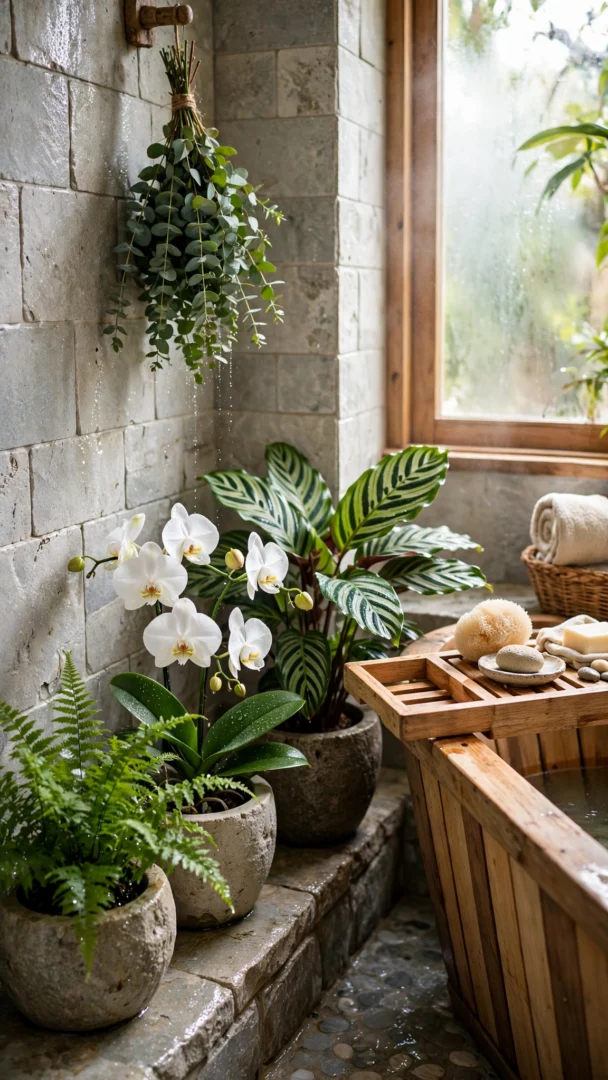
Humidity-loving plants like ferns, calatheas, and orchids thrive in bathroom corners, turning an ordinary washroom into a spa. A wooden bath caddy, eucalyptus bundle, and one statement fern are all it takes to make the corner feel like a boutique hotel.
This suits anyone with a windowed bathroom and a self-care routine worth elevating. It works beside the tub, on a vanity end, or on open shelving above the toilet.
Styling tip: hang a bundle of fresh eucalyptus from the showerhead for scent, and choose pots in stone or concrete to handle the moisture without damage.
Rustic Ladder Plant Display
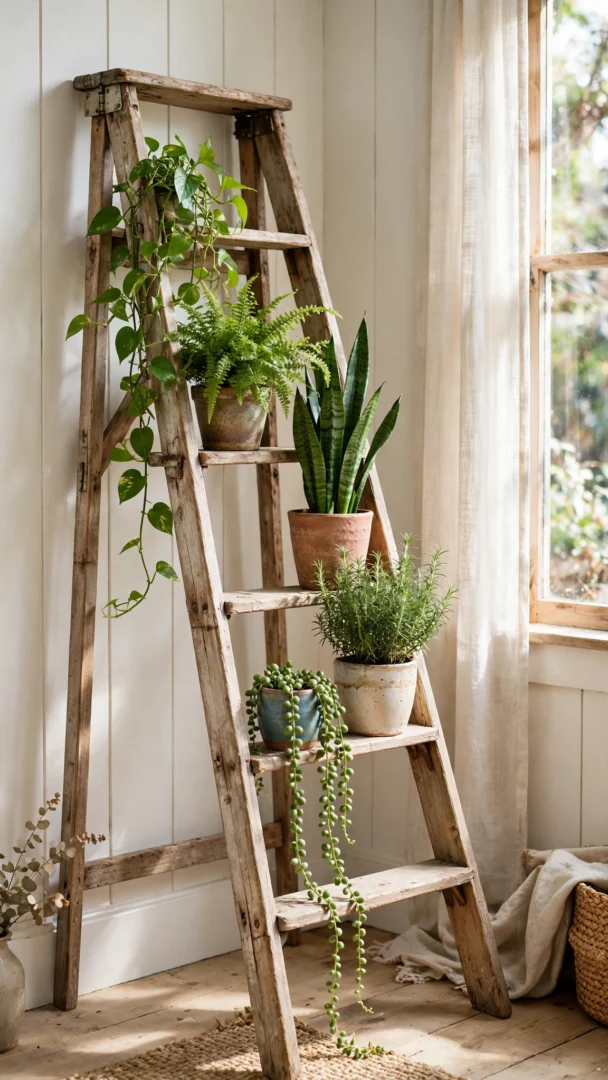
Lean a wooden ladder or vintage step ladder in the corner and use each rung as a plant shelf. The angled silhouette is naturally decorative, and the open structure lets light reach every plant while keeping the display airy.
This suits farmhouse, cottage, and rustic interiors, and anyone who likes displays that are easy to rearrange. It works in living rooms, sunrooms, and covered porches.
Styling tip: secure the ladder to the wall with a discreet bracket for safety, and place the heaviest pots on the bottom rungs to keep it stable.
Botanical Corner with Natural Fiber Rug
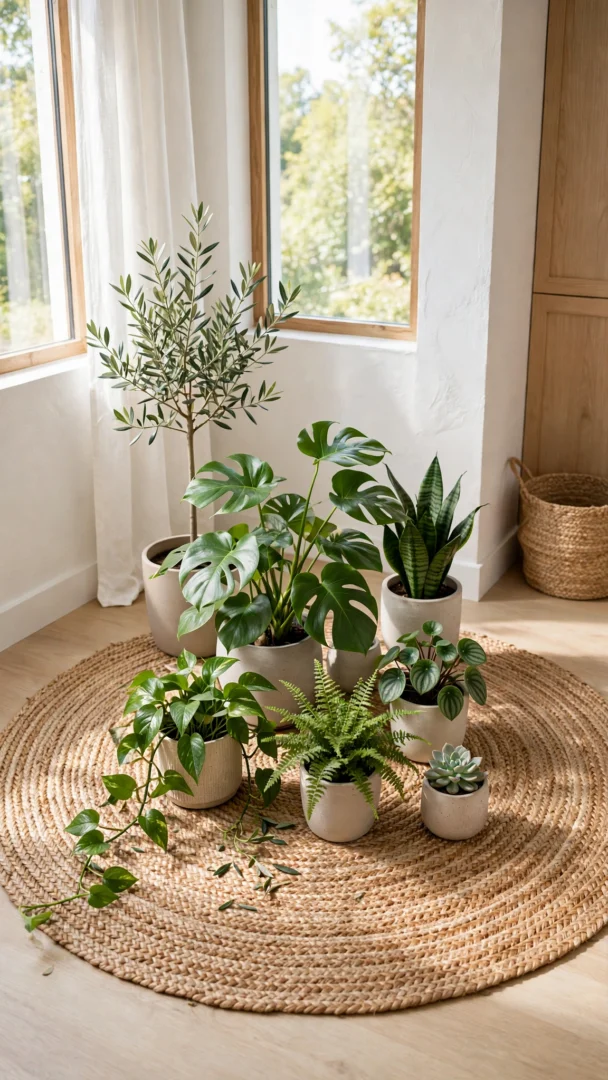
Define the corner with a round jute, sisal, or seagrass rug, then build the plant grouping on top of it. The rug acts like a stage — it visually contains the display, protects the floor, and adds the natural texture that makes the whole corner feel grounded.
This suits open-plan rooms where the corner needs a visual boundary. It works under reading chairs, beneath plant stands, and in entryway corners.
Styling tip: choose a rug slightly larger than the plant grouping so there’s a visible border, and layer a smaller patterned rug on top if you want extra softness underfoot.
Art-Led Botanical Gallery Corner
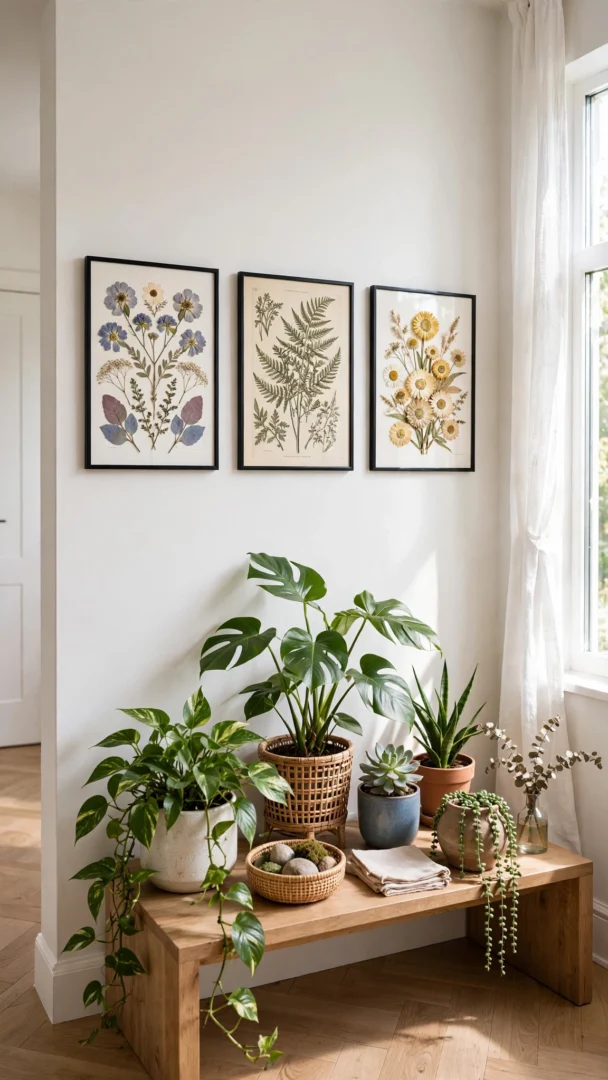
Hang botanical prints, pressed-flower frames, or a vintage plant illustration above your plant grouping so the wall art and the living plants echo each other. The art gives the corner a finished, gallery feel while the real plants add life and dimension.
This suits art lovers and anyone with a great print collection waiting for a home. It works in hallways, home offices, and above console tables.
Styling tip: keep the frames in one finish — thin black or natural wood — and let the green tones of the art rhyme with the foliage below for a seamless look.
Seasonal Botanical Refresh Corner
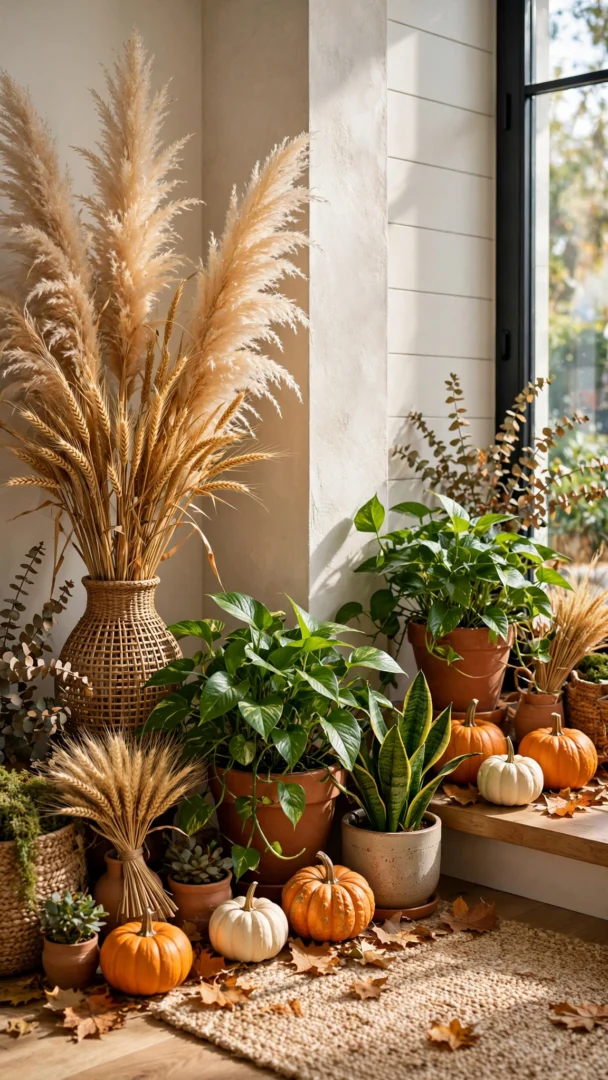
Keep the plant foundation permanent but refresh the corner seasonally: pumpkins and dried grasses in fall, citrus and evergreen sprigs in winter, fresh tulips in spring. The living plants stay; the accents rotate with the calendar.
This suits seasonal decorators who love a refresh without starting over. It works in entryways, living rooms, and any corner guests see first.
Styling tip: store a small bin of seasonal accents — dried stems, mini pumpkins, ornaments — so the refresh takes ten minutes, not a shopping trip.
Low-Maintenance Succulent Corner
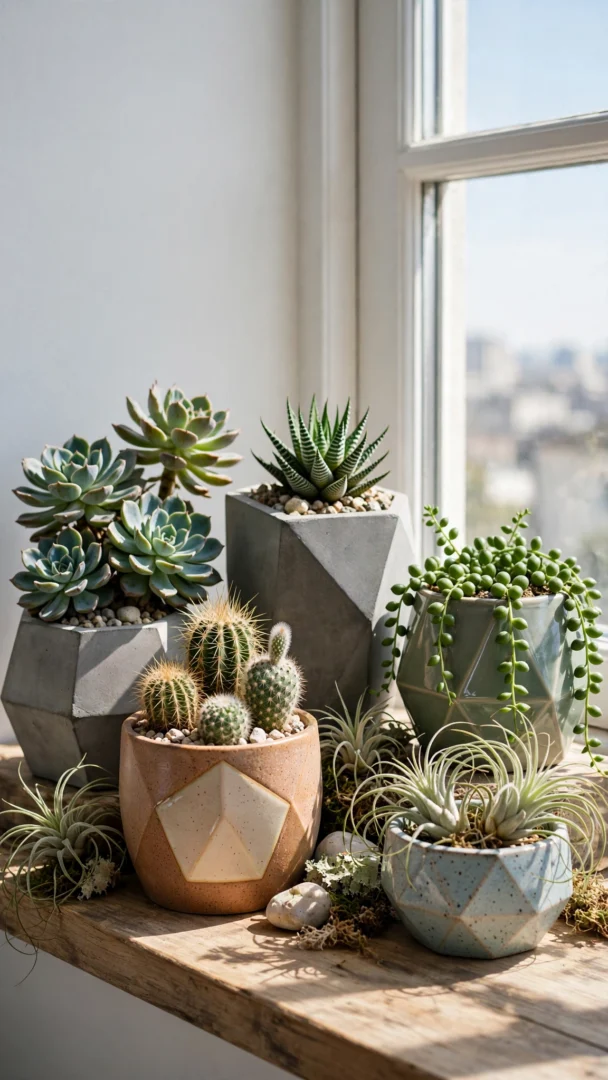
For the chronically busy or the plant-killing prone, build the corner from succulents, cacti, and air plants in sculptural arrangements. They need water only every week or two, tolerate bright sun, and their geometric shapes look striking in modern pots.
This suits frequent travelers, beginners, and sunny windowsills where thirstier plants would struggle. It works in kitchens, home offices, and dorm rooms.
Styling tip: use gritty, fast-draining soil and pots with drainage holes — most succulent deaths come from wet feet, not neglect — and give them the brightest spot you have.
Tall Tree Anchor Corner
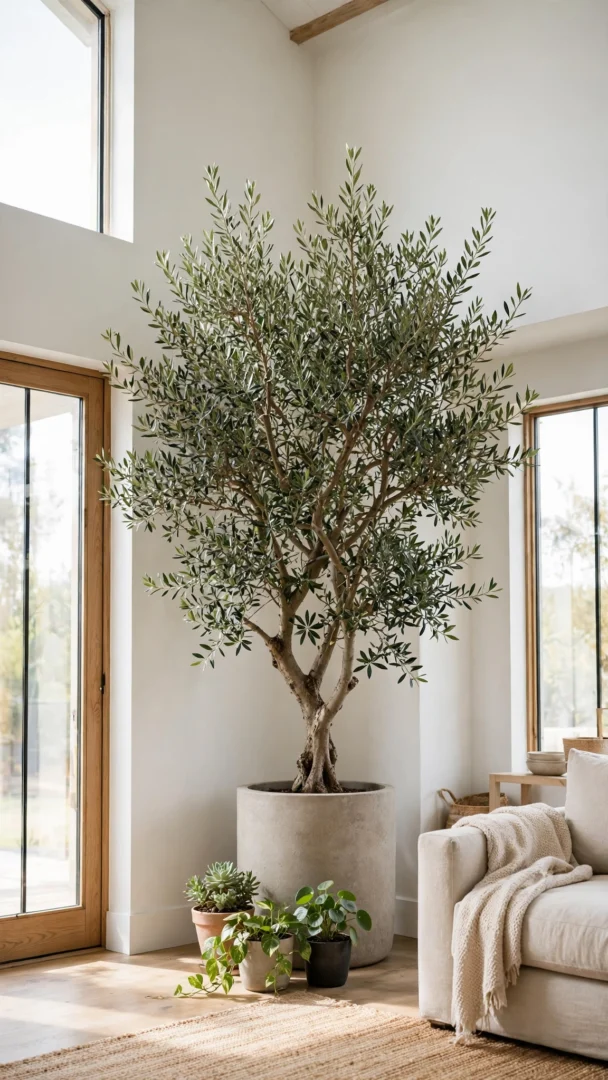
Let one tall indoor tree — fiddle-leaf fig, olive tree, or dracaena — anchor the corner, then underplant it with two or three smaller pots at its base. The tree gives instant height and architecture; the smaller plants fill the base so it never looks leggy.
This suits rooms with high ceilings or large empty corners that swallow smaller displays. It works in living rooms, foyers, and beside staircases.
Styling tip: choose a tree whose mature height suits the room — an olive tree for airy brightness, a dracaena for low light — and dust the leaves monthly so they photosynthesize at full power.
What is a botanical corner?
A botanical corner is a curated, vignette-style plant display built in one corner of a room — layered greenery, textured pots, and natural accents arranged intentionally to create a designated relaxation zone. It is the 2026 Pinterest micro-trend evolution of simply owning houseplants: the plants become a styled moment rather than scattered decor.
How many plants do I need for a botanical corner?
Three to seven plants is the sweet spot: enough for layering at different heights without overwhelming the space. Start with one tall anchor plant, add two or three medium pots, and finish with a trailer or two. You can always grow the collection over time.
What are the best plants for a botanical corner?
Monstera, pothos, snake plants, ZZ plants, fiddle-leaf figs, and peace lilies are the most forgiving and photogenic choices. Mix upright growers, bushy plants, and trailing vines for the layered look, and match each plant to your corner’s actual light level.
How do I style a botanical corner in low light?
Choose low-light champions like snake plants, ZZ plants, pothos, and cast iron plants, and add a warm floor lamp or grow-light bulb to supplement. Light-colored pots and a mirror nearby bounce what light you have, keeping the corner bright and lively.
Can I make a botanical corner in a small apartment?
Absolutely — go vertical. A tall narrow plant, one hanging planter, and a small wall shelf create a complete layered corner in about two square feet of floor space. Tiered stands and ladder displays also pack a lot of greenery into a tiny footprint.
How do I keep a botanical corner from looking cluttered?
Stick to a tight pot palette — two or three tones maximum — and group plants in odd numbers at varied heights. Leave a little breathing room between pots, and contain the whole display on a rug or tray so it reads as one intentional arrangement.
Are botanical corners expensive to create?
They don’t have to be. Start with three affordable plants from a local nursery, slip nursery pots into woven baskets instead of buying pricey planters, and propagate pothos cuttings to multiply your collection for free. The styling matters more than the price tag.
Grow Your Own Green Retreat
A botanical corner is one of the simplest, most joyful upgrades you can give your home — a little patch of calm that grows more beautiful every month. Pick the idea that fits your light, your space, and your plant-parent confidence, then start with three plants and a good pot. Before you know it, that forgotten corner will be your favorite seat in the house.