
A great bob can feel polished without being hard to maintain, and older women have plenty of ways to shape the cut around their hair texture, face shape, and daily routine. This guide to 25 bob hairstyles for older women covers classic cuts, layered versions, textured styles, and fringe options, with practical styling and trimming tips for each one.
Classic Chin-Length Bob

A classic chin-length bob has a clean, balanced outline that frames the lower face with a soft or lightly squared edge. Its timeless shape works well when you want a neat short haircut without following every trend.
This cut can emphasize a strong jawline, so ask your stylist to round the corners if you prefer a gentler silhouette. It also works nicely for oval, heart-shaped, and longer faces when the front sections stay light.
Blow-dry the front pieces toward your face, then curve the ends slightly under or outward with a round brush. Trimming every eight to ten weeks helps the bob retain its crisp shape.
Jaw-Length Blunt Bob
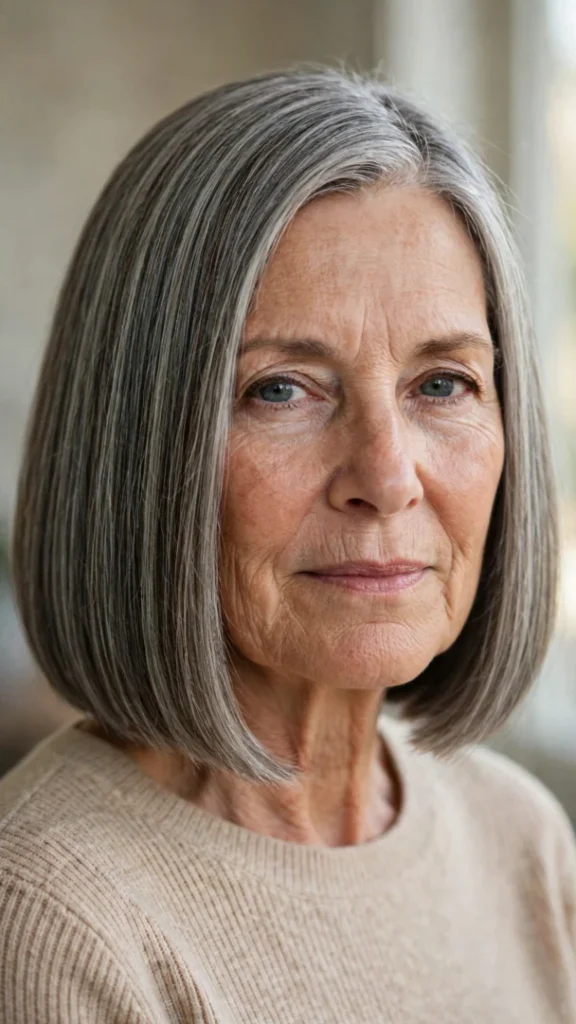
The jaw-length blunt bob features one clean line that ends around the bottom of the jaw. It creates a confident, polished look and pairs well with a simple side or center part.
This cut is especially suitable for medium-thick or thick hair because the blunt ends preserve visible density. Fine hair may need a slightly shorter length or soft interior layers to avoid looking sparse near the ends.
Use a blow dryer and light flat iron to create a smooth finish with a subtle bend at the ends. Regular trims are important because little growth changes the strong outline of this bob.
Graduated Layered Bob
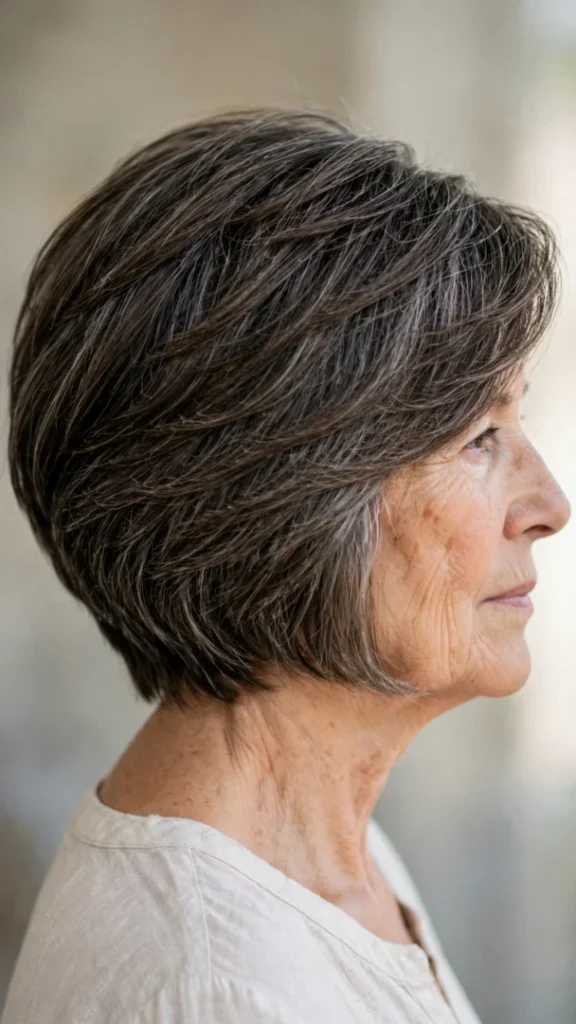
A graduated layered bob is shortest near the nape and gradually becomes longer toward the front. The stacked layers create movement while keeping the back neat and lightweight.
This style works well for fine to medium hair that needs shape without looking too heavy at the ends. Ask your stylist to keep the layers controlled if your hair is very fine or has recently become thinner.
Round-brush the front sections away from the scalp, then lift the roots with a light mousse or spray. Schedule frequent trims so the layered nape remains close to the head.
Stacked Bob
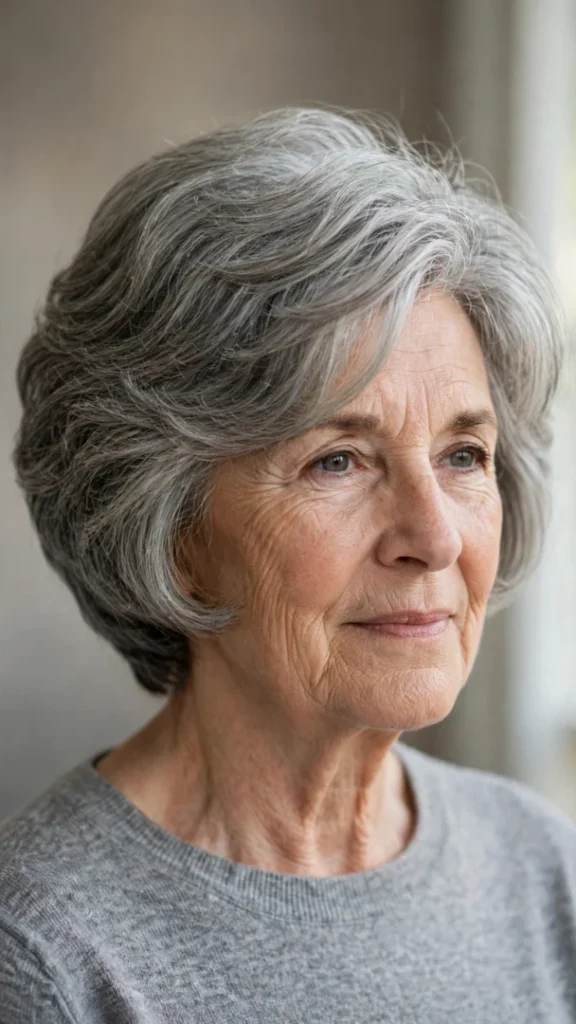
A stacked bob has a shorter back and progressively longer sections over the crown and sides. Its rounded profile adds impressive volume while keeping the overall shape compact.
Dense, straight, or coarse hair often responds well to this cut because the stylist can remove bulk without losing the full outline. The top must be controlled carefully, since excess length at the crown can make the style look top-heavy.
Blow-dry the crown away from the scalp to build volume, then smooth the sides toward the face. Stacked bobs need regular shaping because the back grows out faster than the front.
A-Line Bob
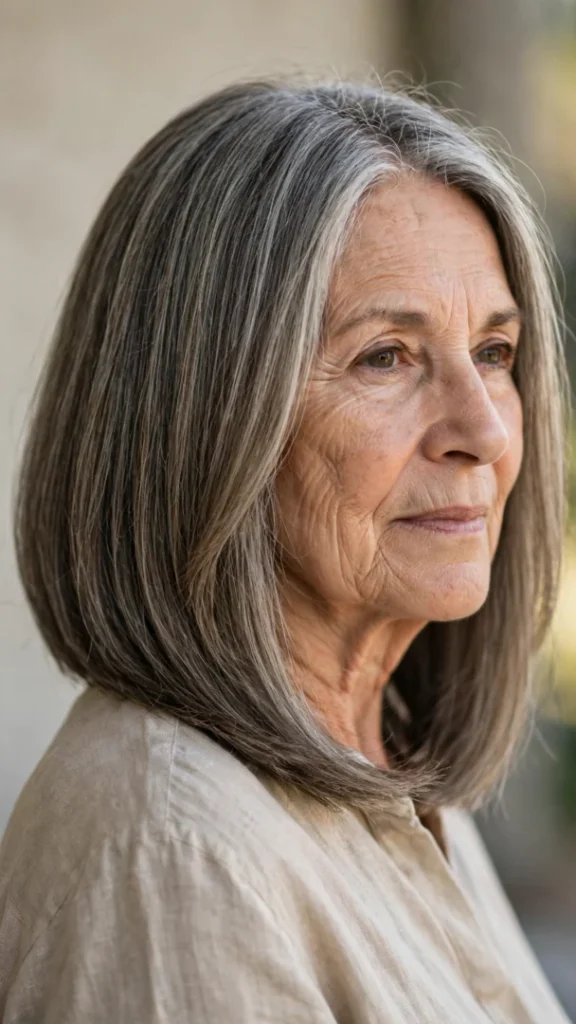
An A-line bob slopes from a shorter front toward a longer back, creating a clean triangular outline. It offers a softer alternative to a blunt cut and frames the face without ending abruptly at the jaw.
This style can balance a pronounced jawline and works with many face shapes when the front pieces are tailored carefully. It also suits women who want a polished look but need more length in the back for styling variety.
Blow-dry the front toward the face and bend the longer back sections under or outward. A light round brush movement gives the A-line shape a smooth, graceful finish.
Asymmetrical Bob
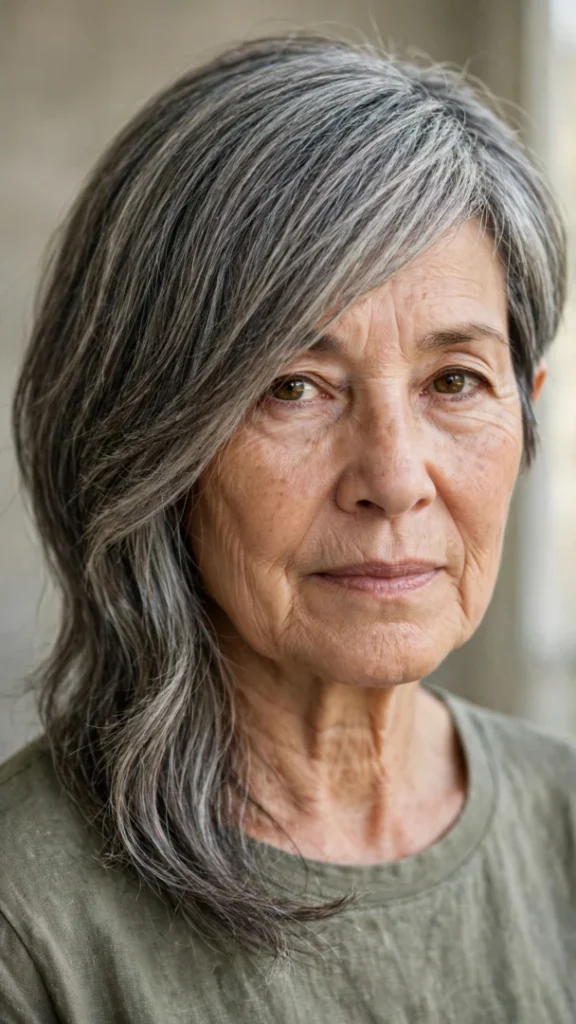
An asymmetrical bob features a longer section on one side and a shorter shape on the other. The angled line often sweeps across the forehead, giving the classic bob a more noticeable point of view.
This cut works particularly well with straight or gently wavy hair that can show the longer side clearly. Choose the fuller side for your part, since that placement will help the asymmetrical shape blend into your natural growth pattern.
Blow-dry the longer section across the forehead and shape the shorter side close to the cheek or ear. Regular trims are needed to preserve the intentional angle.
Short Pixie Bob
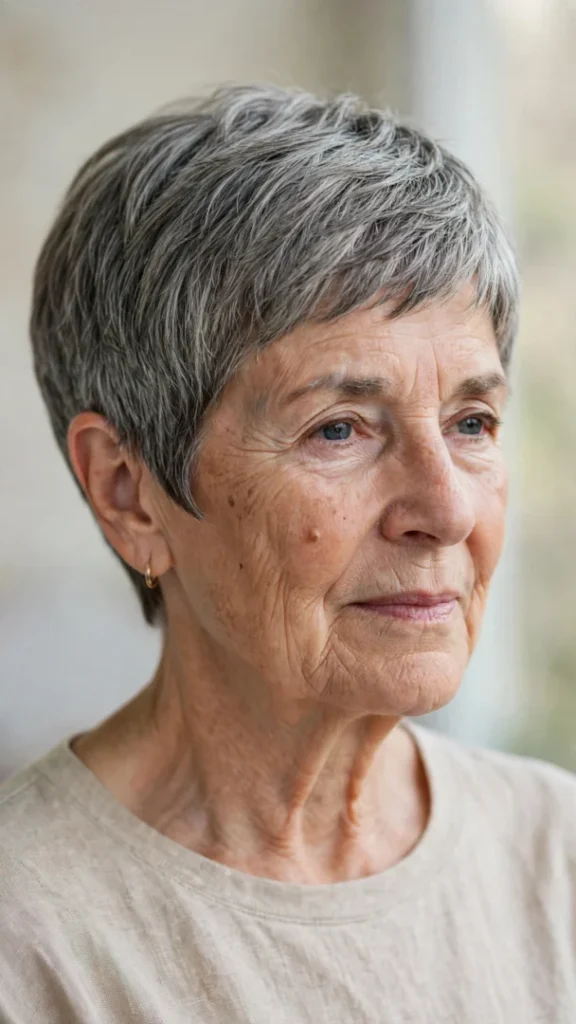
A short pixie bob combines the ease of minimal length with the structure of a bob shape. It may sit around the ears and jaw while leaving very little hair at the nape.
This compact cut suits older women who want a wash-and-go short haircut with less styling time. Fine hair benefits from the extra body, although the shape needs more frequent shaping than a traditional bob.
Apply a small amount of texture cream to damp hair, then tousle it with your fingers instead of smoothing it flat. A pixie bob often needs trimming every six to eight weeks to keep its playful outline.
Ear-Tuck Bob
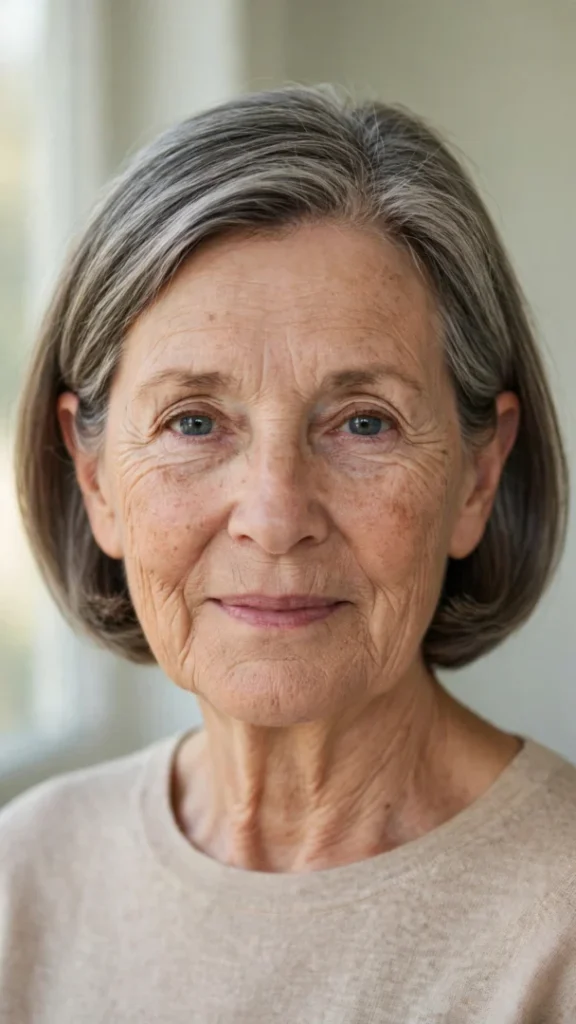
An ear-tuck bob has the sides and front sections tucked neatly behind the ears. Opening the face this way creates a clean, alert appearance with plenty of visual movement.
The style works best on medium-density straight or wavy hair that holds a tucked shape. Fine or thin ends may need to remain longer to create a fuller transition around the ears.
Use a round brush to blow-dry the front sections away from the face, then finish with a small amount of light-hold product. A quick trim every few months keeps the tucked areas neat.
Collarbone-Length Bob
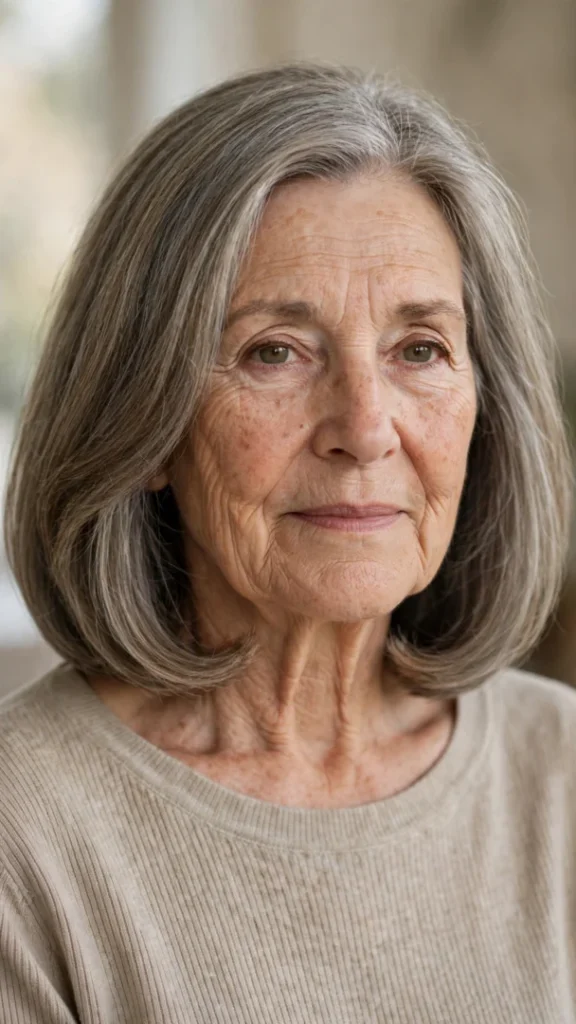
A collarbone-length bob is the longest version of the cut, with the ends resting near the neckline or collarbones. Its soft length makes it an easy transition between a bob and a longer hairstyle.
This style is useful for women who want the structure of a short haircut without committing to a sharp jaw-level outline. Medium and thick hair can form soft waves at the ends, while very fine hair may need volume at the roots.
Blow-dry the ends with a large round brush to create a light inward curve or loose wave. Trim the ends every ten to twelve weeks to keep the collarbone shape visible.
Shaggy Bob
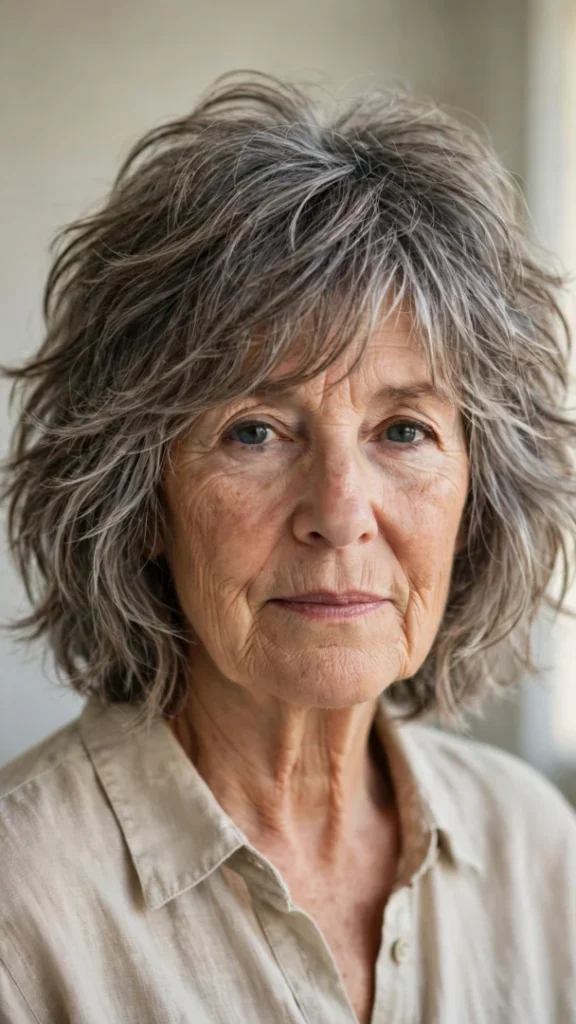
A shaggy bob uses choppy, feathered layers to create an airy outline and relaxed movement. It looks polished without feeling severe, especially when the layers are blended around the cheeks.
Fine to medium hair benefits from the texture, since the layers prevent the bob from sitting flat against the head. Ask for fewer very thin layers if your ends are sparse or fragile.
Apply lightweight mousse to damp hair, scrunch the layers, and finish with a diffuser or gentle air-dry. Use your fingers rather than a flat brush to preserve the shaggy texture.
Curly Bob

A curly bob is shaped around natural curls, with the outline softened by movement and volume. It can look polished when the curls are defined, yet it also works well for an effortless wash-and-go routine.
Women with naturally curly hair can ask a stylist familiar with curl patterns to cut the bob according to its shrunken length. The finished shape often appears shorter once the curls spring up.
Use a leave-in moisturizer and curl cream, then scrunch the curls upward and diffuse to speed drying. Avoid brushing the hair dry, since that can create frizz and break the curl pattern.
Wavy Bob
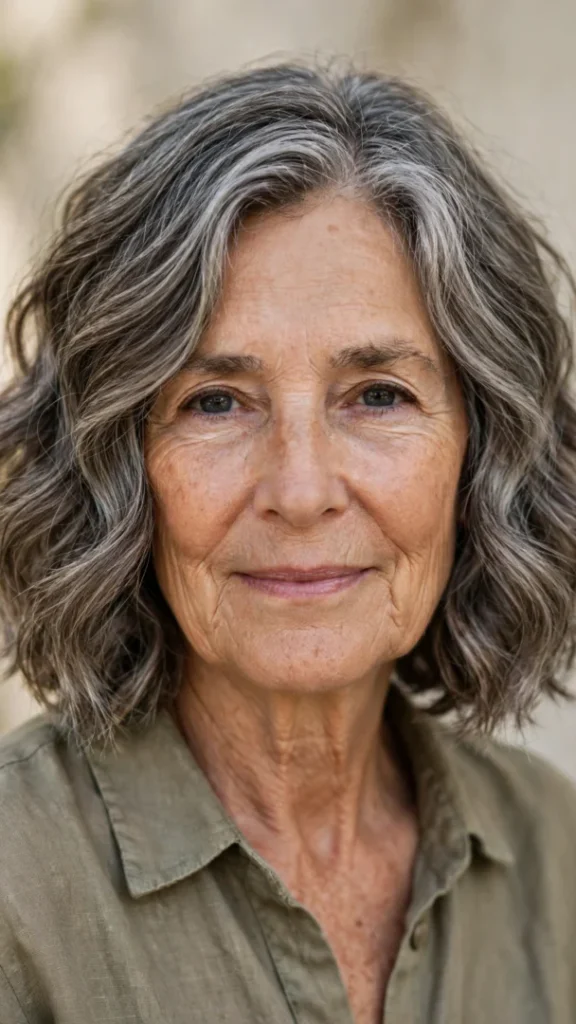
A wavy bob has loose S-shaped bends that soften the outline and add movement. The waves are relaxed rather than tight, giving the style a casual but well-shaped finish.
This cut is easy to adapt for straight or gently wavy hair that can be bent without holding a perfect curl. It can also make a blunt bob feel less severe by adding texture around the face.
Mist a lightweight texturizing spray through damp hair, scrunch the waves, and let them air-dry. For more defined waves, use a diffuser and a small amount of heat protectant.
Coily Natural-Texture Bob
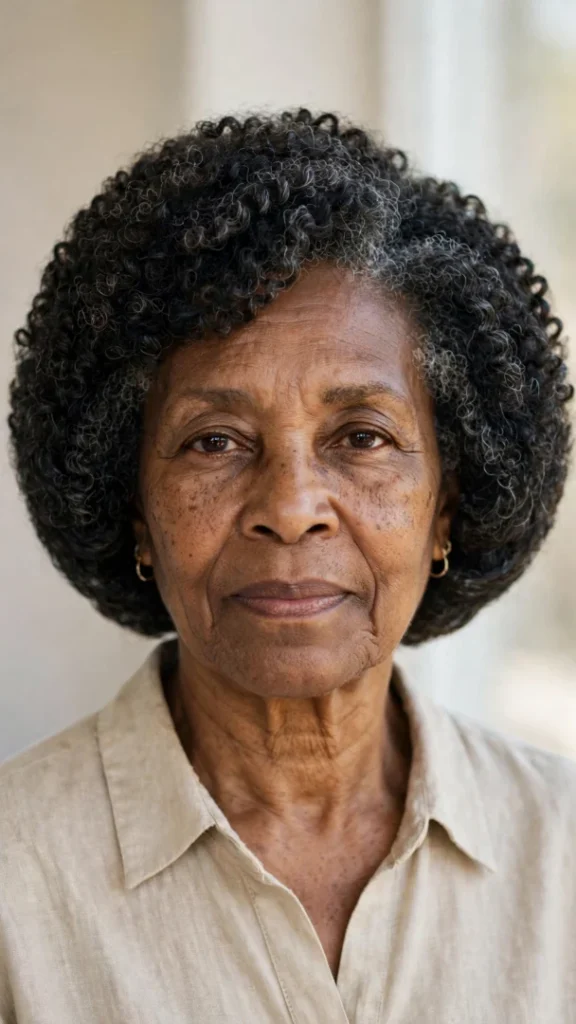
A coily natural-texture bob celebrates defined coils with a rounded, balanced silhouette. The shape can include tapered ends, soft layers, or a full curved outline that honors the hair’s natural volume.
This approach works especially well for Black women with coily hair who prefer to wear their natural texture. A stylist experienced with textured hair can plan the length based on the hair’s shrinkage and density.
Apply moisturizer, leave-in product, and a light gel through each section, then let the hair dry fully before shaping. A satin scarf at night and a satin pillowcase can help reduce tangling and frizz.
Fine-Hair Bob
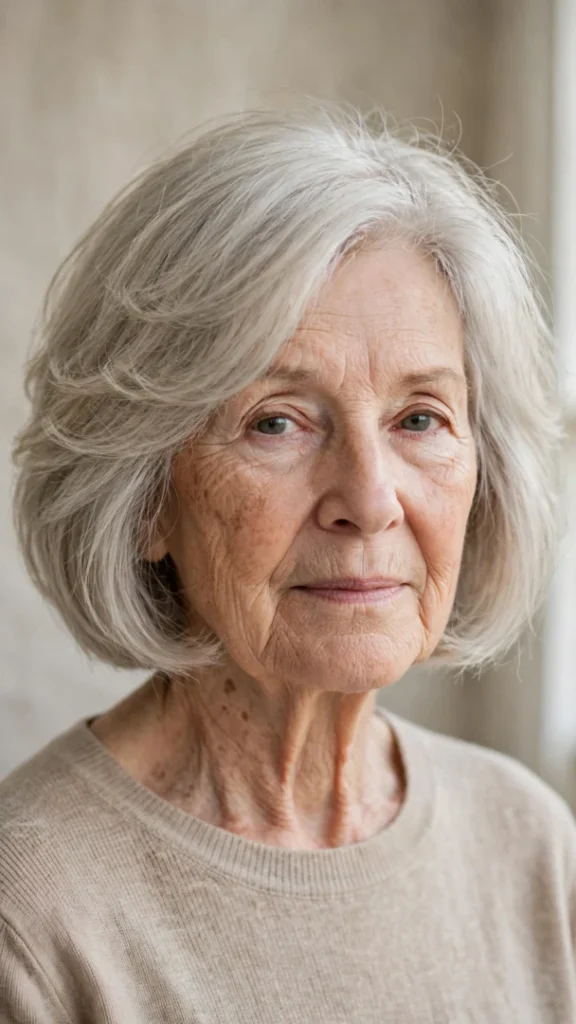
A fine-hair bob uses a light outline, controlled layers, and soft volume to make the hair appear fuller. Medium-length ends can create a wispy finish, while a lightly blunt edge adds visible body.
Fine hair benefits from a lightweight shape that avoids heavy nape layers or an overly dense fringe. A stylist can add subtle crown volume without making the sides appear too thin.
Use a volumizing mousse at the roots and blow-dry upward with a round brush. Finish with a tiny amount of lightweight product on the ends, since heavy oils can weigh the hair down.
Thick-Hair Bob
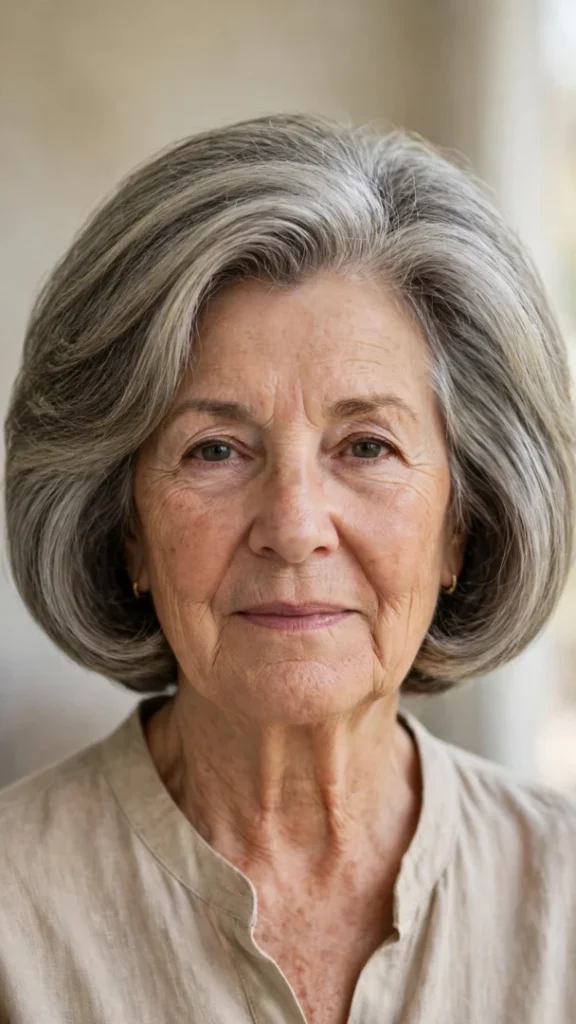
A thick-hair bob removes excess weight while preserving enough length to create a smooth, full shape. Interior bulk and softened ends help the hair lie more easily around the head.
Dense, straight, or coarse hair can benefit from an A-line, graduated, or lightly layered version. Without interior shaping, thick hair may bulge at the sides and appear wider than intended.
Blow-dry the roots first, then use a large round brush to smooth the mid-length sections toward the face. Regular trims help prevent the upper layers from becoming too bulky.
Bob for Thinning Hair
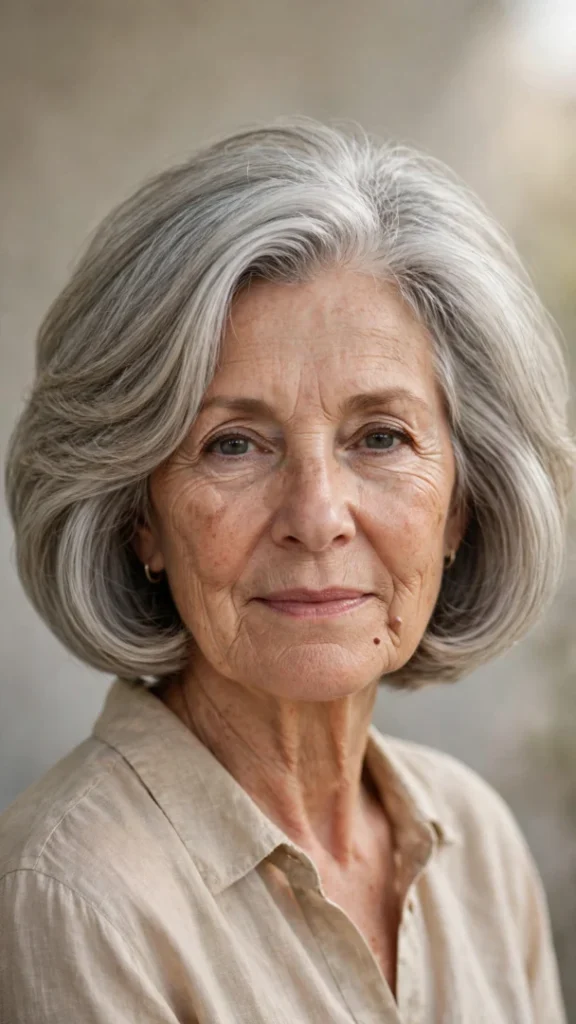
A bob for thinning hair uses soft face-framing pieces and controlled crown volume to create a fuller-looking shape. It avoids wispy ends and excessive interior layers that can make the lower sections look sparse.
A stylist can tailor the cut to your current density while keeping the front and sides light enough to move naturally. If hair loss is sudden, uneven, or linked with scalp changes, seek medical advice before focusing only on the haircut.
A root-lifting spray, light mousse, and gentle blow-dry can add body without flattening the hair. A short fringe may also work when it is kept light rather than heavy.
Straight Center-Part Bob
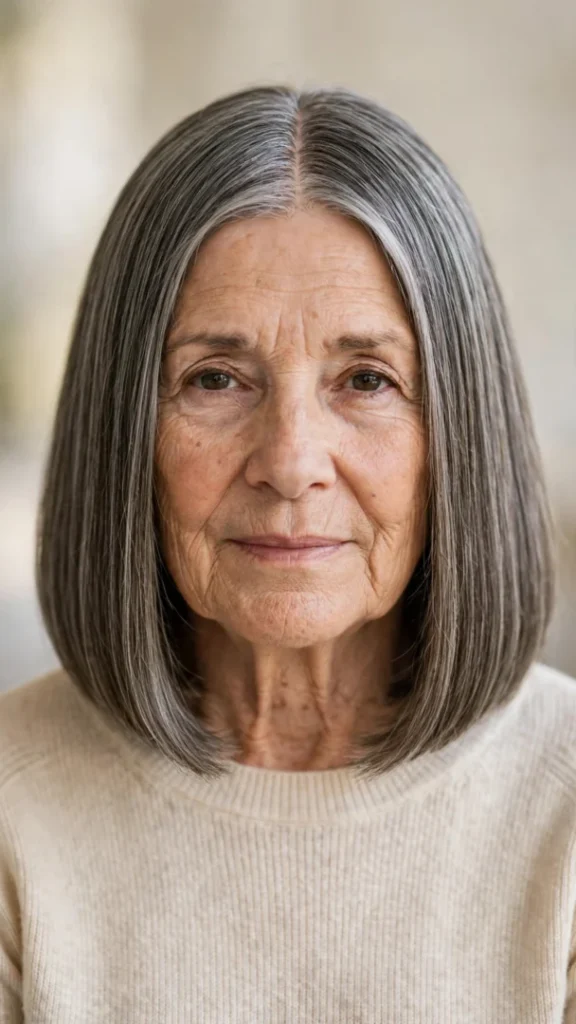
A straight center-part bob has a balanced, symmetrical outline with smooth sections falling on both sides of the face. It creates a crisp, composed look that highlights the overall shape of the haircut.
This style works best with straight or gently wavy hair that can lie flat with minimal bending. Fine hair may show the part more clearly, so a little root volume can improve its appearance.
Blow-dry the front sections straight down, then smooth the top with light serum and a narrow brush. Regular trimming preserves the clean, mirror-like finish.
Side-Part Bob

A side-part bob uses a diagonal part to create flow across the forehead and softer movement around the face. The angled direction gives the cut a relaxed look without losing its structure.
This style works with many textures, including straight, wavy, and gently curly hair. Follow your natural cowlick or the fuller side of your part so the shape sits correctly after washing.
Blow-dry the hair in the opposite direction, then move it into the desired part and mist lightly to hold the separation. The diagonal shape needs fewer precise trims than a very short angular bob.
Blunt Bangs Bob
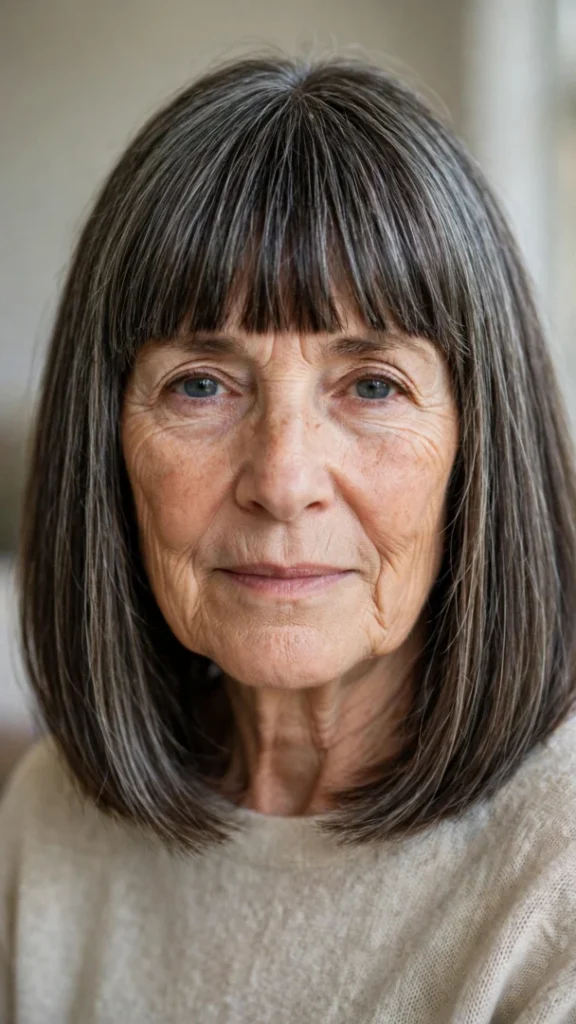
A blunt bangs bob features a dense, straight fringe that sits near the eyebrows or across the forehead. It creates a bold frame and draws attention to the eyes.
Medium-thick hair often carries the fringe well, while fine hair may need it cut lighter to avoid weighing down the front. The strong contrast between the fringe and longer side pieces requires regular maintenance.
Blow-dry the bangs forward, then brush them slightly to one side for a softer finish. Bangs may need trimming every four to six weeks as they grow.
Soft Curved Fringe Bob
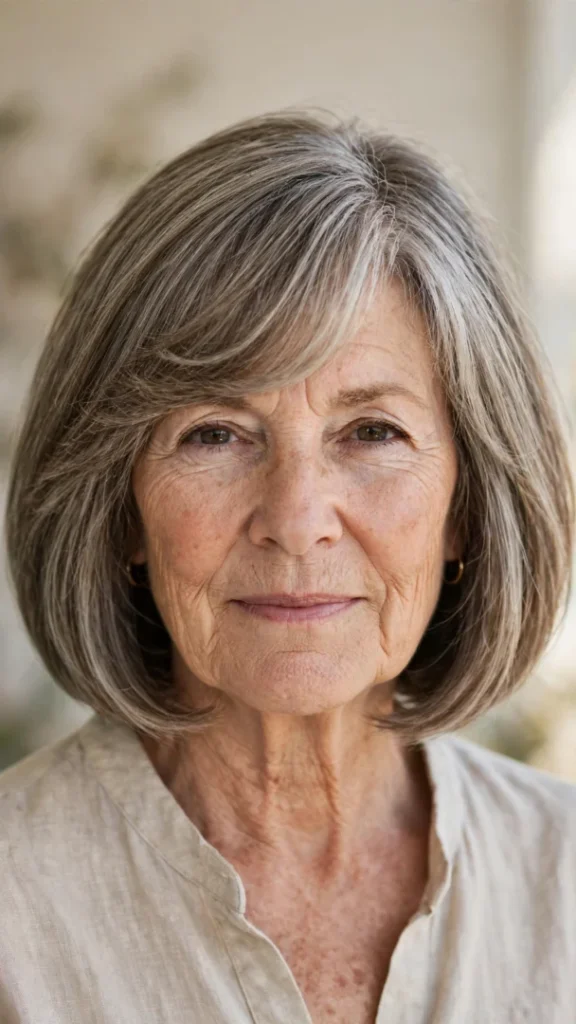
A soft curved fringe is feathered and shaped to sweep gently across the forehead. It offers the coverage of bangs without the heavy, blunt finish of a full fringe.
This fringe can be a practical choice for fine or thinning hair because the tapered ends blend into the side sections. It also works well with silver hair when the fringe is cut to follow the natural growth pattern.
Round-brush the fringe toward the face, then sweep it to the side with light hairspray. The curved shape grows out softly and usually needs less exact trimming than blunt bangs.
Face-Framing Layered Bob

A face-framing layered bob places longer pieces around the cheeks and jaw while keeping the back controlled. These soft layers open the face and create movement around the ears.
This cut works well for medium-density, wavy, or straight hair that needs shape without severe blunt ends. It can also make a growing-out haircut look intentional while the back catches up.
Blow-dry the front layers away from the face, then curve them around the cheeks with a large round brush. A light finishing spray will keep the layers separate and defined.
Sleek High-Shine Bob
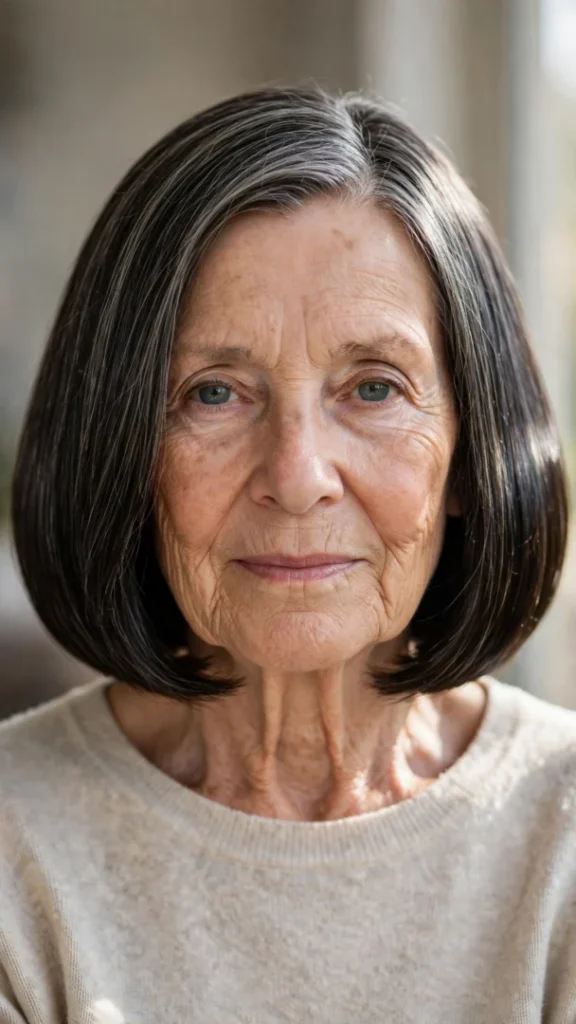
A sleek high-shine bob has a smooth blowout finish with a rounded, reflective surface. It looks refined, polished, and well suited to formal or professional settings.
Straight or gently wavy hair can achieve this look with a round brush, smoothing cream, and heat protectant. Natural curl can also be styled this way, though the blowout takes more time to complete.
Work a small amount of smoothing product through damp hair and blow-dry from roots to ends. Apply a tiny amount of lightweight oil to the ends for shine without making them appear greasy.
Tousled Textured Bob
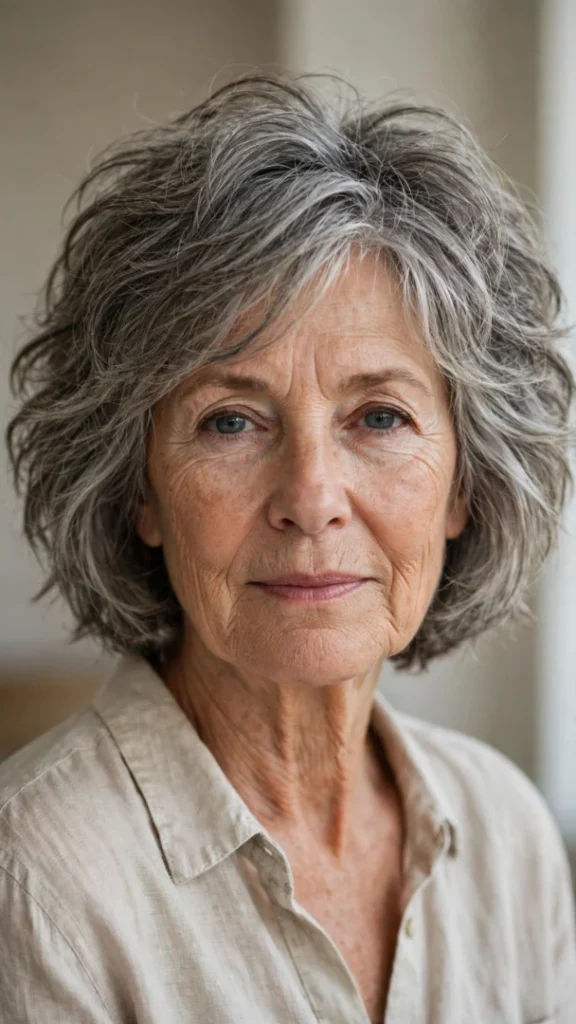
A tousled textured bob has intentionally piecey sections and an irregular, relaxed surface. It creates volume through separation rather than a perfectly smooth finish.
This approach works well for fine, limp, or easily flattened hair that needs more body. Keeping some controlled shape at the crown will stop the tousled style from looking unfinished.
Refresh the roots with dry shampoo, add a small amount of mousse, and scrunch the hair with your fingers. A light mist through the mid-length sections will preserve movement without creating stiffness.
Vintage-Inspired Bob
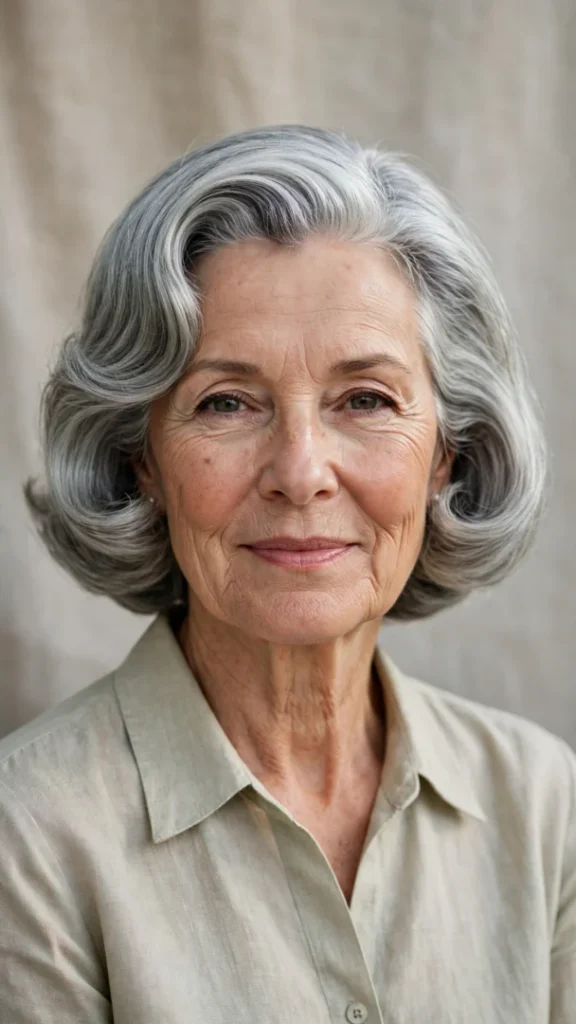
A vintage-inspired bob recalls polished mid-century shapes, such as a rounded pageboy or softly flipped ends. Its smooth curve gives the haircut a classic, feminine appearance.
This style suits silver or gray hair because the uniform shine emphasizes its smooth shape. It works particularly well for formal routines or anyone who enjoys a more structured blowout.
Blow-dry the hair smooth, then set the ends with velcro rollers or a large round brush. Avoid brushing over the set, since light misting and gentle removal will preserve the rounded finish.
Modern Geometric Bob
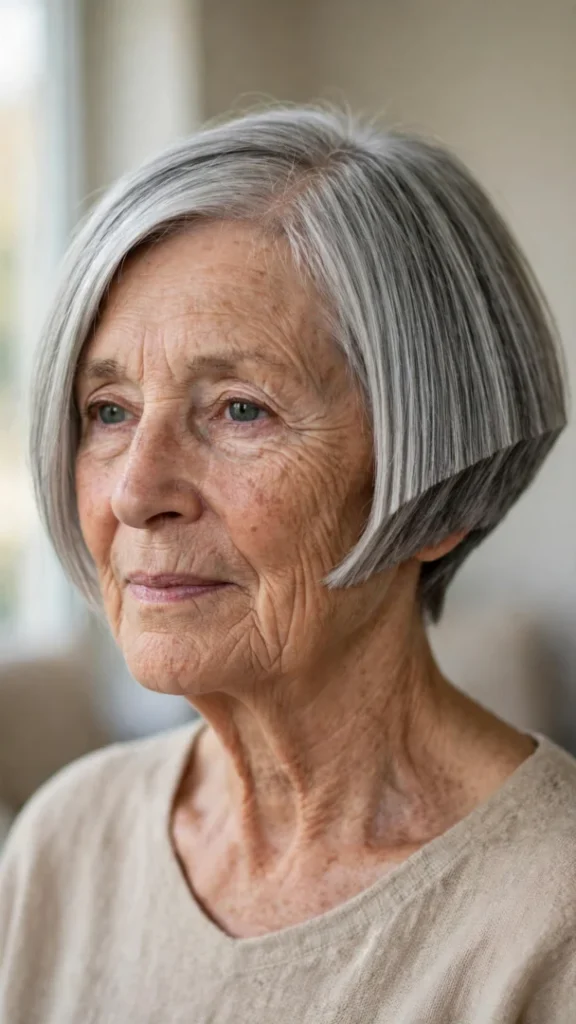
A modern geometric bob uses crisp cheek-level planes, sharp angles, and a controlled shorter nape. Its architectural shape creates a bold, contemporary look.
Straight or thick hair usually shows the clean planes most clearly, while natural textures can soften the edges. This cut requires precision trimming and a confident personal style.
Smooth the top and sides with a blow-dryer, then use a small amount of serum or lightweight gel to define the edges. Frequent salon visits help the geometric lines remain sharp.
Frequently Asked Questions
What Is the Best Bob Hairstyle for Older Women?
The best bob hairstyle depends on hair texture, face shape, and the amount of daily styling you prefer. A chin-length, jaw-length, or softly layered cut is easy to manage, while an asymmetrical or geometric bob makes a stronger statement.
How Often Should an Older Woman Get a Bob Trimmed?
Most traditional bobs need a trim every eight to ten weeks to keep their outline neat. Short pixies, blunt bangs, and geometric cuts may need more frequent shaping, often every four to eight weeks.
Can a Bob Hairstyle Work With Gray or Silver Hair?
Yes, a bob can complement gray or silver hair by creating a smooth, polished silhouette. Silver tones and soft gray highlights are easy to incorporate, and a color professional can help choose a shade that suits your skin tone and natural pattern.
What Bob Works Best for Fine or Thinning Hair?
A lightly layered bob with crown volume and soft face-framing pieces can make fine hair appear fuller. Avoid heavy nape layers or a dense fringe, which can place too much weight on the front and sides.
How Can I Style a Bob Without Using Heat?
Apply your usual product to damp hair, scrunch or smooth it by hand, and allow it to air-dry. A diffuser, microfiber towel, or velcro rollers can add shape without relying on a hot tool.
Is an Asymmetrical Bob Low Maintenance?
An asymmetrical bob is easy to style once it has been cut correctly because the longer side can be swept into place. The angled shape does need regular trims to keep the shorter section from blending into the rest of the bob.
Which Bob Is Best for Thick Hair?
A graduated, A-line, or lightly layered bob can remove excess bulk from thick hair while keeping the sides smooth. Your stylist can shape the interior layers to prevent the hair from becoming too wide or heavy.
Finding the Right Bob for Your Next Short Haircut
The most useful bob hairstyles for older women combine a comfortable routine with a cut suited to your natural texture. A classic chin-length bob, soft layered cut, or wavy style can provide polished results with less effort.
A consultation with a stylist lets you test different lengths, fringes, and necklines before making a major change. Choose the shape you can trim, style, and enjoy as your hair continues to change.