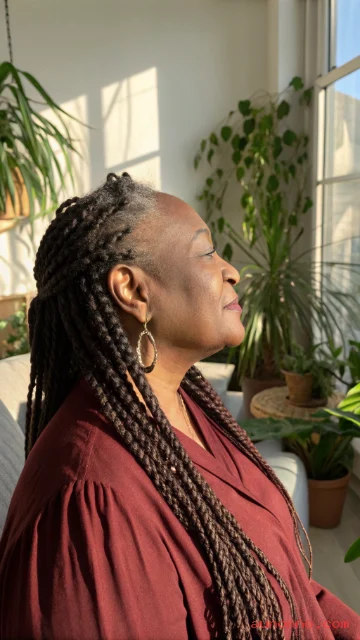
Looking for fresh hair inspiration? You will love these 25 braid styles for older Black women. They offer low-maintenance elegance and protect your natural texture from daily stress. Each style celebrates your grace and saves you time in your weekly routine.
Classic Cornrows
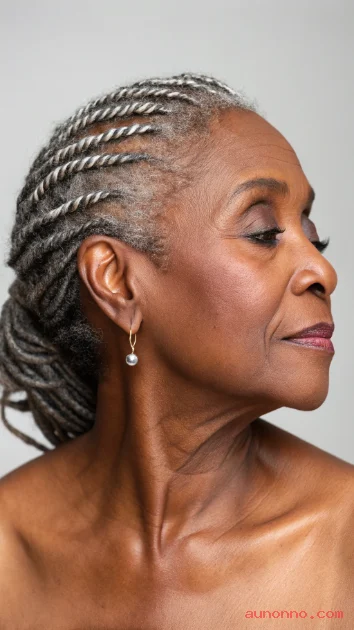
Cornrows lie flat against your scalp in neat, raised rows. This style suits older women because it requires zero daily manipulation. You can wear them straight back or create curved patterns for extra flair.
These braids last up to eight weeks with proper care. Simply wrap your hair at night with a satin scarf. In the morning, you just shake and go without any fuss.
Cornrows also reduce tension on your edges when installed correctly. Ask your stylist for a looser grip around your hairline. This prevents breakage and keeps your edges full and healthy.
Jumbo Box Braids
Jumbo box braids use larger sections of hair for a bold statement. They take less time to install than smaller braids. You will appreciate the lightweight feel on your scalp.
These braids work wonderfully for thinning hair. The larger size creates volume where you need it most. You can pull them into a ponytail or let them hang loose.
Maintenance stays simple with jumbo braids. Wash your scalp with a diluted shampoo in a spray bottle. Follow up with a lightweight leave-in conditioner to keep your braids fresh.
Lemonade Braids
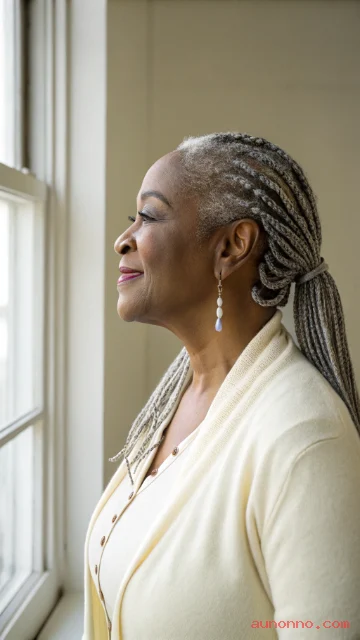
Lemonade braids feature a deep side part with braids swept to one side. This style gained fame from Beyoncé but works beautifully for any age. The diagonal angle creates a lifting effect for your face.
You can cornrow the long side or use individual braids. Many older women prefer the side-swept look because it softens facial features. The asymmetrical style draws attention to your best side.
These braids stay neat for weeks with edge control gel. Apply a tiny amount to your hairline each morning. Use a soft toothbrush to smooth down any flyaways without pulling.
Senegalese Twists
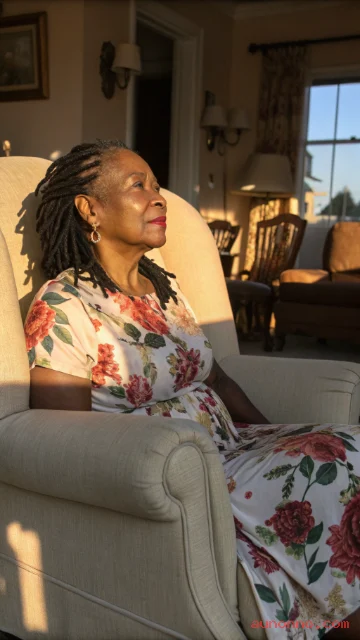
Senegalese twists use two strands of hair twisted together instead of three. This creates a rope-like texture that looks elegant and refined. The twists hang smoothly and swing with natural movement.
Older women love this style for its lightweight feel. The twists put less stress on your scalp than traditional braids. You can wear them at any length from chin to waist.
Keep your Senegalese twists fresh with mousse. Spray a light foam along each twist and scrunch gently. This reactivates the curl pattern and removes any dullness.
Knotless Braids
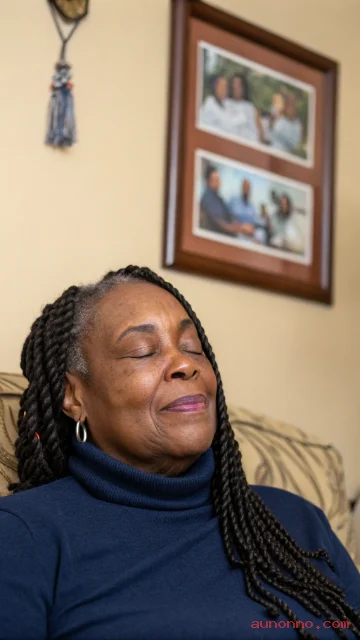
Knotless braids start with your natural hair before adding extensions. This eliminates the bulky knot at your scalp. The result feels flatter, lighter, and more comfortable for daily wear.
Your hairline will thank you for choosing knotless braids. The gradual addition of hair reduces tension by over fifty percent. You can wear these braids for months without traction damage.
Styling knotless braids gives you many options. Pull them into a high bun for formal events. Leave them down with a middle part for casual days.
Ghana Braids
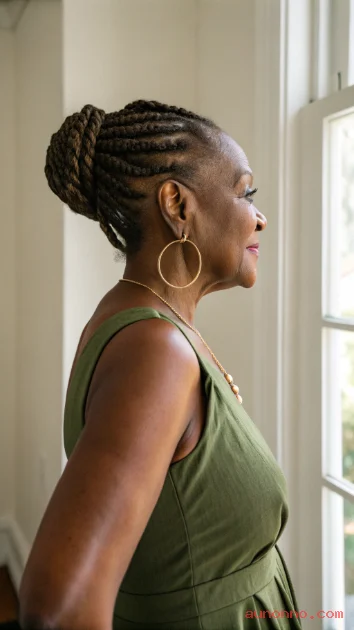
Ghana braids, also called feed-in braids, use a cornrow base with added hair gradually. The braids start thin at the scalp and grow thicker down the length. This creates a stunning tapered effect that looks very polished.
You can style Ghana braids in straight rows or geometric patterns. Many older women choose curved lines that follow their natural head shape. The design possibilities make this style truly unique.
These braids hold up well to humidity and sweat. Apply a light oil to your scalp twice per week. Focus on the parts to prevent dryness and itching.
Fulani Braids
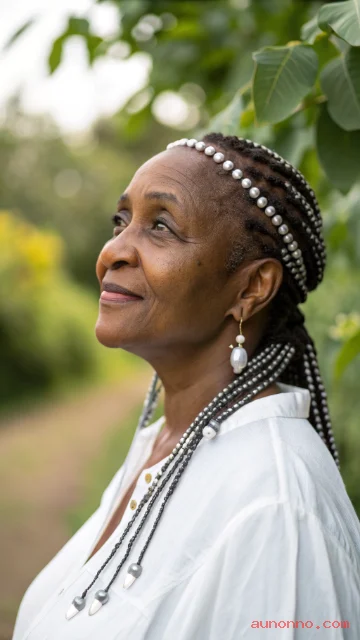
Fulani braids come from the Fula people of West Africa. The style features a central cornrow down the middle with side braids swept back. Small braids often hang loose near your temples or behind your ears.
Older women appreciate the cultural significance of this look. The side braids can include beads or cowrie shells for decoration. You control how many accessories you add for a subtle or bold finish.
These braids require very little daily work. Tie them down with a scarf each night. In the morning, shake them out and adjust your accessories.
Crochet Braids
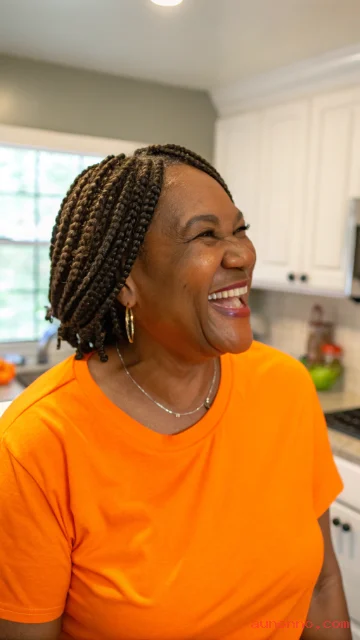
Crochet braids use a crochet hook to pull pre-braided hair through your cornrowed base. This method takes only two to three hours for a full head. You get the look of individual braids without the long installation time.
This style suits older women with arthritis or hand pain. You do not need to grip or pull small sections for hours. Your stylist can finish the whole look in one comfortable session.
Change your crochet braids easily whenever you want. The pre-braided hair comes in many colors and textures. You can switch from long to short in just a few weeks.
Passion Twists
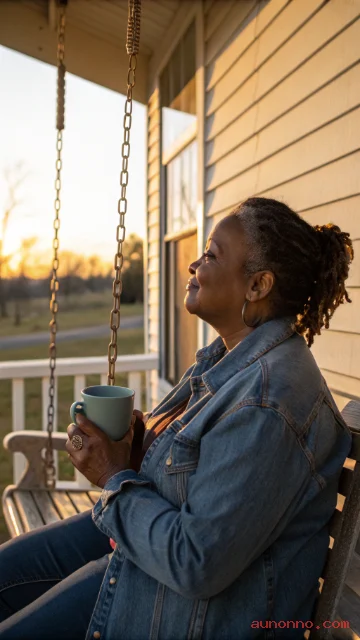
Passion twists use a wavy, bohemian texture that looks soft and romantic. The twists have a fluffy appearance unlike smooth Senegalese twists. This style gives you a relaxed, effortless vibe perfect for daily wear.
Older women choose passion twists for their forgiving nature. The wavy texture hides new growth very well. You can keep these twists for up to ten weeks without a refresh.
Caring for passion twists requires a light touch. Spray them with water and aloe vera juice every other day. Scrunch the mixture into each twist to maintain the wave pattern.
Tree Braids
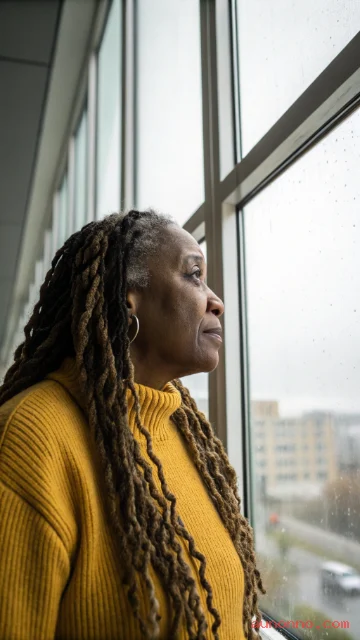
Tree braids combine cornrows with loose, flowing hair. The braided base sits close to your scalp like tree roots. Then the hair falls freely from each braid like branches.
This style gives you the security of braids with the look of loose hair. You can add curls, waves, or straight textures to the falling sections. Older women love this versatility for changing their look without commitment.
Maintenance stays low with tree braids. The loose ends do not tangle as badly as loose natural hair. Run your fingers through them each morning to separate any snags.
Marley Twists
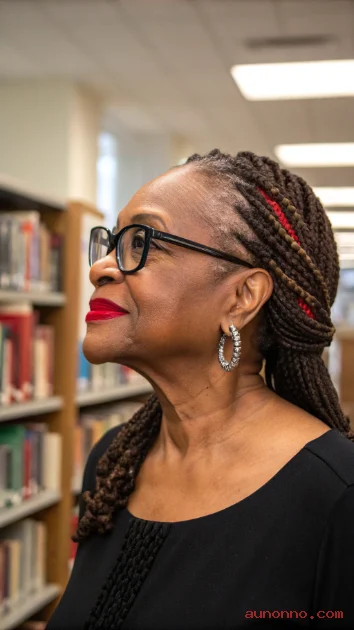
Marley twists use Marley braiding hair that mimics natural afro texture. The twists look thick, matte, and very organic. This style blends perfectly with your own unrelaxed hair.
Older women appreciate how Marley twists camouflage thinning spots. The fluffy texture fills in any areas with low density. You get a full, youthful head of hair without heavy extensions.
Keep Marley twists hydrated with a water-based spray. The synthetic fiber dries out faster than human hair. Mist them lightly each day to prevent frizz and breakage.
Flat Twists
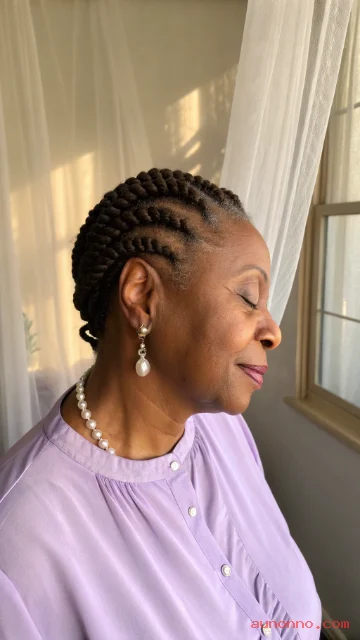
Flat twists look like two-strand cornrows on your scalp. You twist sections of hair flat against your head instead of braiding. This creates a soft, rope-like pattern that feels very gentle.
This style works perfectly for transitioning from relaxed to natural hair. The twisting motion does not require perfectly even sections. You can create flat twists on any hair length from two inches to twenty.
Wear flat twists for a week then take them down. The twist-out pattern gives you beautiful heatless waves. Two styles from one installation makes this very economical.
Havana Twists
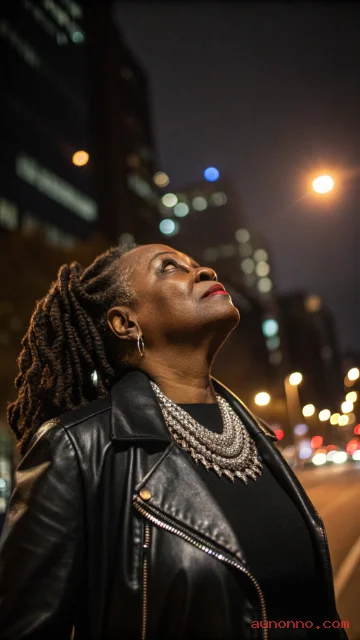
Havana twists use thick, chunky sections for a bold look. The twists are larger than Marley twists but similar in texture. You achieve a full installation in under four hours.
Older women love Havana twists for their dramatic impact. The thickness makes your hair look incredibly dense and healthy. You can wrap them into a low bun or let them hang straight.
These twists weigh less than you expect. The hollow center of the twist keeps the style lightweight. Your neck will not feel tired after wearing them all day.
Invisible Cornrows
Invisible cornrows use your natural hair color for the base. The braids start very small at your hairline and grow wider. This creates a natural fade effect that looks like your real hair.
This style fools everyone into thinking you have loose hair. Only close inspection reveals the cornrow pattern underneath. Older women choose this for job interviews or formal events.
Maintain invisible cornrows with dry shampoo. Spray it directly on your scalp between wash days. This absorbs oil and keeps the braids looking fresh for two weeks.
Goddess Braids
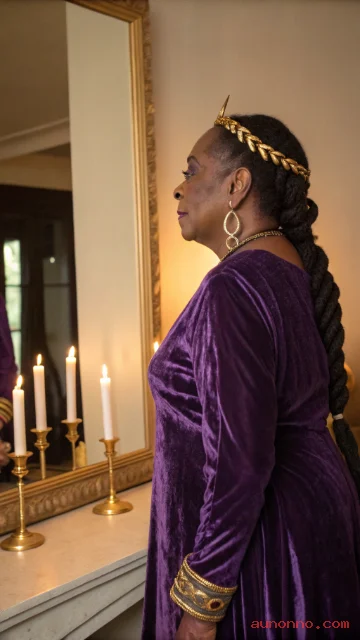
Goddess braids are extra-large cornrows raised high above your scalp. The size ranges from half an inch to two inches wide. These braids make a powerful statement without many individual pieces.
You only need four to eight goddess braids for a full look. This makes installation incredibly fast for older women. The large size also means less tension on your scalp overall.
Decorate goddess braids with cuffs or rings. Slide metal accessories onto the ends for a glamorous touch. Remove them at night to prevent snagging on your pillowcase.
Micro Braids
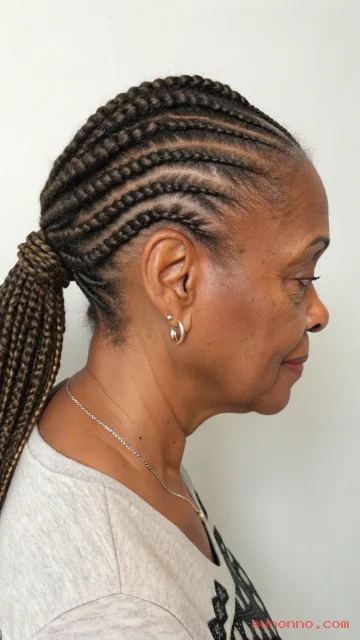
Micro braids use very small sections for an ultra-detailed look. Each braid measures about the width of a grain of rice. The finished style looks like a fine, woven fabric on your head.
Older women choose micro braids for their versatility. You can style them into any updo, ponytail, or bun. The small size allows for intricate parting designs that larger braids cannot achieve.
The main drawback is installation time of eight to twelve hours. But the payoff lasts four months with good care. You save hours each week not touching your natural hair.
Stitch Braids
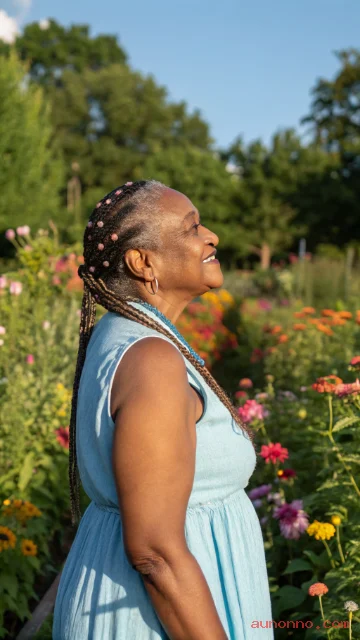
Stitch braids get their name from the sewing pattern appearance. Each braid has small, square indents along its length. The effect looks like tiny stitches holding the braid together.
This style works best on straight-back cornrows. The stitch pattern adds visual interest to an otherwise simple look. Older women appreciate the modern feel without high maintenance.
Stitch braids stay neat longer than regular cornrows. The square pattern locks each section into place firmly. You can go up to ten weeks between touch-ups.
Butterfly Braids
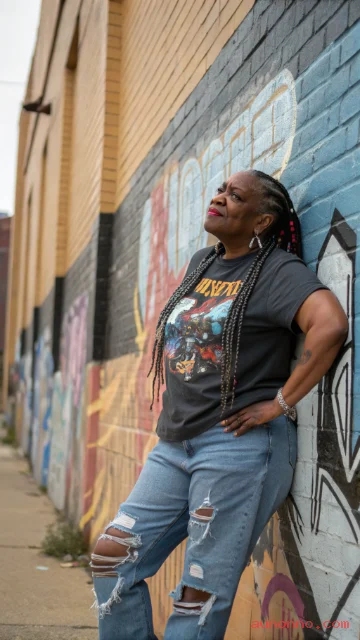
Butterfly braids use a special looping technique that creates loops along each braid. These loops look like tiny butterfly wings resting on your hair. The style has a soft, romantic, and airy appearance.
Older women love butterfly braids for their uniqueness. Nobody else in your book club will have the same look. The loops also hide new growth better than smooth braids.
Care for butterfly braids requires gentle handling. The loops can snag on rough fabrics or pillowcases. Sleep on a satin pillowcase to keep every loop intact.
Rope Twists
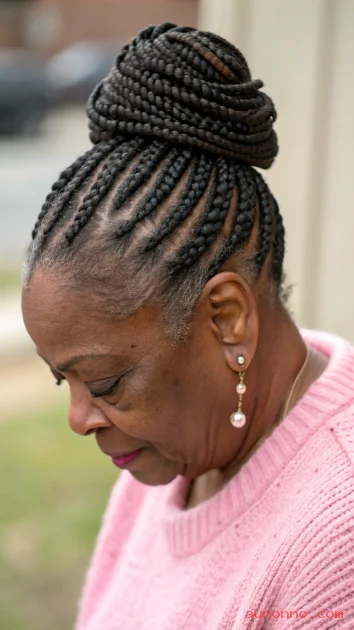
Rope twists use a two-strand method with more tension than Senegalese twists. The result looks tighter, shinier, and more defined. These twists hold their shape for weeks without unraveling.
Older women choose rope twists for humid climates. The tight construction resists frizz and swelling from moisture. You can exercise or swim without ruining your style.
Apply a lightweight gel to your rope twists each week. Smooth the gel down each twist from root to tip. This maintains the shine and prevents flyaways from forming.
Feed-In Ponytail Braids
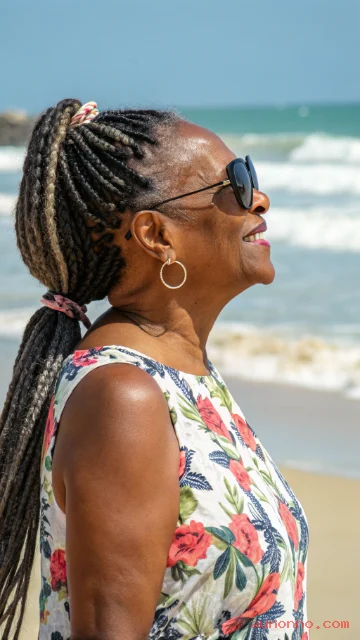
Feed-in ponytail braids gather all your braids into one high ponytail. The base uses feed-in cornrows that lead up to the ponytail. This style lifts your face and shows off your jawline.
Older women love this style for summer weather. The ponytail keeps hair off your neck and shoulders completely. You stay cool even on the hottest days.
The ponytail can use your natural hair or added extensions. Wrap a small piece of hair around the base to hide the band. This gives a polished finish that looks salon-fresh for weeks.
Bohemian Braids
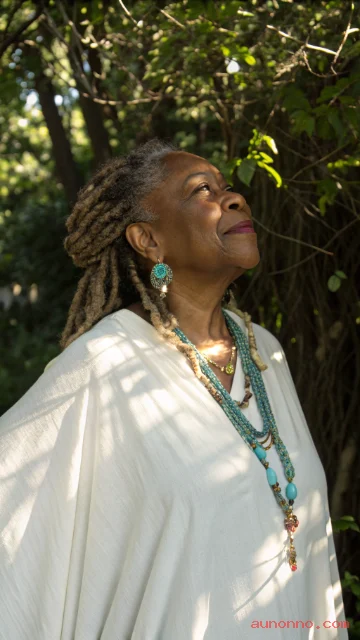
Bohemian braids mix traditional braids with loose, wavy pieces. Your stylist leaves out small sections of hair along each braid. These loose pieces curl and wave like a bohemian spirit.
This style softens the look of structured braids. Older women appreciate the romantic, carefree appearance. The loose pieces also hide any thinning around your hairline.
Bohemian braids need extra conditioning. The loose ends can dry out faster than the braided parts. Apply a curl cream to the loose sections every two days.
Triangular Part Braids
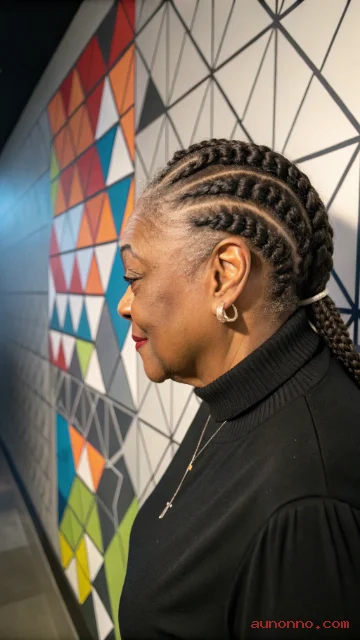
Triangular part braids use diamond or triangle shapes for the parts. Instead of straight lines, your scalp shows geometric patterns. Each braid starts inside its own triangle for a modern look.
Older women choose this style to express creativity. The geometric parts look like beautiful tile work on your head. You can make the triangles large or small depending on your preference.
These braids require a skilled stylist for perfect parts. Bring a photo of the exact pattern you want. The installation takes longer but the compliments last for months.
Yarn Braids
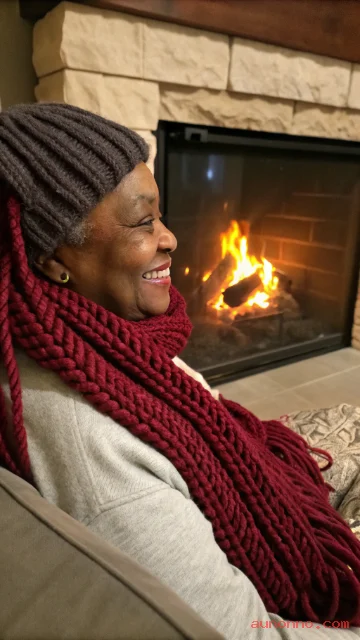
Yarn braids use soft acrylic yarn instead of synthetic hair. The yarn comes in every color imaginable for fun looks. This style feels very light and costs much less than regular extensions.
Older women love yarn braids for their warmth in winter. The yarn insulation keeps your scalp cozy on cold days. You can also wash them more frequently than synthetic braids.
The texture of yarn braids stays soft forever. It never gets crunchy or stiff like some synthetic fibers. Your braids will feel like a soft sweater against your shoulders.
Dutch Braids
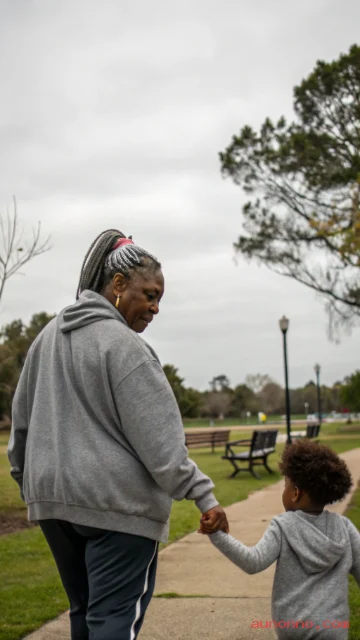
Dutch braids look like inverted cornrows that sit above your scalp. You cross the sections under instead of over during braiding. This makes the braid pop up instead of lying flat.
Older women choose Dutch braids for their dramatic height. The raised appearance gives your hair extra volume instantly. You can create one Dutch braid down the middle or two on each side.
These braids hold up well between wash days. The raised construction allows air to reach your scalp easily. You will notice less itching and flaking than with flat cornrows.
Ladder Braids
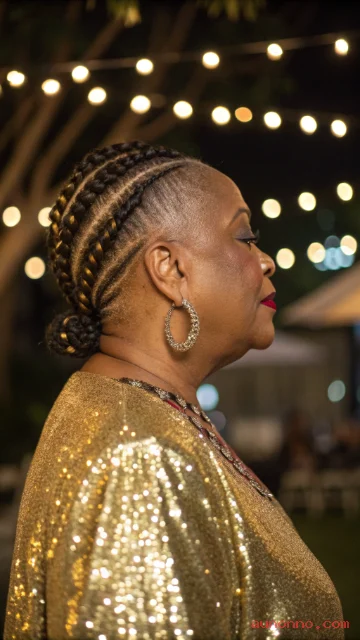
Ladder braids feature a series of connected braids that look like rungs. Each braid runs horizontally across your head instead of vertically. The overall effect resembles a ladder resting on your scalp.
This rare style turns heads wherever you go. Older women wear ladder braids for special occasions and parties. The intricate pattern shows off your personality and confidence.
Ladder braids last about two weeks before needing redoing. The horizontal tension can loosen faster than vertical styles. But those two weeks will be the most stylish of your month.
FAQ
1. Are braids safe for older women with thinning hair?
Yes, braids are safe when installed correctly with low tension. Choose knotless or jumbo styles that put less stress on each hair strand. Always tell your stylist about any tender areas before they start braiding.
2. How long can I keep braids in my hair?
Most braid styles last four to eight weeks with proper care. Check your new growth and scalp condition every two weeks. Remove braids immediately if you see redness, bumps, or excess shedding.
3. What products work best for braids on mature hair?
Use lightweight sprays, mousses, and oils instead of heavy creams. Witch hazel spray cleans your scalp without residue. Argan oil seals moisture into your braids without weighing them down.
4. Will braids damage my edges if I have fragile hair?
They will not damage edges if you insist on a loose grip. Ask your stylist to braid the front sections gently without pulling. Take down any style that causes pain or headaches within 24 hours.
5. How often should I wash braided hair?
Wash your braids every two to three weeks using diluted shampoo. Squeeze the soapy water through your braids without rubbing. Rinse thoroughly and dry completely to prevent mildew or itching.
6. Can I exercise or swim with braids?
Yes, both activities are fine with proper prep. Wet your braids with plain water before entering a pool. Chlorine and salt water dry out synthetic hair, so rinse immediately after swimming.
7. What is the best braid style for sleeping comfort?
Jumbo box braids or Havana twists feel most comfortable on a pillow. Wrap your hair in a satin bonnet and sleep on a satin pillowcase. This double protection prevents friction while you toss and turn.
8. How much do professional braids cost for older women?
Prices range from $80 for basic cornrows to $400 for micro braids. Expect to pay more for longer hair or complex patterns. Always ask for a consultation and price quote before booking your appointment.
9. Can I braid my own hair if I have arthritis?
Crochet braids are easiest for DIY with hand pain. Use a large ergonomic crochet hook with a rubber grip. Take frequent breaks and stop immediately if your hands hurt.
10. What braid style looks most natural for gray hair?
Invisible cornrows and Marley twists blend perfectly with silver strands. Ask for dark gray or salt-and-pepper extensions to match your color. Avoid stark black extensions that create a harsh contrast with your natural gray.
Conclusion
These 25 braid styles for older Black women prove that age brings more beauty and wisdom to your hair choices. You deserve protective styles that save time, reduce damage, and celebrate your unique grace.
Pick two or three styles from this list and show them to your trusted stylist today.