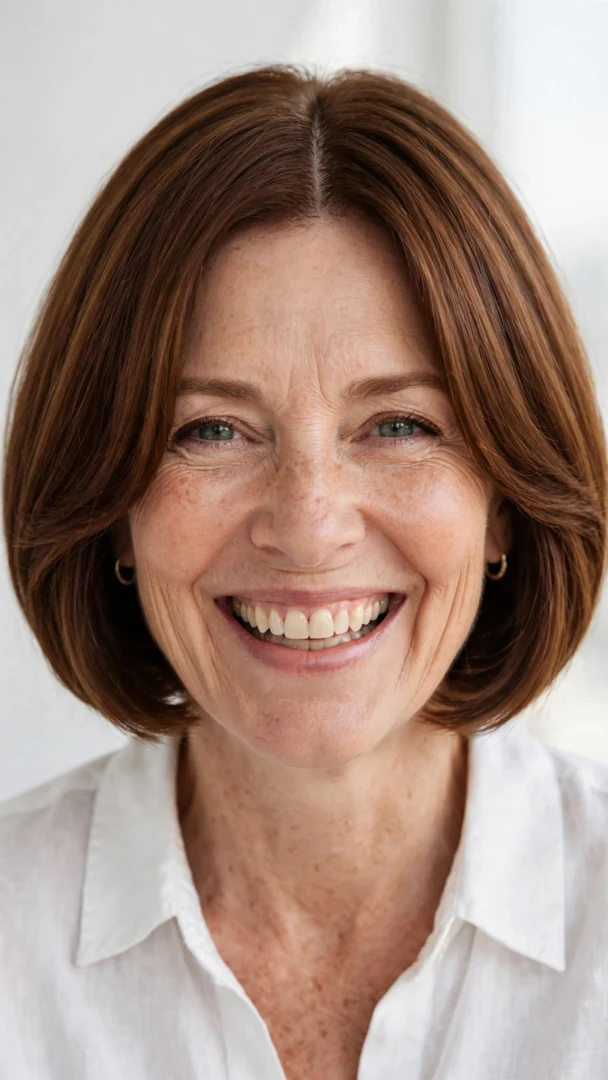
Women over fifty are finally getting a haircut that feels as bold and current as they are. The curtain crop, autumn 2026’s defining cut, pairs a chin-length or shorter bob with a long, open fringe that frames the face like parted curtains.
Youthful without trying too hard, it suits every face shape and texture, and it asks for surprisingly little effort each morning. Here are twenty-seven gorgeous ways to wear it, from silver-gray elegance to softly permed ease.
The Classic Curtain Crop
The classic curtain crop is the purest version of the trend: a chin-skimming micro-bob with a center part and a long, open fringe that falls along each cheekbone. The back stays neat and tidy while the front pieces stay longer, creating that signature face-framing drape.
This cut flatters oval, heart-shaped, and round faces equally, since the open fringe draws the eye diagonally and softens a strong jawline. It works best on medium-density straight or lightly wavy hair that falls naturally into place.
Rough-dry with a paddle brush until nearly dry, then sweep the fringe sections forward and outward with a medium round brush to encourage the open-curtain shape. A dab of lightweight smoothing cream on the ends keeps them sleek, and a fringe trim every four to five weeks keeps the length in check.
Silver-Gray Curtain Crop
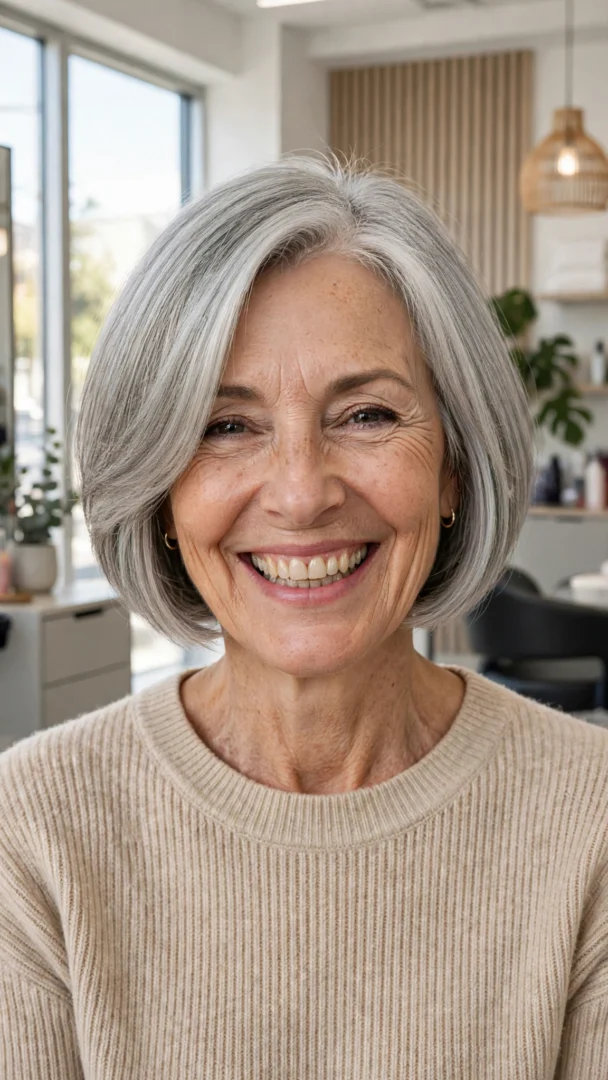
The silver-gray curtain crop celebrates natural color instead of hiding it, letting the full spectrum of gray, from platinum silver to soft slate, become the star of the cut. The chin-length shape gives gray hair a structured frame, while the open fringe keeps the look airy and youthful.
Gray hair often runs coarse or wiry, and the crop’s blunt perimeter tames that texture while the fringe adds softness around the eyes. Cool and neutral undertones glow next to silver, and confident women who have embraced their gray find this cut affirms the choice.
Use a purple-toning shampoo once a week to fight yellowing from heat and sun, and keep the ends hydrated with a weekly hair mask. A cool-toned glossing treatment every few months keeps the silver reflective and bright.
Tousled Curtain Crop
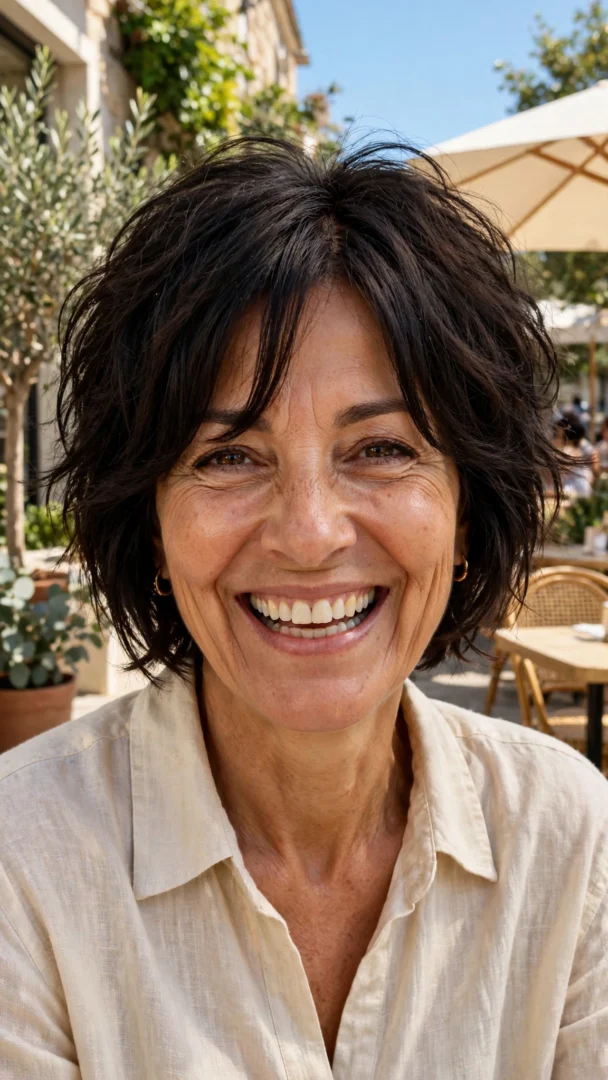
The tousled curtain crop trades precision for personality: the same chin-length base and open fringe, but finished with lived-in texture, piecey ends, and a deliberately undone feel. The result reads effortlessly chic, never overworked.
The broken-up texture softens square and heart-shaped faces by blurring angular lines. Naturally wavy hair wears it best, since the cut follows the hair’s own movement and forgives frizz on humid days.
Scrunch a pea-sized amount of texturizing cream into damp hair and let it air-dry, then shake the roots with your fingertips. A salt spray adds gritty separation on second-day hair, and point-cut ends keep the perimeter broken up naturally.
Curtain Crop with a Deep Side Part
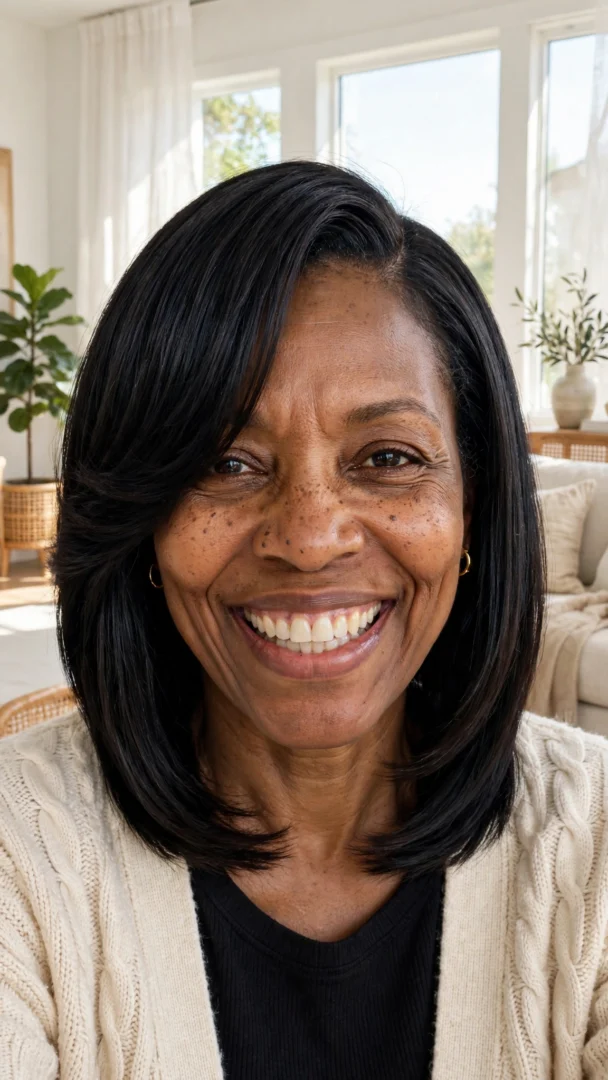
A deep side part gives the curtain crop a dramatic, asymmetric twist: the open fringe sweeps generously to one side while the shorter side sits close and clean. This variation adds instant volume at the crown and an editorial feel that photographs beautifully.
The diagonal line lengthens and slims round and square faces, and shifting the part disguises thinning at the part line. Medium to thick hair holds the volume best.
Set the part while hair is damp with a fine-tooth comb and a root-lifting mousse, then blow-dry the longer side over a round brush for that sweeping bend. A light-hold hairspray locks the sweep without stiffness.
The Sleek Polished Curtain Crop
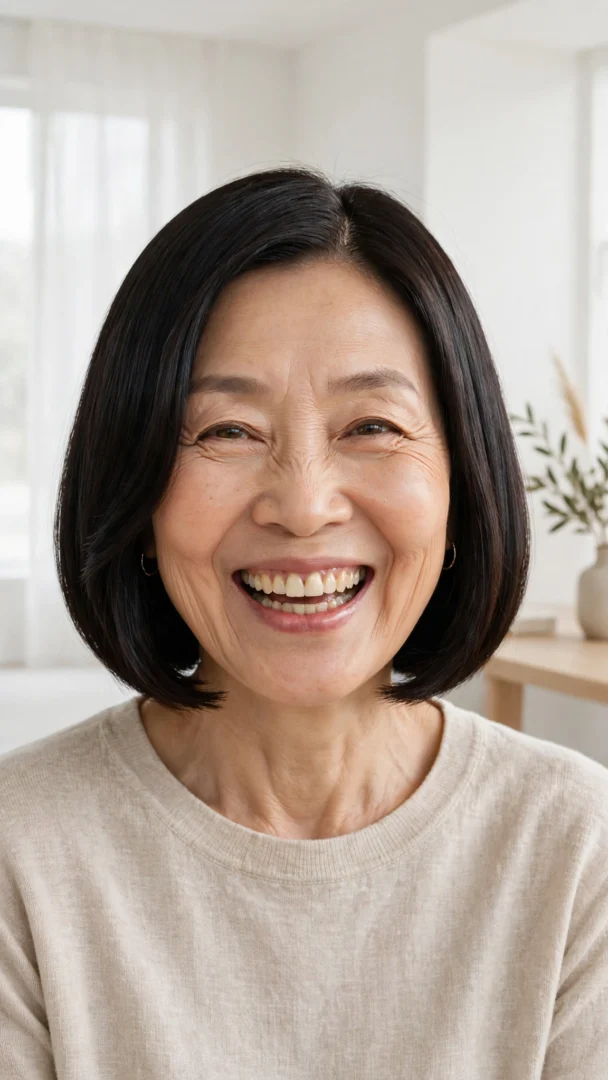
The sleek polished curtain crop is the trend at its most refined: glassy straightened strands, a clean center part, and a fringe that falls in smooth, symmetrical sheets. Every strand looks intentional, giving off quiet luxury energy.
Oval and long faces wear this best, since the smooth, close silhouette flatters balanced proportions without adding width. Fine to medium straight hair lies into this look with the least fuss, and it projects polish for the workplace.
Flat-iron in small sections on medium heat with a heat protectant, then finish with a single drop of shine serum smoothed over the surface. A silk pillowcase keeps the sleekness overnight, and a straightening brush restores polish in minutes each morning.
Curtain Crop with Subtle Layers
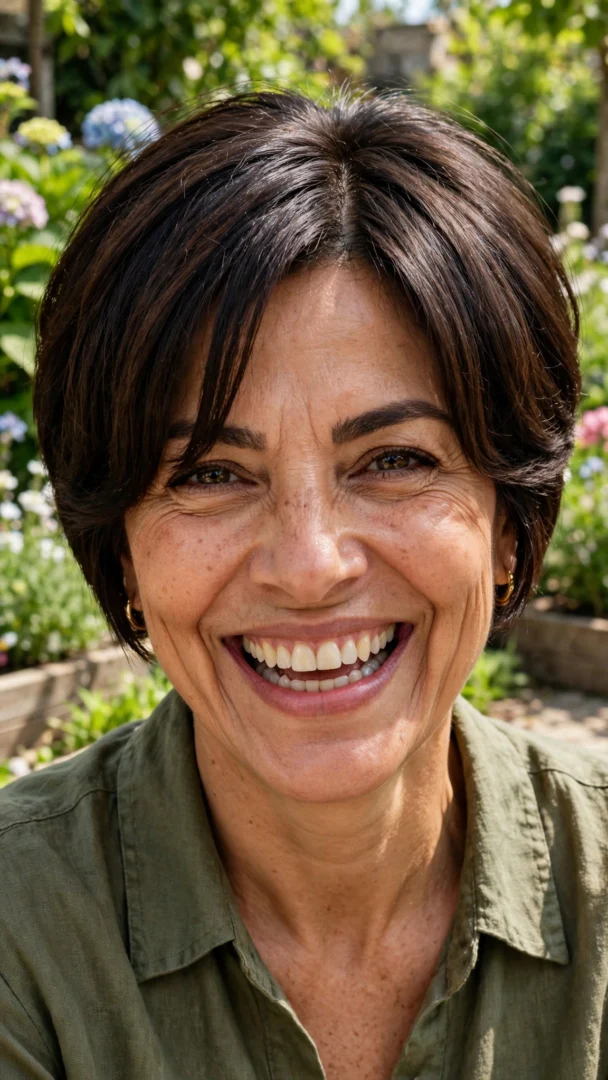
Subtle layers are the curtain crop’s secret weapon: long, barely-there layers through the mid-lengths and ends that keep the silhouette intact while removing bulk and adding swing. The fringe still opens perfectly, but the rest of the cut breathes.
Thick or dense hair that would pyramid outward at chin length benefits most, and square faces gain softness at the corners. Layered ends also lift fine hair that falls flat in a blunt cut.
Style with a round brush, lifting each section at the root and turning the ends slightly inward for a swinging finish. A light volumizing mousse at the roots prevents afternoon collapse, and trims every six weeks keep short layers sharp.
Curtain Crop with Volume on Top
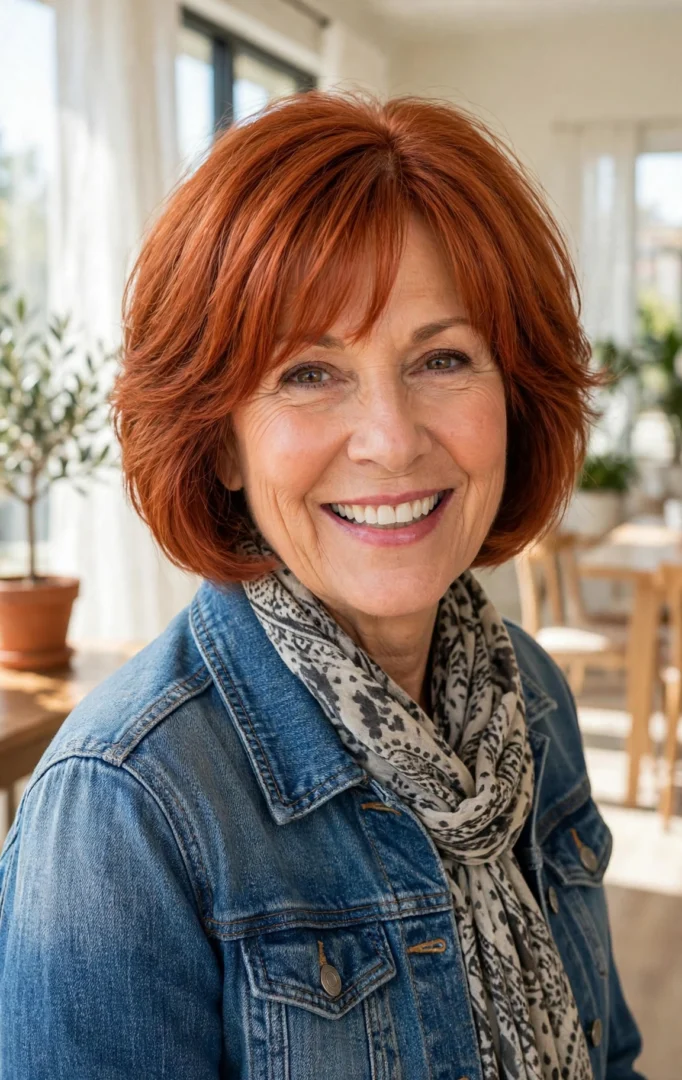
Crown volume gives the curtain crop lift and presence: the top is cut and styled to stand proud while the fringe opens beneath it, creating a tall, elegant silhouette. Confident, lifted, and full of life, this is the version that turns heads.
Fine or thinning hair on top benefits enormously, since the styling creates density exactly where it matters. The added height elongates round faces and flatters smaller foreheads.
Blow-dry upside down for the first minute, then finish with a round brush lifting straight up at the crown. Backcomb lightly at the roots before smoothing the top layer over, and set with a flexible-hold spray.
The Curly Curtain Crop
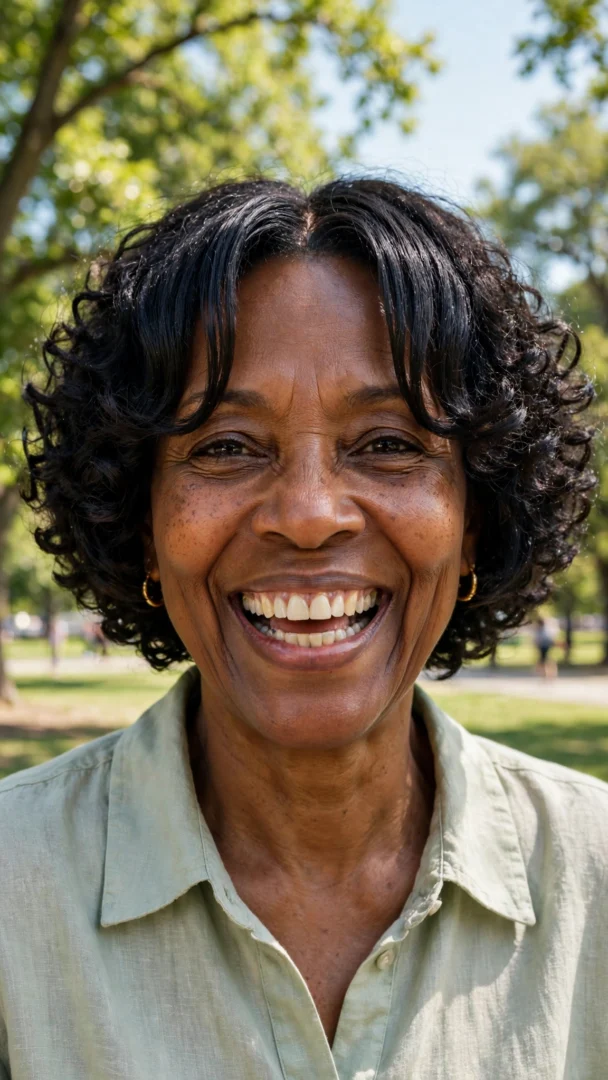
The curly curtain crop proves the trend belongs to every texture: springy curls shaped into a chin-length silhouette with a longer, open fringe that parts over the face. The curls do the framing naturally, and the shorter length keeps coils bouncy instead of weighed down.
This cut suits curl patterns from loose ringlets to tighter coils, and the volume on top balances round and heart-shaped faces. Shorter hair also makes managing changing curl patterns far easier.
Have curls cut dry and individually for the truest shape, then scrunch curl-defining cream into soaking-wet hair. Diffuse on low heat or air-dry to avoid frizz, and refresh second-day curls with a light mist of water and leave-in.
The Wavy Curtain Crop

The wavy curtain crop sits perfectly between straight and curly: soft, beachy bends through a chin-length cut, with the open fringe melting into the waves. Romantic and sun-kissed, it is the curtain crop at its most effortlessly pretty.
Natural wavers get the easiest version of all, since the hair does the work itself. The diagonal movement flatters oval, square, and heart faces, and medium-density hair with a little natural body holds the bends best.
Wrap random sections around a medium-barrel curling wand, alternating directions, then brush through gently for soft cohesion. A sea-salt spray encourages natural bends, and re-curling just the face-framing pieces refreshes day-two hair.
Curtain Crop with Feathered Ends
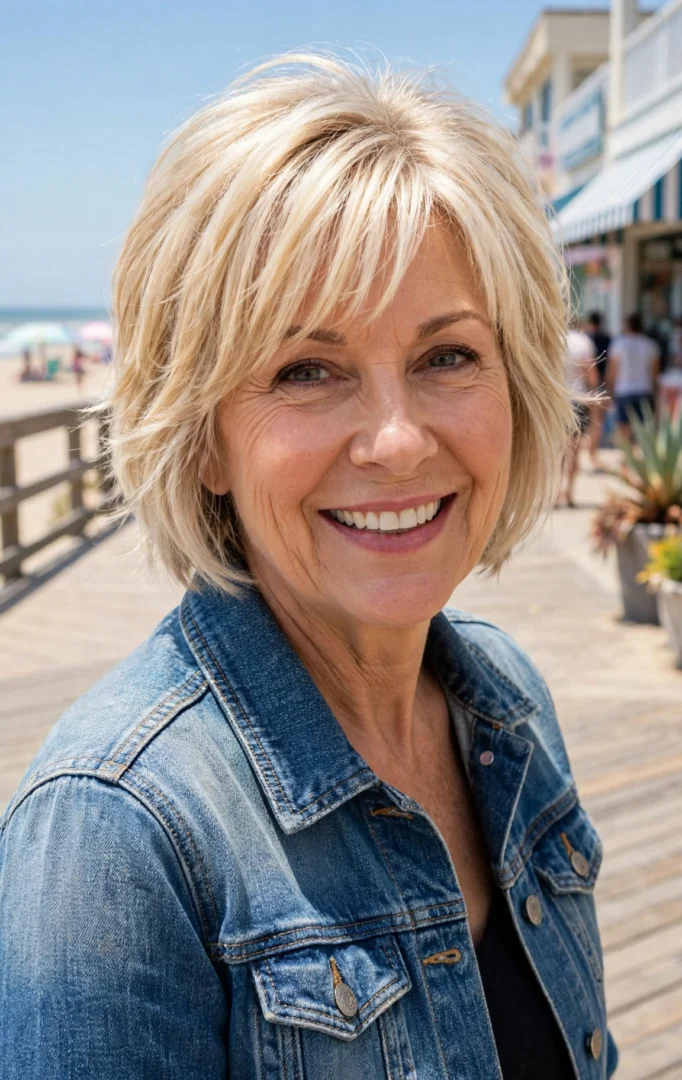
Feathered ends give the curtain crop a light, airy finish: the last inch of hair is texturized into fine, wispy points that move with every turn of the head. The silhouette stays short and chic, but the edges feel soft instead of blunt.
Fine to medium hair gains ends that move rather than sit, and the wispy finish disguises thinning tips. Square and long faces benefit from the horizontal softness, and anyone who finds blunt cuts harsh will prefer this.
Blow-dry with a vent brush, flicking the ends outward for that feathered flip, then pinch the tips with a tiny amount of pomade. Avoid heavy conditioners near the ends, which weigh feathering down.
Ash-Blonde Curtain Crop
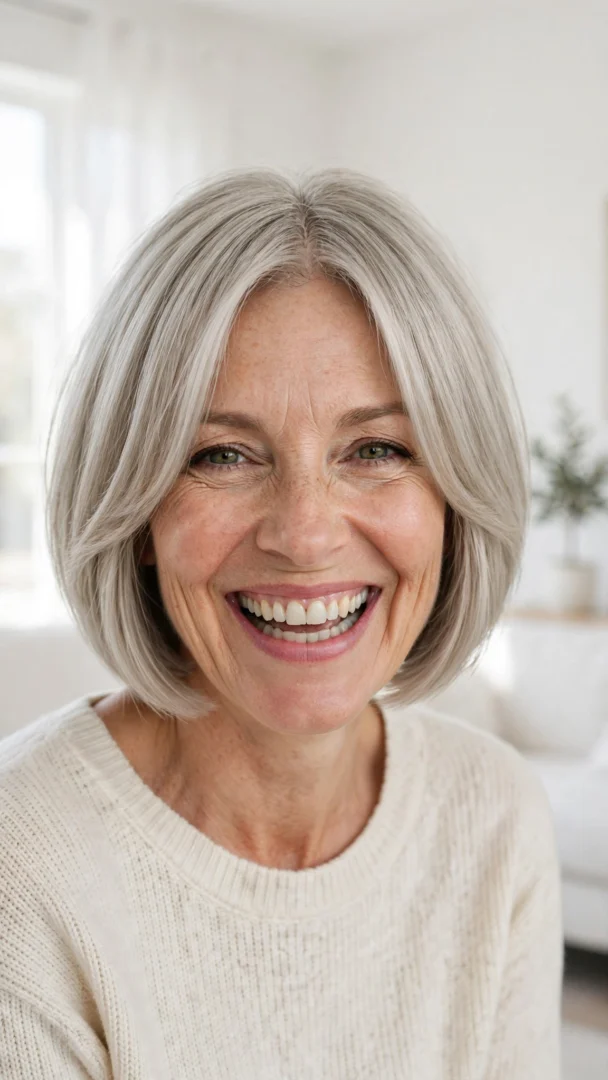
The ash-blonde curtain crop pairs the season’s coolest cut with its coolest color: a smoky, mushroom-toned blonde sitting between beige and gray. The matte, sophisticated shade looks editorial, and it grows out gracefully as cool tones blend with emerging gray.

Ash blonde flatters fair to medium skin with cool or neutral undertones, and the muted color is kinder to mature skin than icy platinum. Straight and wavy textures show off the multidimensional tone best.
Protect the color with a sulfate-free, color-safe shampoo and a weekly purple mask to neutralize brassiness. Keep irons at moderate temperatures with a thermal protectant, since heat accelerates fading.
Salt-and-Pepper Curtain Crop

The salt-and-pepper curtain crop turns the natural mix of dark and gray strands into high-contrast art: a striking marbled blend that the crisp crop frames like jewelry. The shorter length concentrates the color variation, and the open fringe shows it off front and center.
Uneven or dramatic gray becomes a feature instead of a flaw, and the high-contrast color suits warm and cool undertones alike. Women tired of the colorist’s chair find liberation in letting their real hair take the spotlight.
Use a clarifying shampoo monthly to prevent dull buildup from muting the dark strands, and a silver-depositing conditioner to keep the light strands bright. A shine spray unifies the two tones into one glossy finish.
Curtain Crop with Wispy Ends
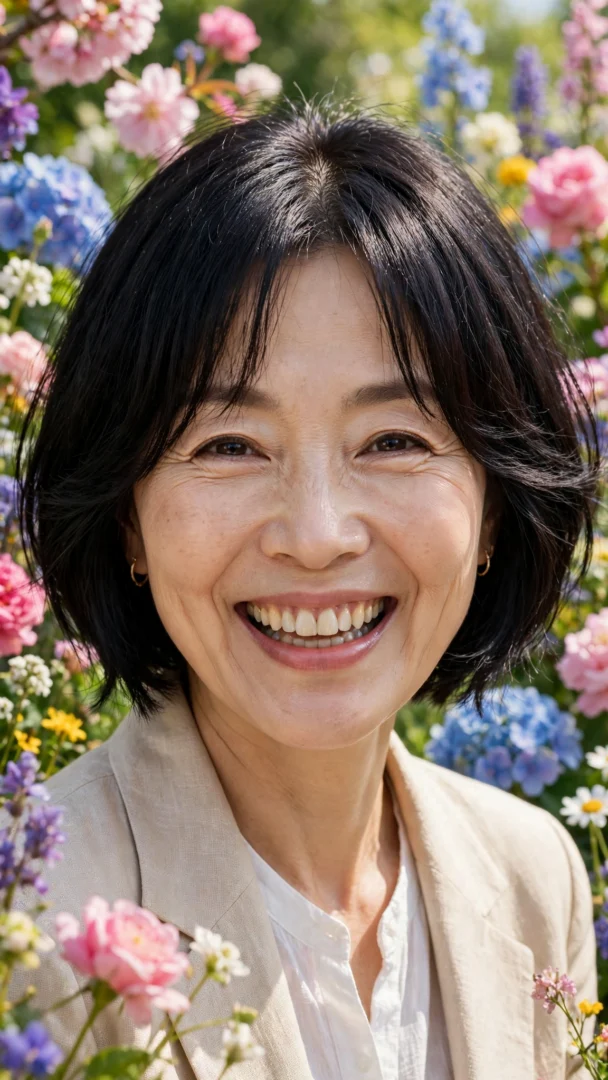
Wispy ends give the curtain crop an ethereal, feather-light quality: the perimeter dissolves into fine, delicate points rather than a hard line, so the cut seems to float around the face. Soft and romantic, this is the gentle cousin of the blunt crop.
Fine hair whose ends thin out naturally gets a cut that works with that reality. Heart-shaped and oval faces gain delicate framing, and women with delicate features avoid being overwhelmed.
Have ends razor-cut or point-cut rather than simply left thin, which keeps the wispiness intentional instead of scraggly. A light texturizing spray adds airy separation, and light conditioning keeps tips feathery rather than stringy.
The Chin-Length Curtain Crop
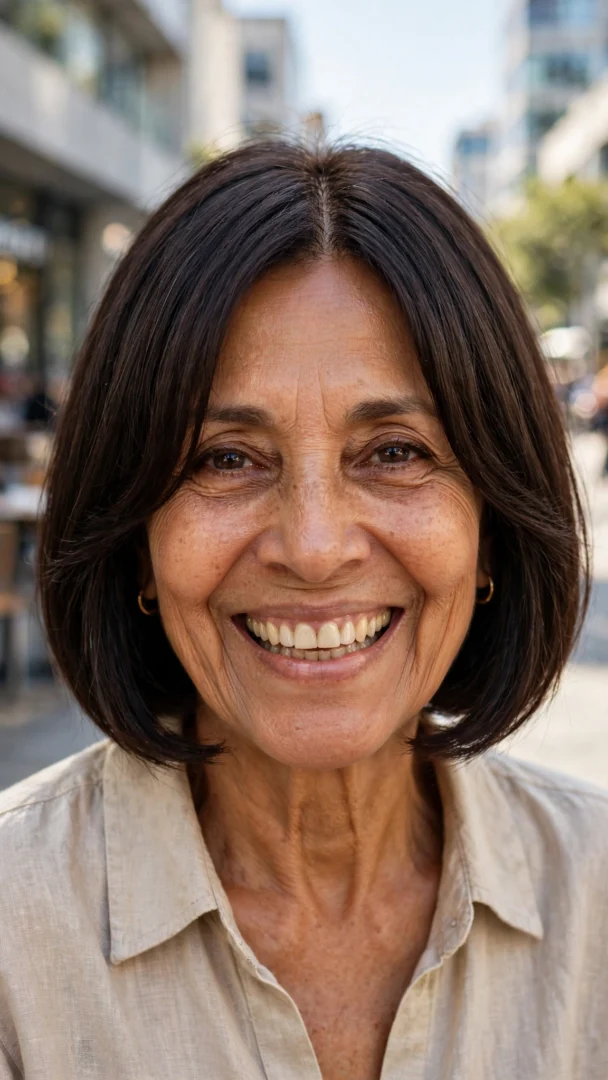
The chin-length version keeps the crop at its longest comfortable length: grazing right at the jawline, tuckable behind the ears, with the curtain fringe opening just below the cheekbones. It delivers the full curtain effect while retaining real versatility.
Chin length is universally flattering and especially kind to round and full faces, since the jaw-grazing line defines without shortening the neck. It suits thick hair that needs length to sit properly, and it still allows a low ponytail on active days.
Blow-dry the front sections forward and flip them outward for the curtain opening, or tuck one side behind the ear for asymmetry. A flat-iron touch-up on the ends keeps the jawline crisp, and trims every four to five weeks hold the shape.
Curtain Crop with a Tapered Nape
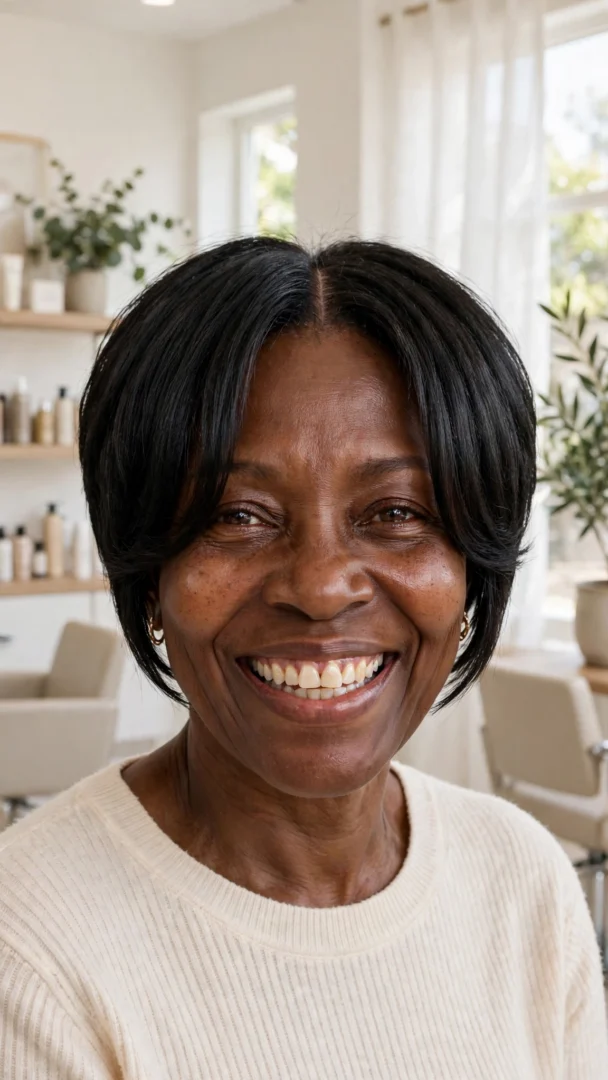
The tapered nape gives the curtain crop a beautifully sculpted back: hair graduates shorter at the neckline while the front stays longer and open, creating elegant contrast. Sleek and neat from behind, all curtain-fringe glamour from the front.
Thick hair benefits since the taper removes weight exactly where bulk builds up, and long necks gain a clean line at the nape. Oval and heart faces pair well with the graduated silhouette.
Keep the taper crisp with cleanups every three to four weeks, since nape hair grows fastest and blurs the graduation first. Style the back smooth with a paddle brush and the front with a round brush for contrast.
Curtain Crop for Fine Hair
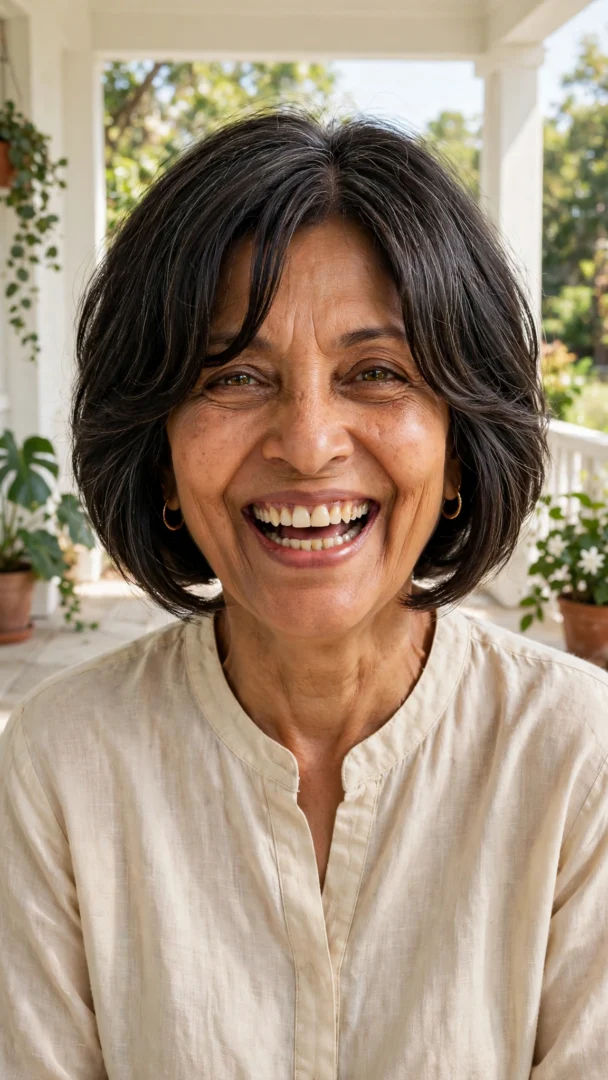
The fine-hair curtain crop is engineered for density illusion: a slightly stacked back, a blunt-ish perimeter, and an open fringe cut to sit fuller than it is. Strategic texturizing adds grip without removing the weight fine hair needs.
Women whose hair has thinned with age, or was always fine, get a cut where every technique builds the appearance of fullness. It suits oval, heart, and long faces, and straight to lightly wavy hair coaxes into volume best.
Apply volumizing mousse to damp roots and blow-dry with your head flipped for the first minute. Dry shampoo at the roots adds grip and absorbs the oil that flattens fine hair by afternoon.
Curtain Crop for Thick Hair
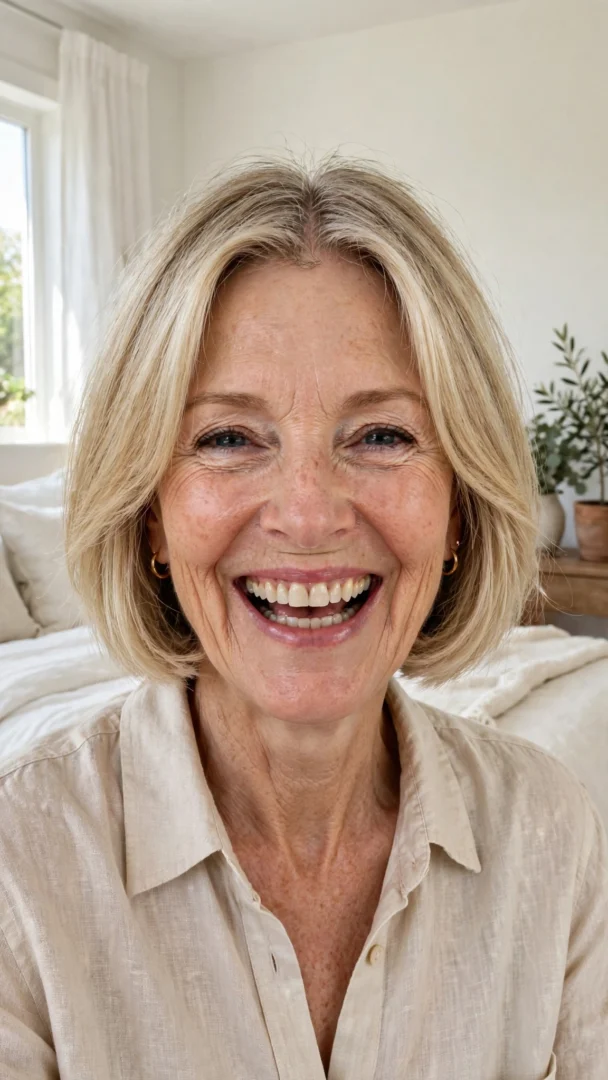
The thick-hair curtain crop tames abundance: interior layering and weight removal carve the chin-length silhouette into shape, while the open fringe stays lush and full. Instead of a helmet, you get movement, swing, and airiness.
Dense, coarse, or heavy hair finally moves in a short cut, and the removed interior weight keeps width from building at the cheeks on round and square faces. The architecture is built for hair that has always swallowed short cuts whole.
Ask your stylist to thin and layer underneath rather than at the surface, preserving the smooth outer shell. Style with a round brush to control the fullness, and use a smoothing cream on damp hair for coarser strands.
Curtain Crop with Warm Highlights
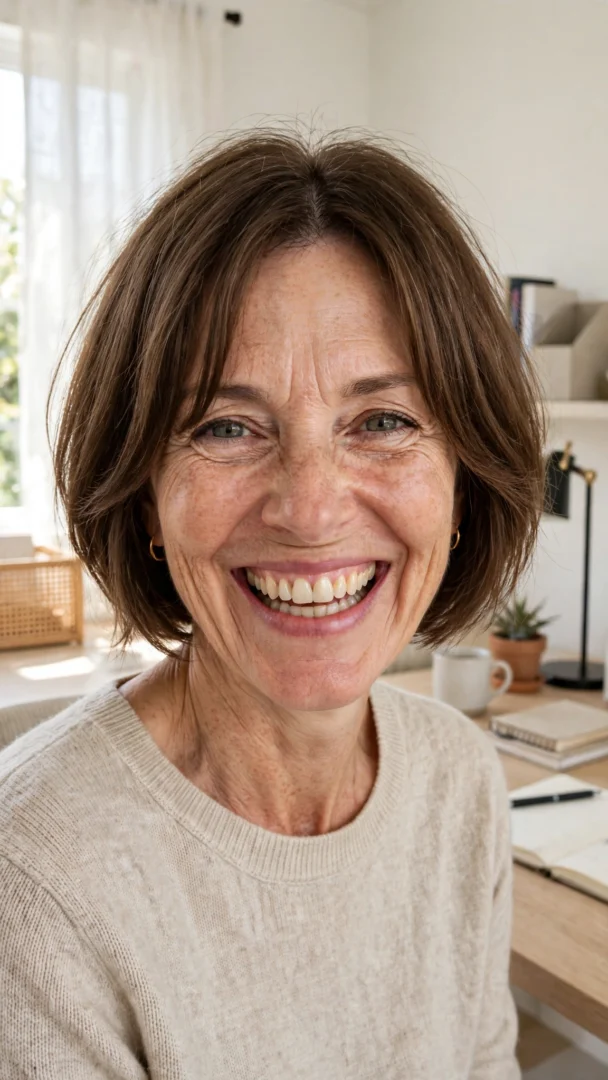
Warm highlights bathe the curtain crop in golden light: caramel, honey, and copper ribbons woven through the cut and concentrated around the face-framing fringe. The warm tones catch the light with every movement, adding dimension and a sun-kissed glow.
Warm and golden skin undertones pick up radiance from the color, and it brings life to tired-looking complexions. Medium to thick hair shows off the dimension well, and it is especially pretty over a natural brunette base.
Warm tones are high-maintenance color, so use color-safe shampoo, limit hot water, and book gloss refreshes every six to eight weeks before brassiness creeps in. A weekly deep-conditioning mask keeps lightened strands supple.
The Wash-and-Go Curtain Crop
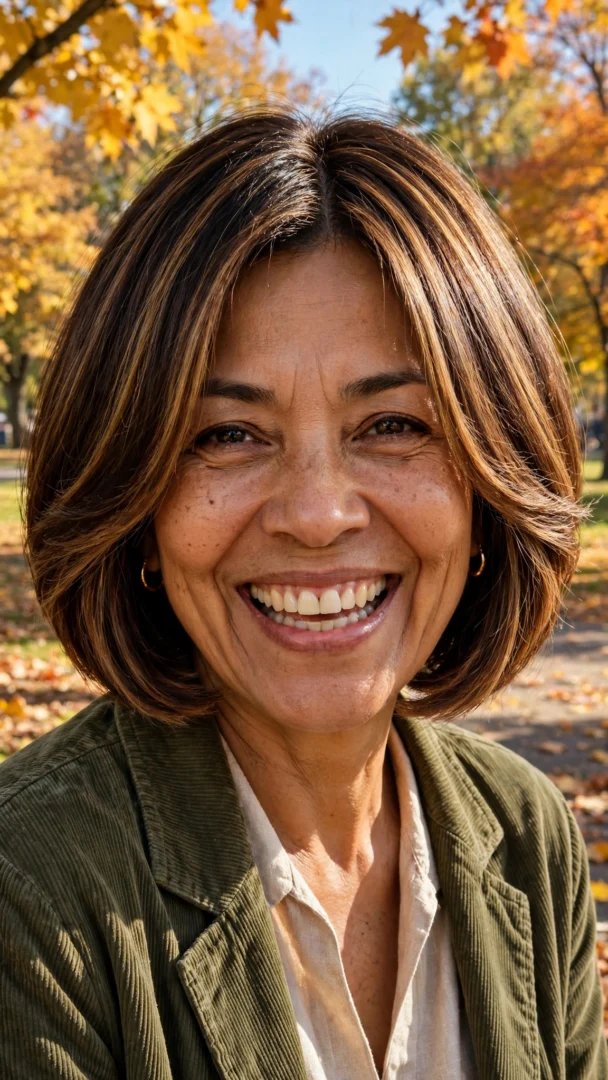
The wash-and-go curtain crop is the trend for women who refuse to fuss: a cut shaped so precisely that damp hair, a little product, and air-drying produce a finished look. The fringe opens naturally and the perimeter sits cleanly, so fingers replace brushes.
Straight and wavy hair with predictable drying patterns wears it best, and it is a lifesaver for active women, frequent travelers, and anyone with arthritis or shoulder issues that make blow-drying painful. All face shapes suit it, since the cut carries the architecture.
The secret is the product cocktail: leave-in conditioner plus a small amount of smoothing cream, scrunched into towel-dried hair. Comb the fringe into place while damp and leave it untouched until fully dry.
Curtain Crop with Bold Bangs
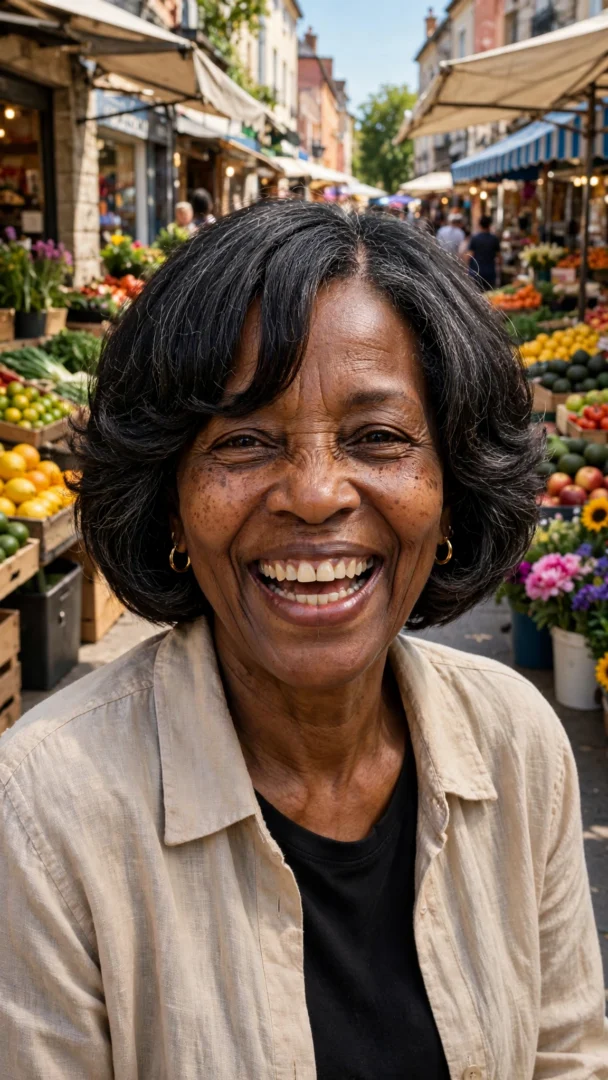
Bold bangs push the curtain crop toward the dramatic: a fuller, more substantial fringe that still parts in the center but carries real presence, like a curtain made of velvet instead of gauze. The chin-length base stays sleek while the bangs become the statement.
Larger foreheads gain genuine coverage, and the fringe shortens oval and long faces visually. Thick hair carries bold bangs best, since fine hair can look sparse at this density.
Style the bangs first while dampest, blow-drying them forward with a round brush and opening them into the curtain part with your fingers. A dry-shampoo puff at the roots on day two absorbs oil where bangs meet the forehead.
The Evening-Styled Curtain Crop
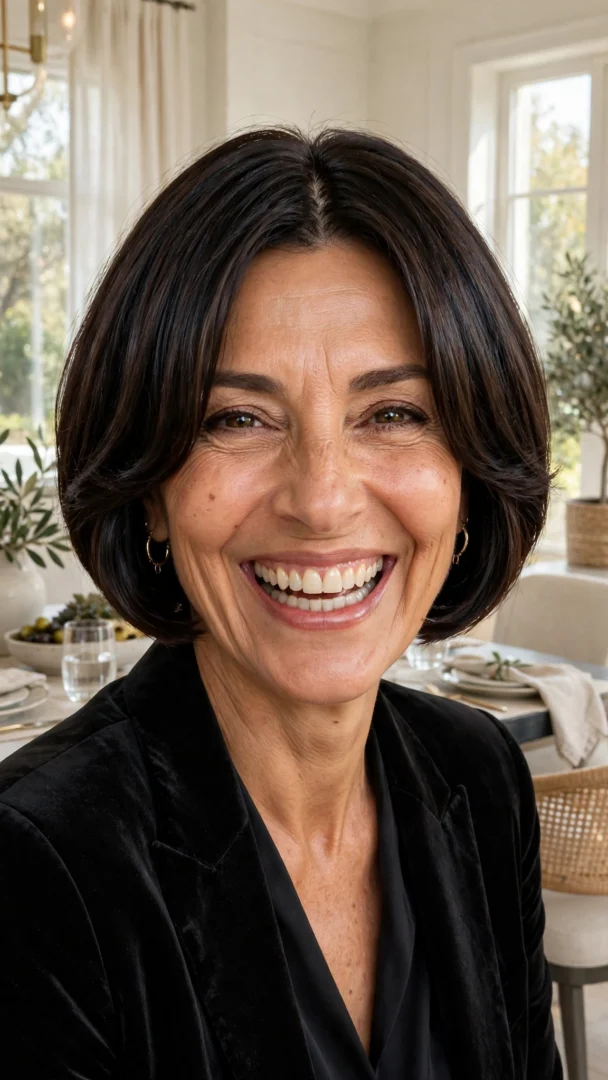
The evening-styled curtain crop dresses the trend up: glossy, sculpted waves through the fringe and polished, tucked sides that catch candlelight beautifully. The same beloved cut, elevated with shine and intention, is red-carpet ready without a single extension.
This styling suits all face shapes and gives women a formal option that needs no updo. Medium to thick hair holds the sculpted waves longest, and the polished finish flatters elegant personal style.
Create the look with a large-barrel iron, curling the fringe away from the face in smooth, uniform waves, then set with a shine-enhancing flexible spray. Tuck one side behind the ear and pin with a decorative clip.
Curtain Fringe Styled Back

Styling the curtain fringe back transforms the crop completely: the open fringe sweeps backward off the face for a lifted, windswept effect that reveals the full face. One cut, two personalities, depending on your mood.
Strong features and beautiful bone structure get their moment, and the swept-back look suits hot weather or active days when fringe on the forehead feels oppressive. Oval and heart faces wear it best.
Apply a strong-hold mousse to damp roots, then blow-dry everything straight back with a vent brush, lifting at the crown. A touch of pomade through the top holds the sweep, and anti-frizz serum guards against humidity.
The Sporty Curtain Crop
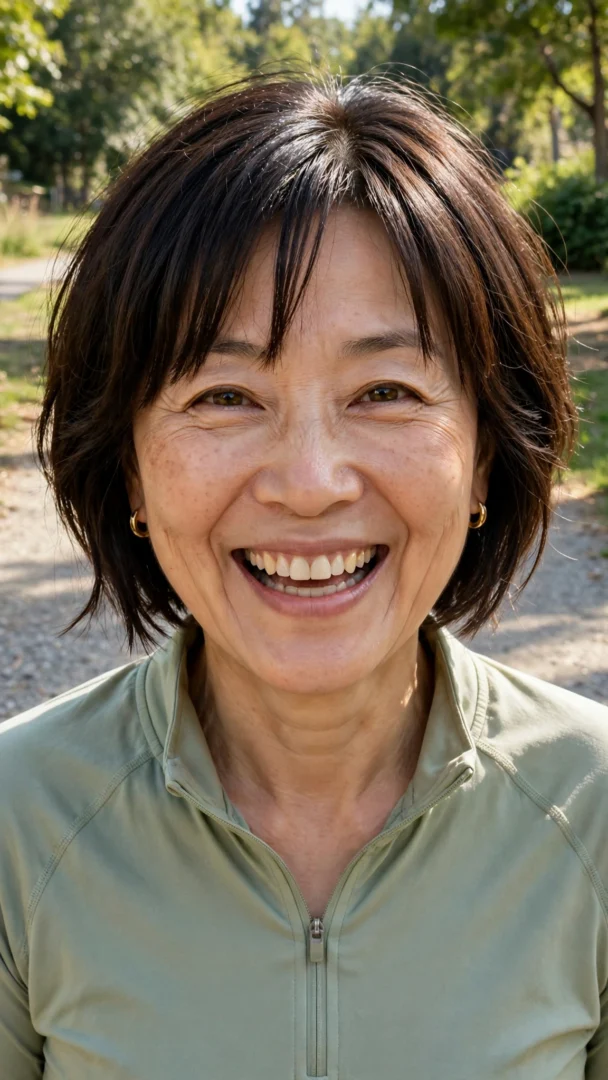
The sporty curtain crop is built for motion: a neat, secure cut with the fringe shaped to stay put through workouts, walks, and windy days. The chin-length perimeter tucks behind ears or under a headband, and the open fringe carries enough weight to resist flying everywhere.
Runners, swimmers, gardeners, and grandmothers chasing toddlers all get a trendy cut that keeps up. Every face shape and texture works, since the practicality lives in the cutting rather than the styling.
Keep a fabric headband or silk scarf handy for high-intensity sessions, and use a sweat-proof styling cream that reactivates with water. Rinse after heavy sweating even when you skip full shampooing.
Curtain Crop with Undercut Texture
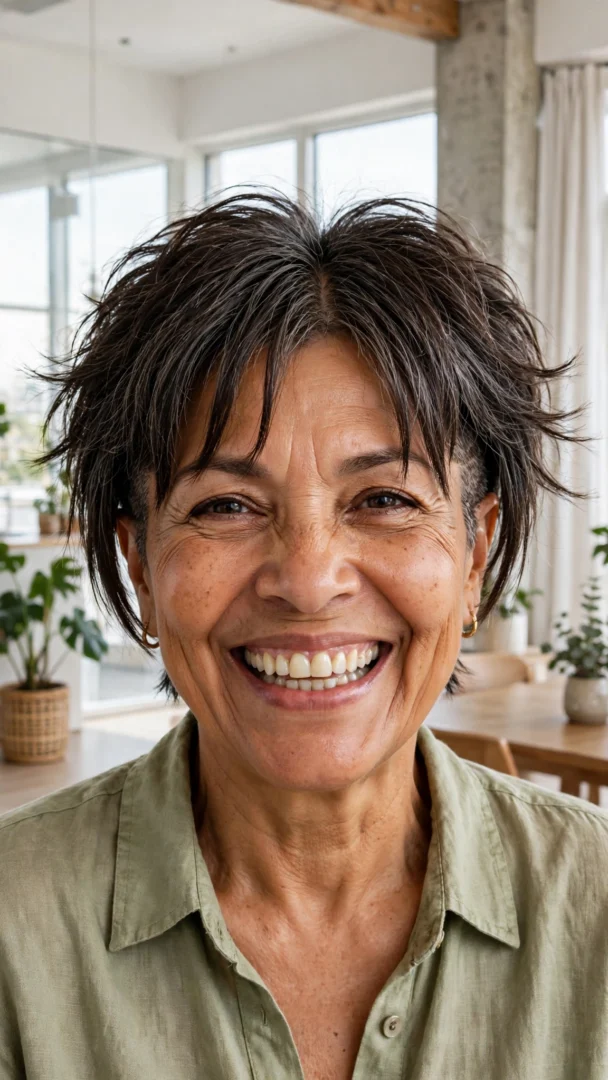
An undercut adds hidden edge to the curtain crop: the hair beneath the top layers at the nape or sides is clipped short, removing bulk and creating a cool, secret detail. Hair down, it reads as a perfectly normal chic crop; tucked behind the ear, the undercut reveals itself.
Thick hair benefits most, since the undercut removes the weight that makes short cuts balloon, and women who run hot appreciate the cooler neck. Oval and square faces pair well with the structured contrast.
The undercut needs maintenance every three to four weeks to stay crisp, since regrowth blurs the line quickly. Style the top layers smooth to showcase the contrast, and keep the clipped hair moisturized.
The Softly Permed Curtain Crop
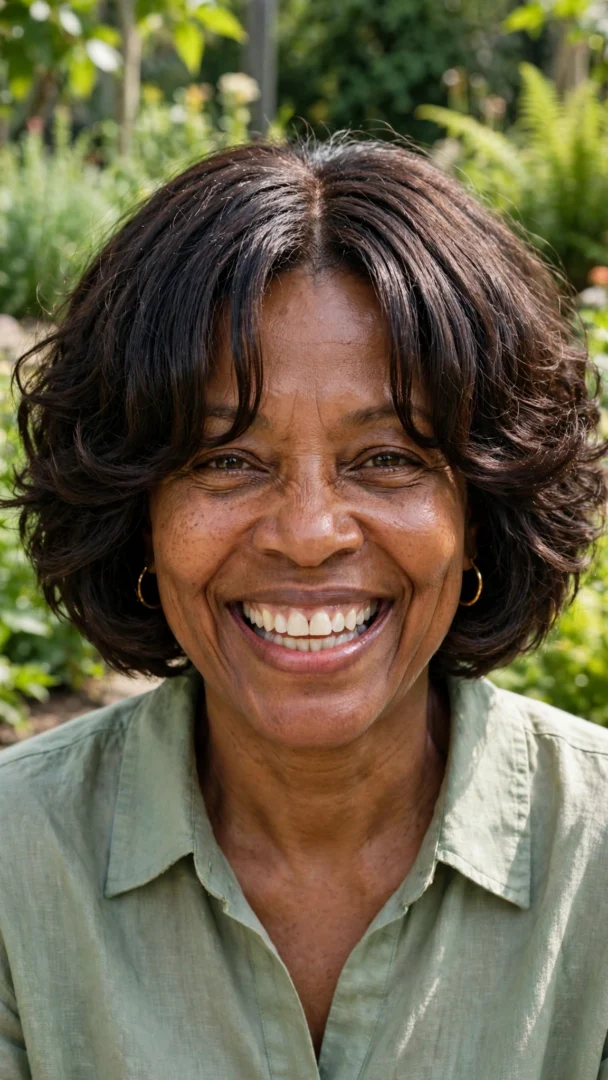
A soft perm gives the curtain crop permanent body: gentle, loose waves are chemically set into the chin-length cut so the fringe opens and the sides move without daily heat styling. Modern perms are nothing like the tight curls of decades past; this is texture, not curls.
Straight, fine, or thinning hair that refuses to hold a bend gains lasting movement, and the texture survives humid climates where styled waves collapse by noon. All face shapes suit the soft movement.
Wait forty-eight hours after the perm before washing, then use sulfate-free shampoo to protect the texture. Scrunch in a curl cream while damp and air-dry, and plan a refresh before the waves fully drop in three to four months.
Curtain Crop with Face-Framing Color
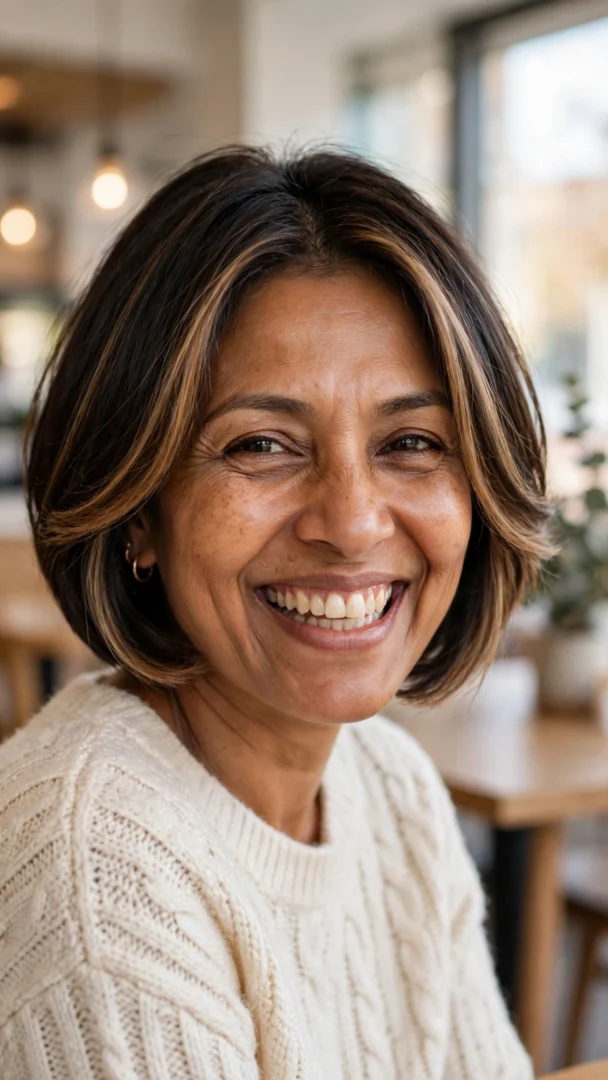
Face-framing color paints light exactly where the curtain fringe falls: brightened ribbons along the parting and front pieces that illuminate the face like a spotlight. The rest of the crop stays deeper for contrast, making the light pieces pop.
Skin that has lost some radiance with age gains a soft-focus filter from the light around the face. The brightness grows out softly since it lives at the front, delivering maximum impact from a partial, affordable color service.
Protect the lightened pieces with weekly deep-conditioning treatments, since the front sections endure the most heat styling and fade fastest. A gloss between appointments keeps the ribbons luminous, and balayage placement grows out most naturally.
Curtain Crop for Glasses Wearers
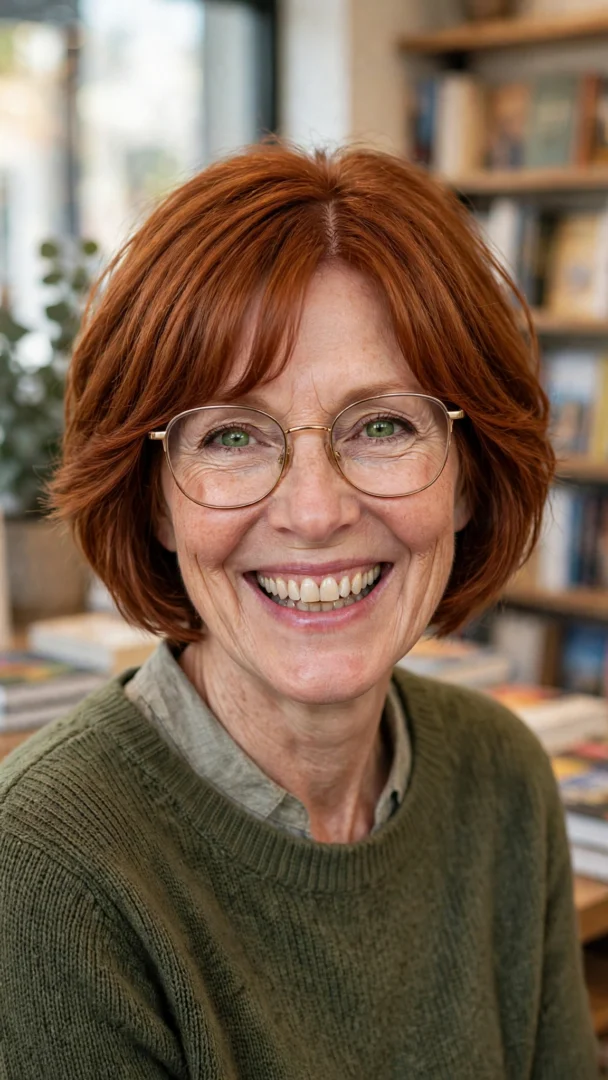
The glasses-wearer curtain crop is cut with frames in mind: the fringe is shaped to part cleanly around the temples so it never fights with glasses arms, and the chin-length sides sit neatly behind the ears. Trendy, finally, without competing with your frames.
Daily glasses wearers get a cut customized around their frames, flattering every face shape. The temple shaping matters most for thicker hair that bulges behind glasses, so bring your everyday pair to the appointment.
Style the temple sections tucked or swept to sit comfortably with frames, and keep a small flat iron handy for touch-ups where the fringe meets the glasses. Anti-slip nose pads reduce the sliding that disturbs the fringe.
Is the curtain crop too trendy for women over 50?
Not at all. The curtain crop is a classic short shape with a modern fringe, and Halle Berry herself debuted it in her fifties.
The open fringe softens the face in ways that genuinely flatter mature features, making it age-appropriate without being matronly.
How often does a curtain crop need trimming?
Book a trim every four to six weeks to keep the shape crisp, since the fringe needs attention most often. Short cuts lose their shape faster than long hair, so regular maintenance is the real secret behind the effortlessly chic look.
Will a curtain crop work with thinning hair?
Yes, the crop is one of the best cuts for thinning hair, since shorter lengths create the illusion of density. Ask for a slightly stacked back and blunt perimeter, and use volumizing products at the roots for extra fullness.
Can I wear a curtain crop if my hair is curly?
Absolutely. The curly curtain crop is one of the trend’s prettiest variations, and curls do the face-framing naturally.
Have it cut dry by a curl specialist so the shape accounts for shrinkage and spring.
What face shapes suit the curtain crop best?
Oval, heart, round, and square faces all work; the stylist simply adjusts the fringe length and parting. The open curtain line is forgiving because it falls diagonally rather than straight across, softening every face shape.
Does the curtain crop require daily heat styling?
It depends on the variation you choose. Sleek and polished versions need the flat iron, but tousled, wavy, and wash-and-go versions look best air-dried.
Pick the variation that matches the effort you actually want to give.
How do I grow out a curtain crop gracefully?
Grow the fringe first into the sides, then let the back catch up, with shaping trims every six to eight weeks to keep it looking intentional. The chin-length crop transitions beautifully into a bob, so the grow-out phase stays stylish.
The curtain crop is more than a passing trend; it is a genuinely flattering, endlessly versatile haircut that gives women over fifty a fresh, modern edge without demanding hours of upkeep. From silver-gray elegance to tousled ease to sleek evening polish, there is a version here with your name on it.
Take your favorite photo to your stylist, talk through your texture and routine, and embrace the change. The compliments will follow.