Afrohemian decor is one of Pinterest’s biggest breakout trends for 2026, blending rich African design heritage with relaxed bohemian ease. Searches for “afrobohemian home decor” are up 220%, and it is easy to see why — vivid Nigerian textiles, handwoven natural fiber pieces, Ethiopian wall art, and earthy materials create spaces that feel layered, soulful, and deeply personal. Whether you go all-in with a full Afrohemian room or simply layer a few cultural accents into your existing style, these thirty ideas will help you build a home that tells a beautiful story.
1. Adire Indigo Throw Pillow Arrangement
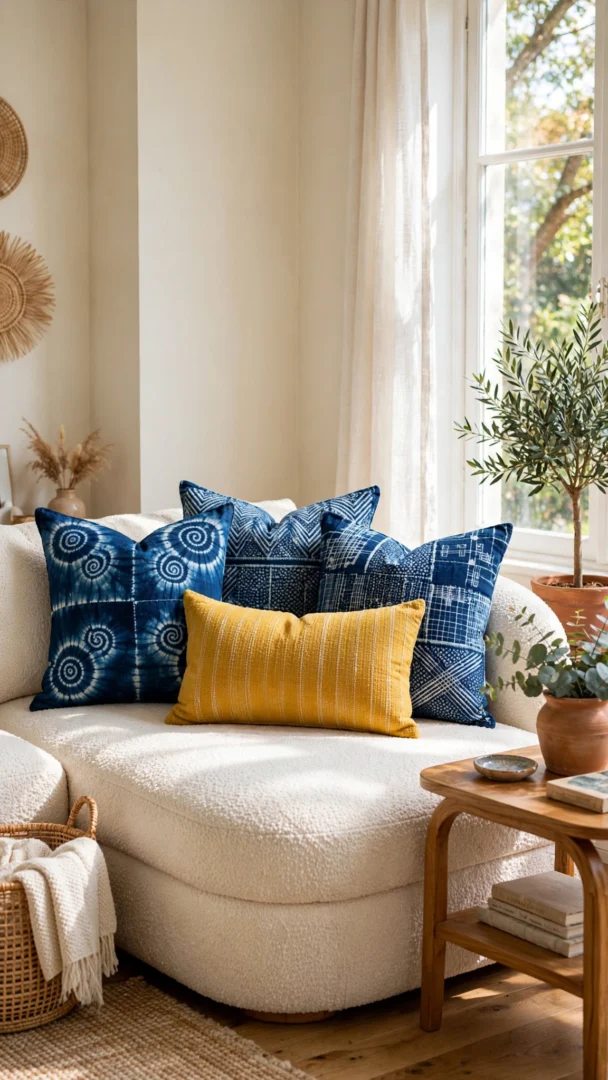
Adire fabric is a traditional Nigerian indigo-dyed textile, and its swirling deep-blue patterns make some of the most striking throw pillows you can own. A cluster of adire pillows on a neutral sofa instantly introduces Afrohemian character without overwhelming the room, because the indigo palette reads as both bold and calm at once. Look for handmade or fair-trade pieces to get the authentic resist-dyed texture that machine prints cannot replicate.
This idea suits anyone who loves pattern but feels nervous about committing to big colorful pieces. It works especially well in living rooms with linen or boucle sofas in cream, oatmeal, or warm white, where the indigo blues have room to pop. Renters love it too, since pillows are completely commitment-free decor.
Style it by mixing two or three adire patterns in different scales — one large swirl, one fine geometric — and tuck a solid mustard or terracotta lumbar pillow in the middle for warmth. Odd numbers of pillows always look more curated than pairs, so aim for three or five.
2. Ethiopian Orthodox Art Gallery Corner
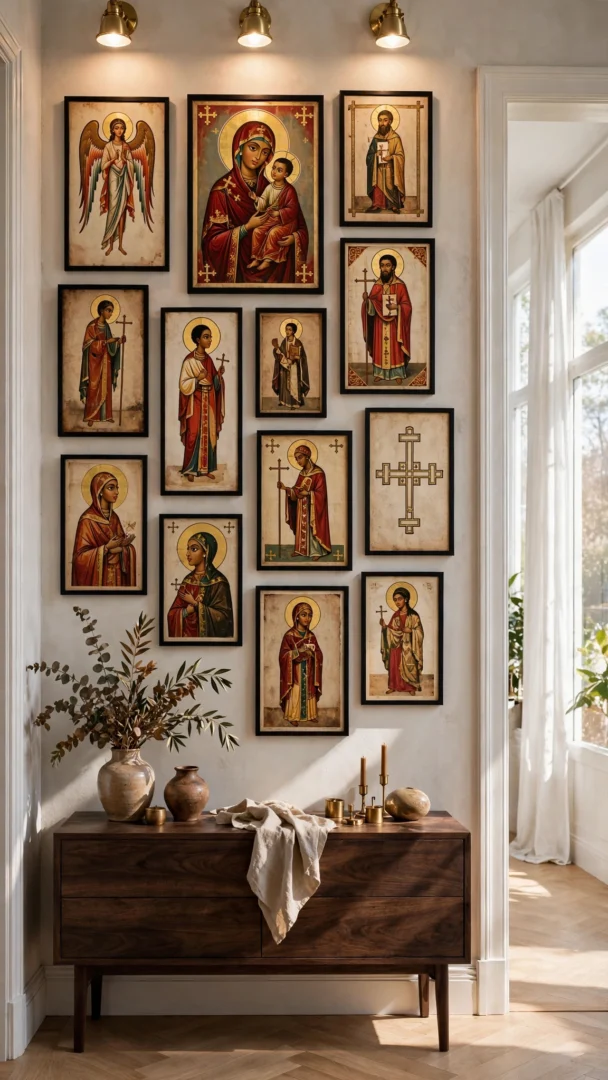
Ethiopian Orthodox art, with its iconic elongated figures and rich devotional colors, brings a museum-quality cultural depth to a home. A small gallery corner — three to five framed pieces hung close together — turns a blank hallway wall or staircase landing into a conversation piece. Choose reproductions on canvas or handmade paper for texture and authenticity.
This idea is perfect for art lovers and collectors who want their walls to reflect a story rather than generic prints. It works beautifully in hallways, entryways, or above a console table, where visitors naturally pause. Pair it with warm lighting so the golds and reds in the artwork glow.
Styling tip: keep the frames simple and uniform — thin black or natural wood frames let the art carry the drama. Hang the largest piece at eye level in the center and build outward, keeping two inches or less between frames for that tight salon-gallery feel.
3. Handwoven Seagrass Basket Cluster
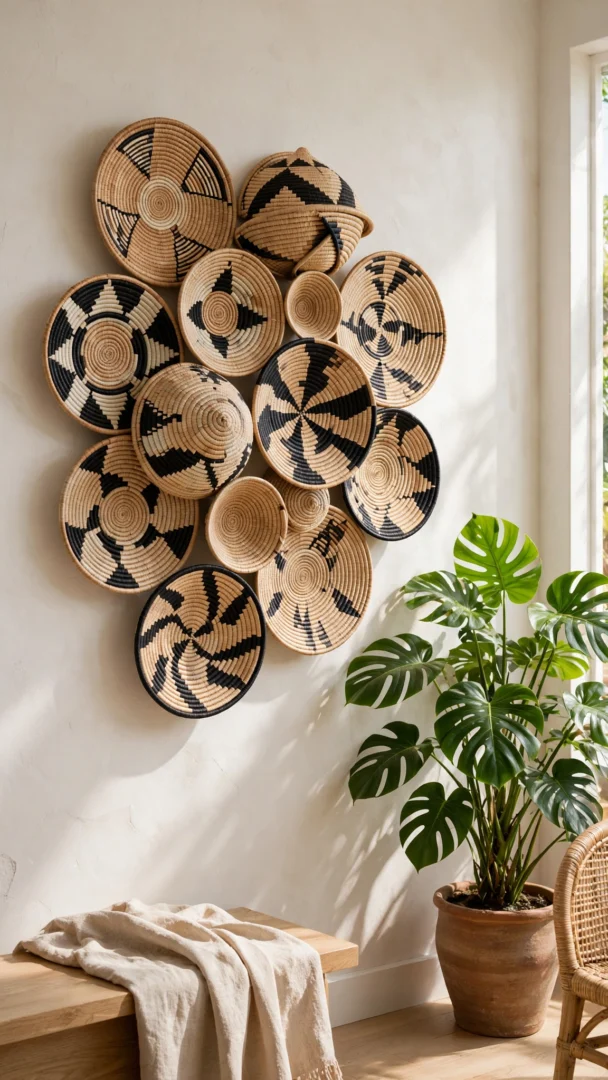
Handwoven baskets are the backbone of Afrohemian styling — flat woven wall baskets from Senegal and deep storage baskets from Ghana add texture, pattern, and craft all at once. A cluster of wall baskets in graduated sizes creates a sculptural focal point that rivals any framed art, and it costs far less than an oil painting.
Best for living rooms, dining rooms, and bedrooms that need warmth without more color. The natural tan, black, and cream patterns complement nearly every palette, from earthy neutrals to jewel tones. They also hide storage needs gracefully when you use the deeper basket styles.
To style them, lay the arrangement on the floor first and photograph it from above before hanging — aim for a loose organic circle or an asymmetric cascade. Mix flat discs with a couple of domed bowl shapes for dimension, and anchor the cluster near a plant or low console.
4. Rattan Beaded Curtain Divider
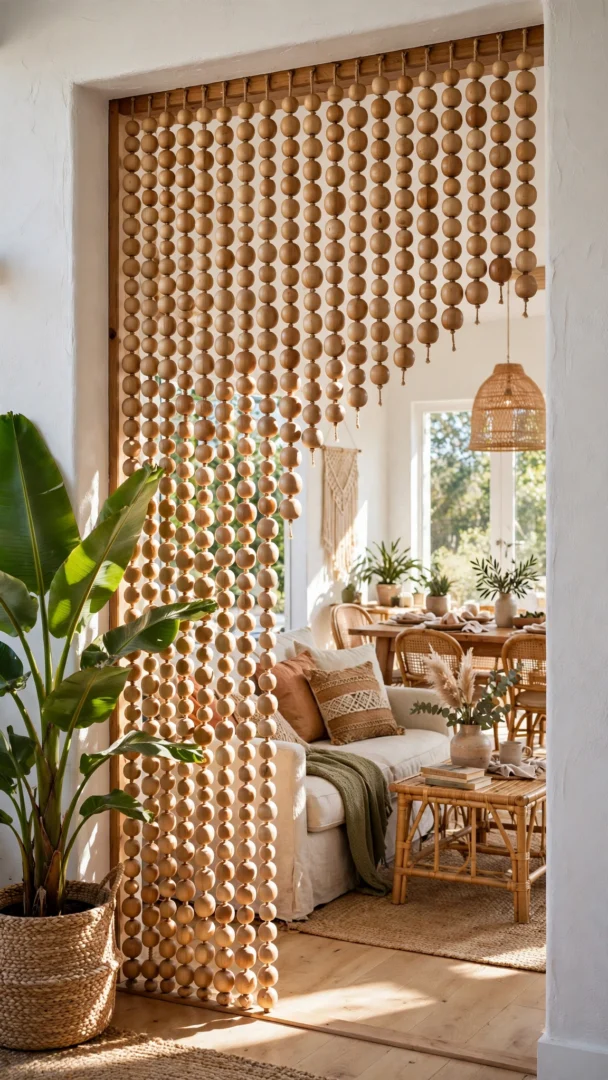
Rattan beaded curtains are having a major moment, with Pinterest searches up 50% this year. Strung across a wide doorway or between a living and dining zone, they create a soft, rattling sense of separation that feels playful and tropical. The natural wood tones filter light beautifully and add movement to still rooms.
This is ideal for open-plan apartments and studio spaces that need flexible zoning without walls or heavy drapes. It also suits doorways that lack actual doors — closets, dressing corners, or pantry entries. The sound and shimmer of the beads make even ordinary transitions feel special.
Hang the curtain from a simple wooden dowel or a discreet tension rod, and let it fall just to the floor for maximum drama. Layer a potted palm or banana plant beside it so the beads echo the greenery, and keep the surrounding furniture low so the curtain reads as the vertical star of the space.
5. Mudcloth Draped Sofa Throw
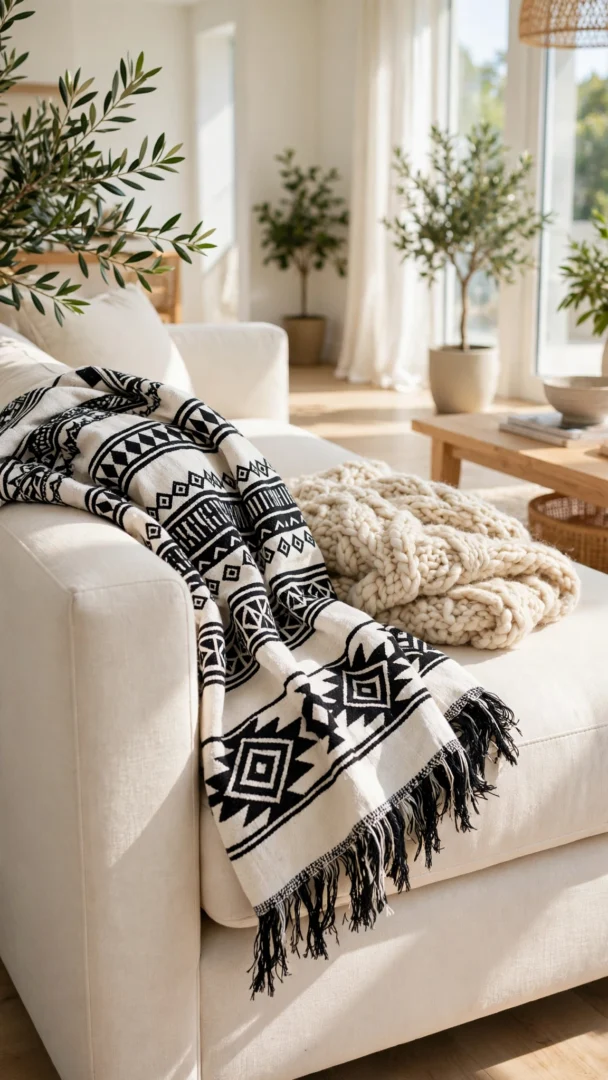
Mudcloth — Bogolanfini from Mali — is the textile world’s quiet icon: hand-loomed cotton patterned with fermented mud in graphic black-and-white motifs. Draped casually over a sofa arm or folded across a bench, it adds instant graphic punch and an artisanal soul that no mass-produced throw can match.
It suits minimalists who want one bold accent rather than a riot of pattern, and it flatters modern, Scandinavian, and boho sofas alike. Because the palette is strictly black, cream, and sometimes rust, it never clashes — it simply grounds whatever sits around it.
Drape it slightly off-center rather than perfectly folded; mudcloth looks best with a little insouciance. Pair it with a chunky knit throw in natural wool for texture contrast, and let the fringe hang free — trimming mudcloth fringe is a styling crime.
6. Carved Wooden Stool Side Table
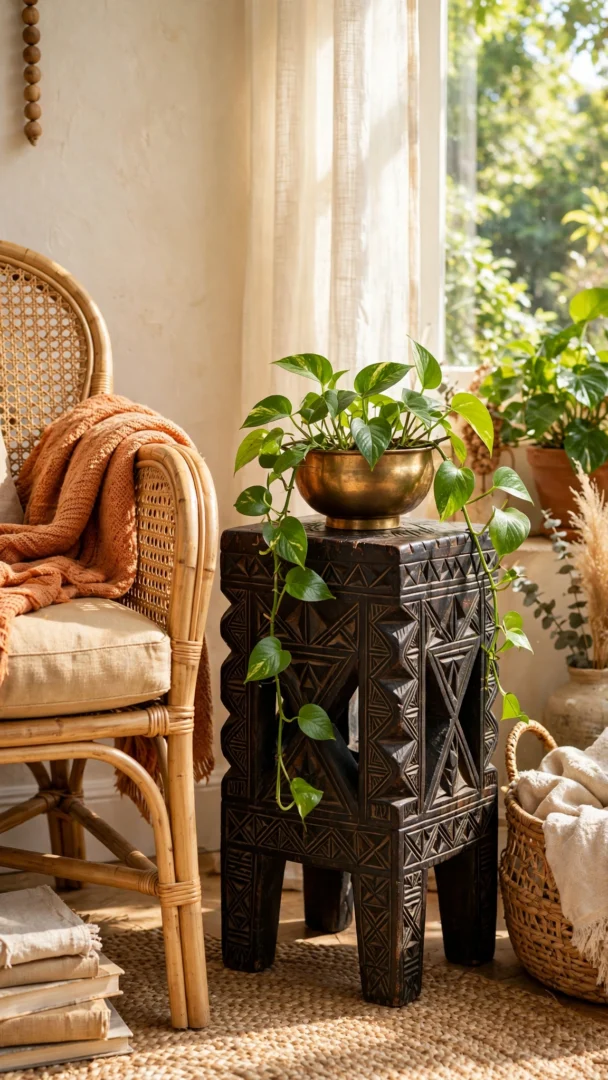
A hand-carved wooden stool from West Africa — think Ashanti stools or Bamileke tables — doubles as a side table with serious sculptural presence. The dark, hand-rubbed wood and organic carved forms bring a collected, well-traveled feeling to a corner that a flat-pack side table never could.
Perfect beside an armchair, as a plant stand, or flanking a bed where a nightstand would feel too bulky. It suits readers and tea-drinkers who need a small surface within arm’s reach, and it works in every room from the entryway to the bathroom.
Top it with a single beautiful object — a small brass bowl, a stack of two art books, or a trailing pothos — and resist the urge to clutter it. The stool’s carved silhouette is the art; the surface styling should be minimal so the form stays legible.
7. Brass and Bronze Candle Collection
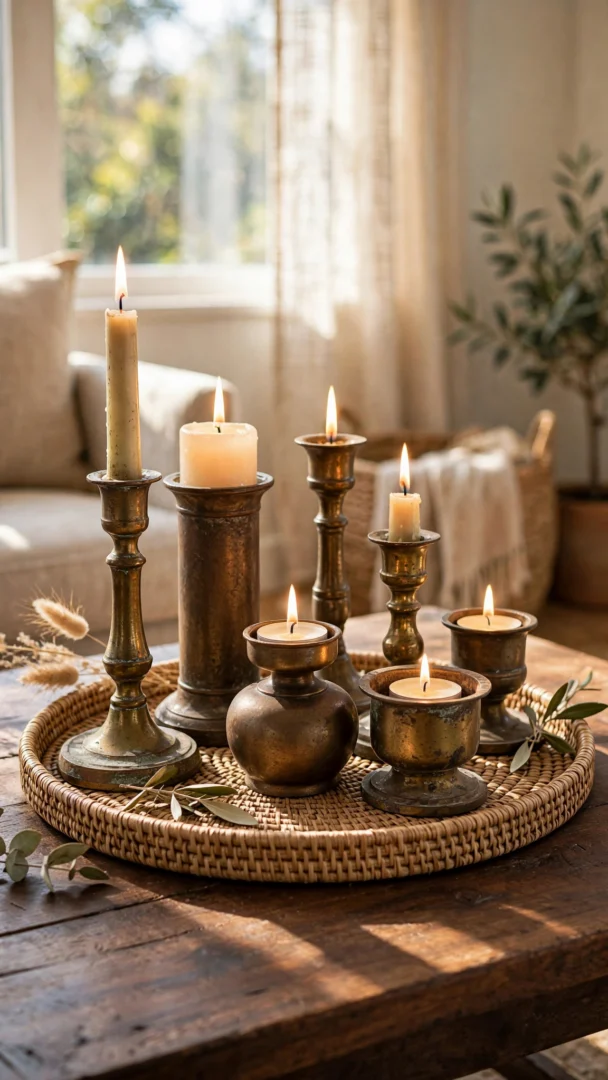
Warm metals are 2026’s defining accent, and Afrohemian styling loves aged brass and bronze candleholders with patina and heft. A collection of mismatched heights on a tray — tapers, pillars, and tea lights together — creates a glowing altar-like moment on a coffee table, mantel, or dining sideboard.
This is for anyone who entertains or simply loves evening ambiance. It works on dark wood furniture where the metal picks up candlelight, and it is a renter-friendly way to add luxury without new furniture. Stick to unscented or single-scent candles to keep the mood calm.
Group in odd numbers on a woven rattan or wooden tray to contain the look, and vary heights by at least three inches between pieces so the flames cascade. Trim wicks to a quarter inch before lighting so the glow stays clean and soot-free.
8. Terracotta Pot Greenery Grouping
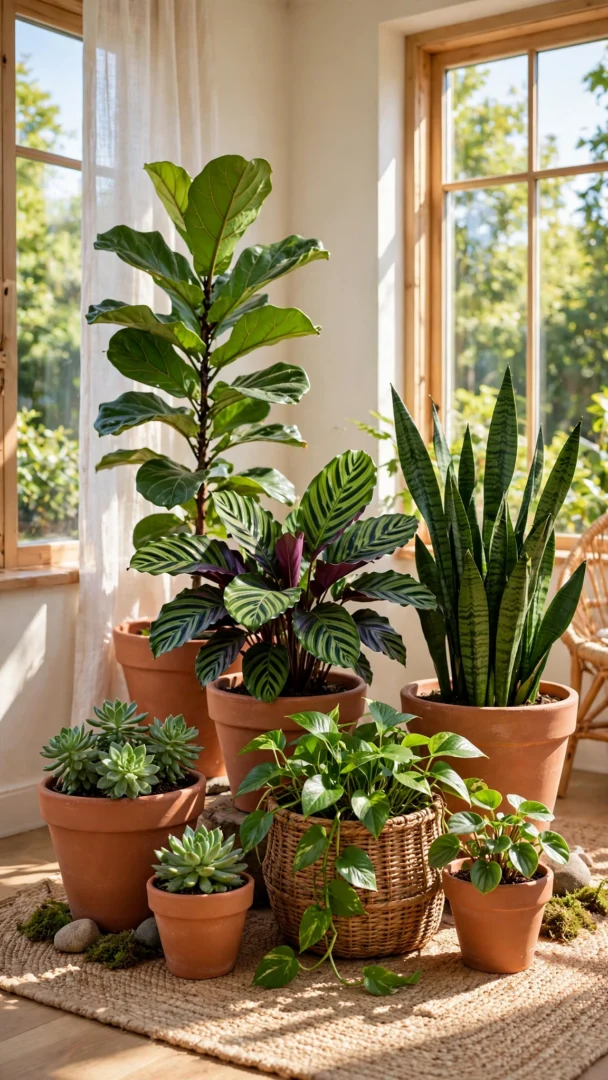
Terracotta pots are the Afrohemian gardener’s signature — their warm earthen orange echoes African clay work and makes every plant look more vibrant. Group five to seven pots in varying sizes in one corner, mixing leafy plants like fiddle-leaf figs, snake plants, and calatheas for a lush, curated jungle effect.
Ideal for plant lovers with a sunny corner and for anyone whose rooms feel flat or sterile. The grouping works in living rooms, sunrooms, and even bathrooms with good light. Terracotta is also forgiving for beginners since it wicks excess moisture away from roots.
Styling tip: keep the pots unglazed and unpainted for authenticity, and vary plant heights so the tallest sits at the back. Tuck a woven basket planter among the terracotta for texture contrast, and rotate the plants monthly so they grow evenly.
9. Woven Pendant Light Statement
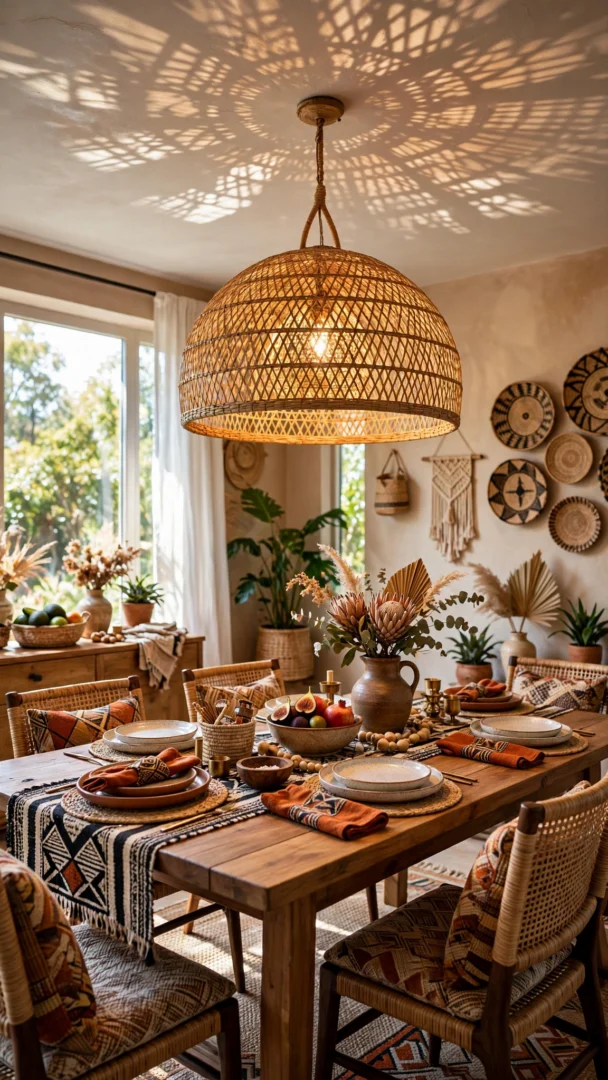
A large woven pendant — rattan, seagrass, or bamboo — is the single fastest way to Afrohemian-ize a dining room or bedroom. It casts gorgeous patterned shadows on the ceiling, adds artisanal texture overhead where rooms are often bare, and reads as a sculptural light fixture at a fraction of designer prices.
Best over dining tables, in entryways with high ceilings, or as a pair flanking a bed in place of table lamps. It suits anyone whose room feels finished except for the “fifth wall” — the ceiling. Choose a drum or dome shape for classic appeal, or a tiered pagoda shape for drama.
Hang it low enough to feel intimate — about 30 inches above a dining table — and use a warm 2700K bulb so the weave glows amber. If the shade is very large, keep the rest of the room’s lighting simple so the pendant stays the star.
10. Kente-Inspired Table Runner
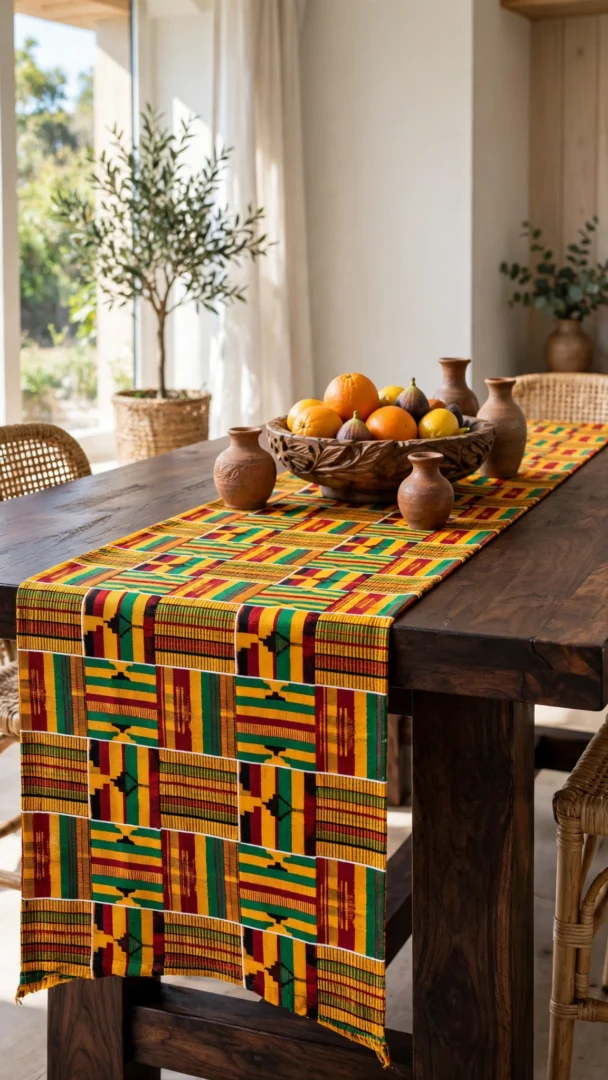
Kente cloth, woven by the Asante people of Ghana, is famous for its bold interlaced strips of gold, green, red, and black. A kente-inspired runner down the center of a dining table brings festival energy to everyday meals and turns the table into the room’s artwork even when it is not set.
Perfect for hosts who love dinner parties and for dining rooms that double as workspaces — the runner dresses the table between uses. It pairs beautifully with dark wood tables, where the bright strips glow, and with simple white dinnerware that lets the textile lead.
Let the runner hang six to ten inches over each table end, and style the center with low natural elements — a carved bowl of fruit, a trio of small clay vases — so nothing fights the pattern for height. Skip a tablecloth underneath; the wood showing at the edges frames the runner.
11. Wooden Mask Accent Wall
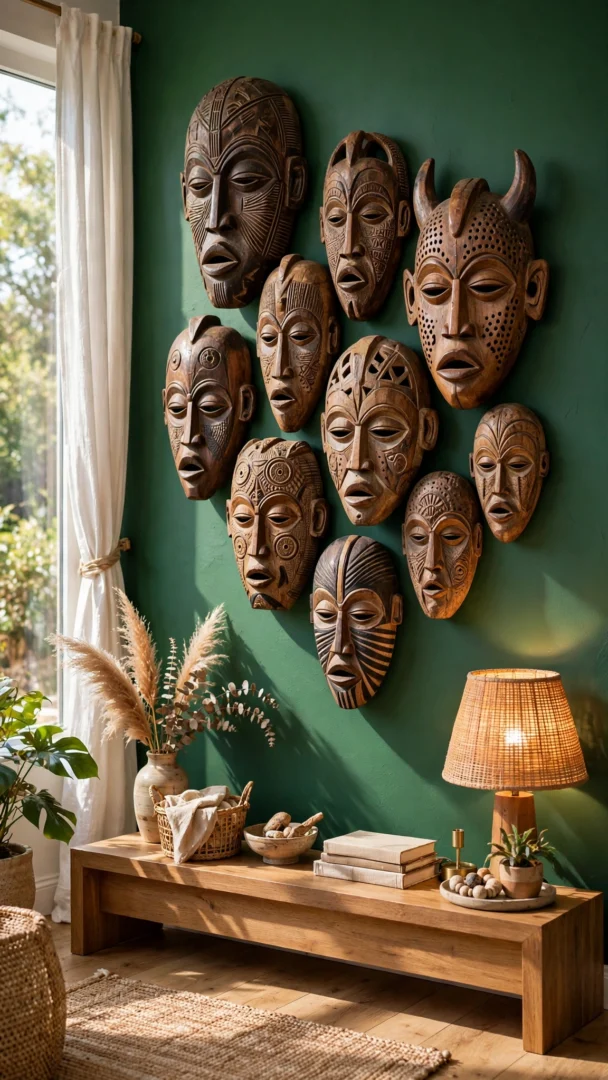
Carved wooden masks, displayed with respect for their craft origins, make a powerful accent wall that is equal parts art gallery and cultural tribute. Three to seven masks in varied sizes, hung in a loose grid or organic cluster, give a living room or study a collected-over-decades character.
This suits confident decorators and collectors who want a genuine statement wall. It works best on a wall with breathing room — behind a sofa, in a dining room, or in a home office — and on warm white or deep green paint that lets the wood tones resonate. Buy from fair-trade sources and learn each piece’s origin.
Hang the largest mask slightly above center and arrange the others around it, keeping consistent two-inch gaps for a gallery feel. Add a small picture light or a nearby floor lamp so the carved details cast soft shadows in the evening.
12. Layered Jute and Wool Rug Pairing
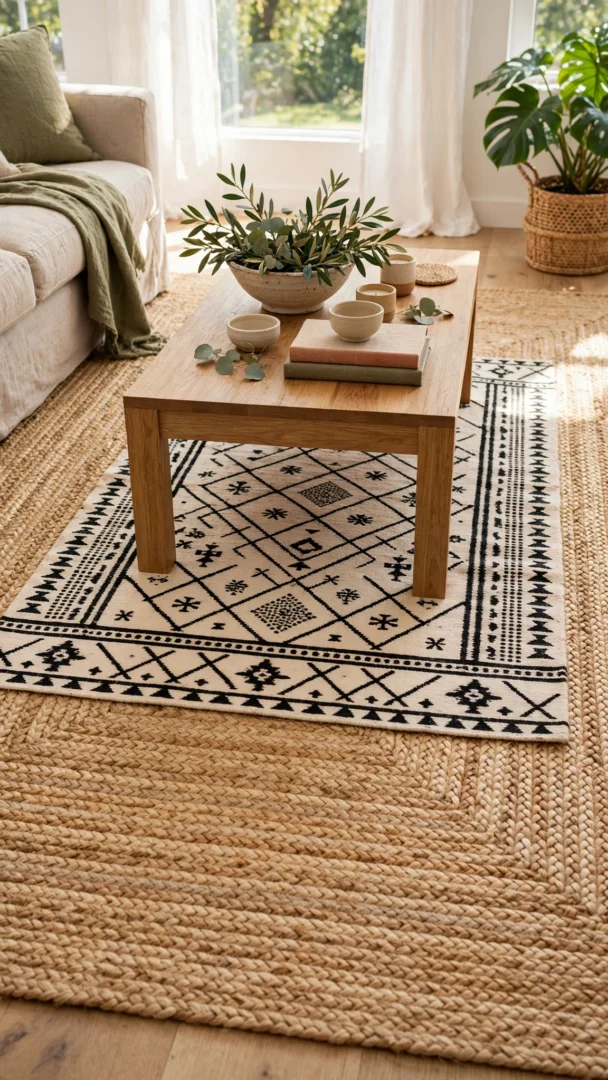
Layering a soft patterned wool rug over a larger natural jute rug is a stylist trick that gives floors instant depth. The jute provides an earthy, textural base while the smaller rug on top adds pattern and softness underfoot — the combination is pure Afrohemian comfort.
Ideal for living rooms and bedrooms with hard floors that feel cold or echoey. It suits families and pet owners too, since jute is durable and hides wear, and the top rug can be swapped seasonally. Keep the base rug two feet larger on all sides than the top one for proper proportion.
Center the top rug under the coffee table or bed, and let the jute extend toward the seating so feet land on softness. Choose a top rug with an African-inspired motif — mudcloth patterns or tribal geometrics — to tie the layers to the Afrohemian story.
13. Cowrie Shell Decorative Accents
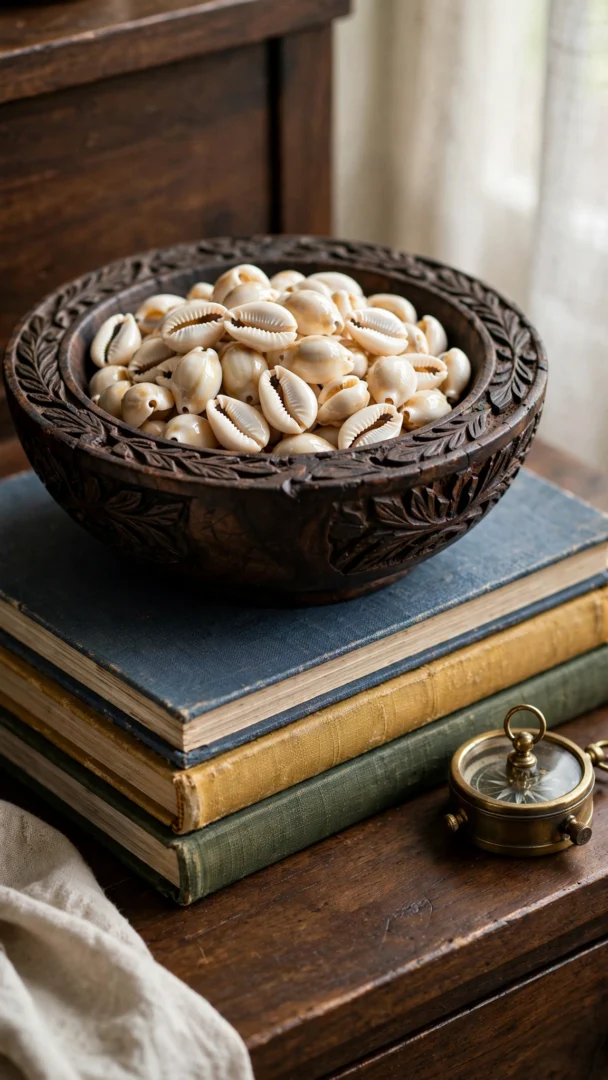
Cowrie shells, once currency across West Africa, carry deep symbolism of prosperity and protection — and they are exquisite decor. Scatter them in a carved wooden bowl, string them as a garland across a mirror, or choose curtain tiebacks edged with cowries for subtle shimmer.
This is a lovely detail for maximalists who love meaningful objects and for minimalists who want just one cultural touch. Cowrie accents work on bookshelves, vanities, and entry consoles — anywhere small objects get noticed up close. Their cream-and-brown patterning flatters both dark and light surfaces.
Less is more: one generous bowl of cowries makes a stronger statement than shells sprinkled everywhere. Pair them with brass or dark wood so the pale shells stand out, and avoid mixing with nautical decor — cowries read as cultural treasure, not beach souvenir, when styled with intention.
14. Cane Webbing Bench Entryway
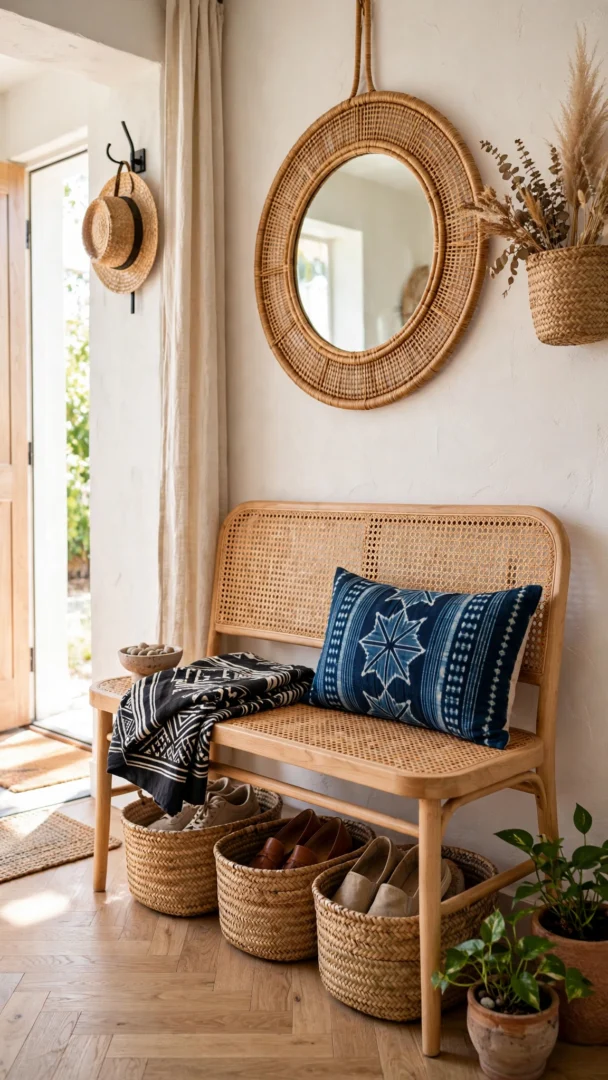
A bench with a cane webbing seat brings breezy, handcrafted texture to the entryway while giving you a practical perch for shoes. The open weave keeps small foyers feeling airy, and the natural rattan tone sets an Afrohemian welcome the moment someone walks in.
Perfect for entryways, mudrooms, and bedroom foot-of-bed spots. It suits households that need seating plus a surface for bags and keys, and the cane seat wipes clean easily. Tuck woven baskets underneath for shoe storage that disappears visually.
Style the bench with a folded mudcloth throw and one lumbar pillow in adire or kente-inspired print. Hang a round rattan mirror above it and add a small potted plant on one end — the entry will feel styled in under ten minutes.
15. Clay Vase Trio on Mantel
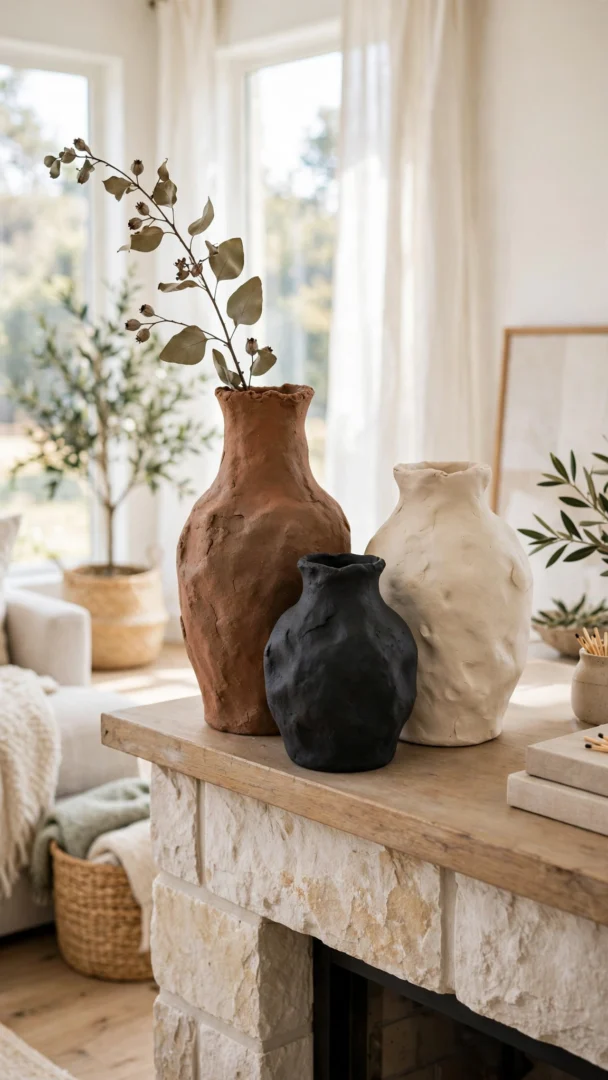
Handmade clay vases in organic, slightly imperfect shapes are the soul of Afrohemian shelf styling. A trio in graduated heights — raw terracotta, matte black, and cream — on a mantel or console creates a quiet sculptural moment that needs no flowers to look finished.
Best for mantels, open shelving, and sideboards that feel cluttered or flat. The matte earthy finishes calm busy rooms and add an artisanal layer to modern furniture. Leave them empty for a gallery look, or add a single stem of dried pampas or eucalyptus for softness.
Arrange in a tight triangle with the tallest vase at the back, and leave breathing room around the group so the silhouettes read clearly. Odd, handmade-feeling shapes beat perfect symmetry here — embrace the wobble.
16. Floor Cushion Reading Nook
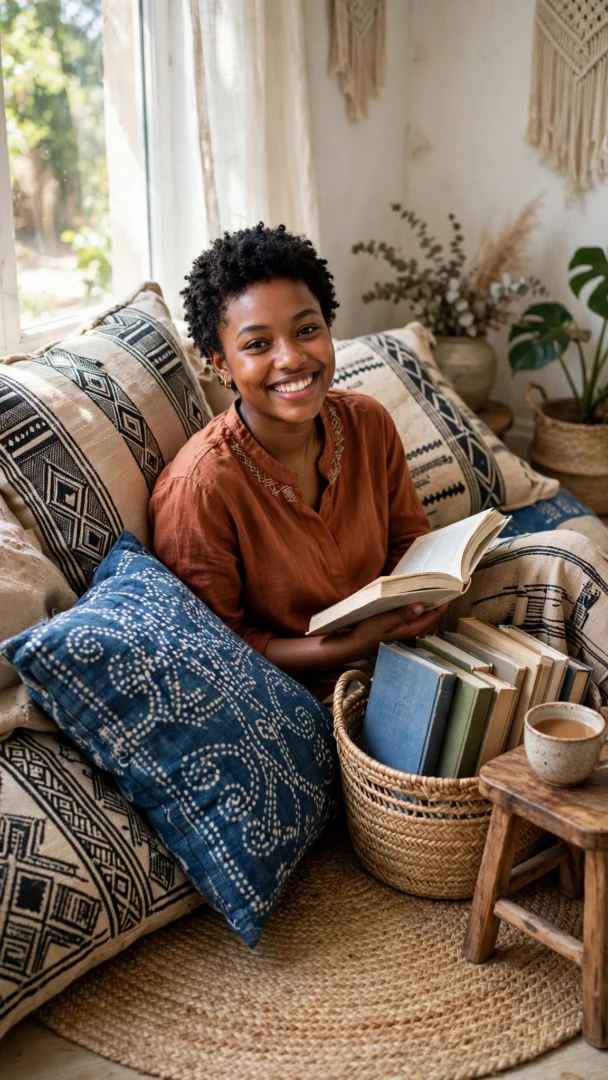
A floor-level reading nook built from oversized cushions, a low round rug, and a basket of books captures the relaxed heart of Afrohemian living. It is the kind of corner that invites you to sink in with tea and stay for hours — low, soft, and wrapped in pattern.
Ideal for awkward empty corners, kids’ rooms, and anyone who prefers lounging to upright sitting. A young woman curled up reading in the nook shows just how inviting it is. It also works beautifully in bedrooms as a morning-coffee spot.
Layer a large round jute rug, then pile two or three floor cushions in mudcloth and adire prints, and finish with a small side stool for the teacup. A woven basket beside the cushions corrals books and a throw, keeping the nook tidy and tempting.
17. Rattan Framed Round Mirror
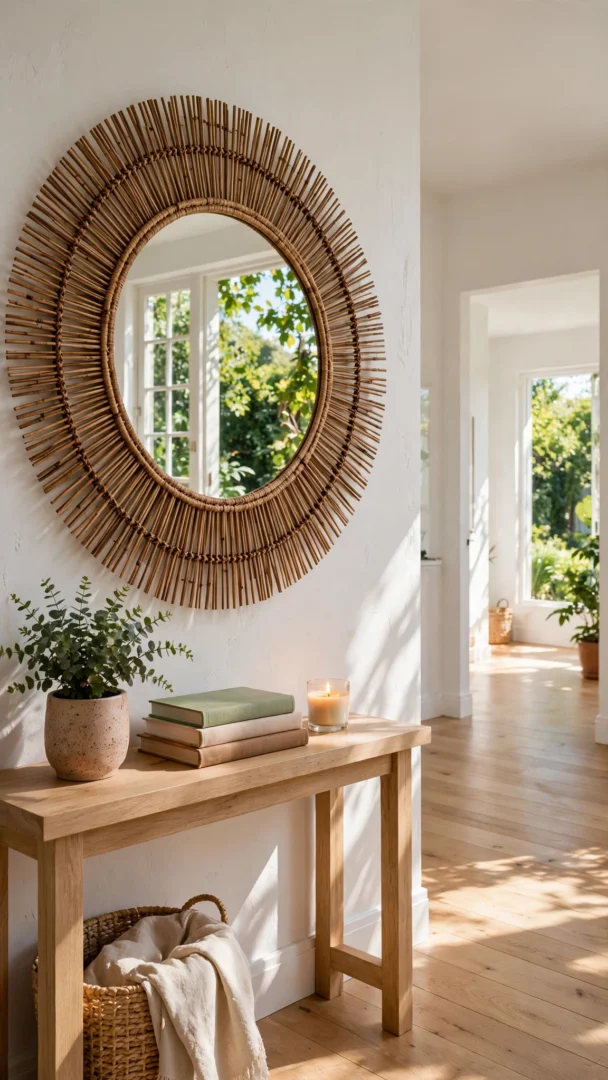
A round mirror wrapped in a sunburst or woven rattan frame is Afrohemian decor’s friendliest statement — it bounces light, doubles the greenery, and adds handcrafted texture in one move. Hung over a console or dresser, it becomes the jewelry of the room.
Perfect for dark hallways, small entryways, and bedrooms that need light and life. The round shape softens rooms full of rectangles, and the rattan frame warms up minimalist spaces. Choose a frame at least 30 inches wide so it holds its own on the wall.
Center it about 60 inches from the floor, and style the surface below simply — a small plant, a stack of books, one candle — so the mirror’s texture stays the focus. Hang it where it reflects a window or a plant for maximum magic.
18. Bold Patterned Upholstered Accent Chair
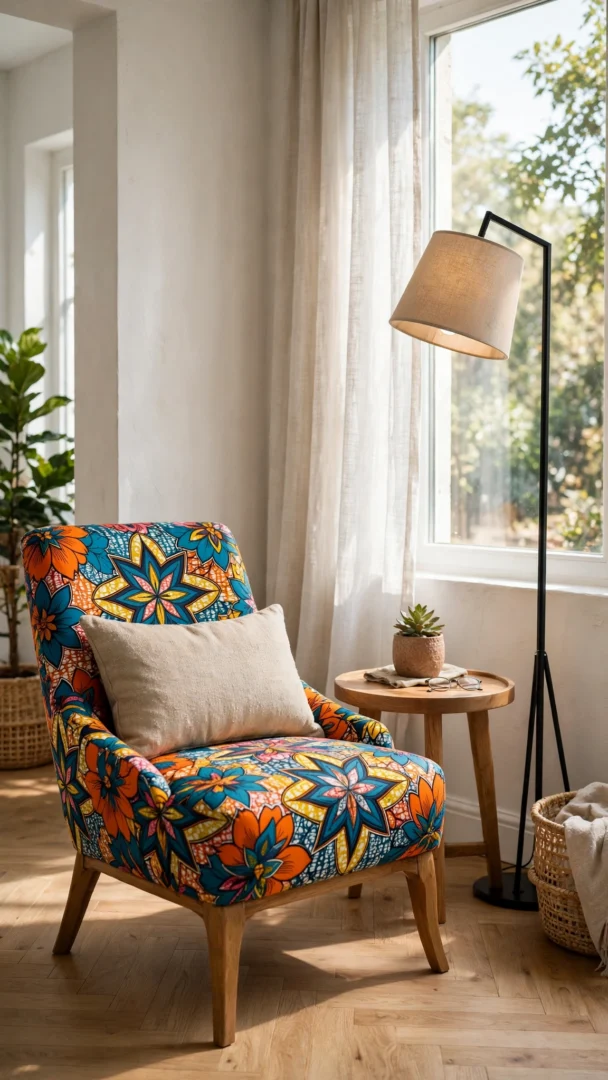
One accent chair upholstered in a bold African-inspired print — Ankara florals, mudcloth geometrics, or a kente-stripe weave — can carry an entire room’s Afrohemian story. It is the exclamation point that makes neutral surroundings feel intentional and collected.
Best in living rooms and bedrooms where a single chair can become the reading spot. It suits decorators who want maximum impact from one purchase, and it photographs beautifully for anyone who shares their home online. Keep surrounding upholstery solid so the print sings.
Place the chair at a slight angle rather than flush against the wall, with a small side table and a floor lamp to complete the vignette. A solid lumbar pillow in a color pulled from the print ties the chair to the rest of the room.
19. Woven Floor Pouf Cluster
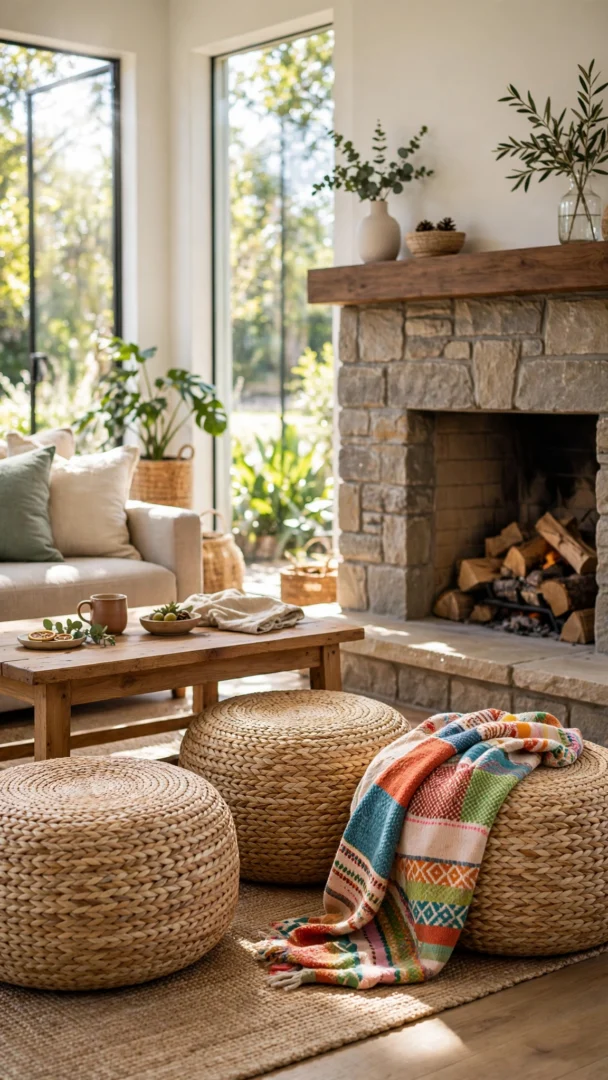
Woven floor poufs in seagrass or wool add casual, movable seating that embodies Afrohemian ease. Clustered two or three together near a coffee table or fireplace, they invite sprawling, shoeless comfort — and they tuck away easily when you need floor space.
Ideal for family rooms, teen hangouts, and small apartments where every seat must earn its footprint. Poufs suit households that entertain informally, and their soft edges are kind to toddlers. Choose flat-weave styles for firmness or stuffed wool for sink-in softness.
Group them in a loose triangle at varied heights if you mix sizes, and drape one with a small throw for color. Keep the palette natural — oatmeal, tan, charcoal — so the poufs read as texture rather than clutter.
20. Console Styled With African Artifacts
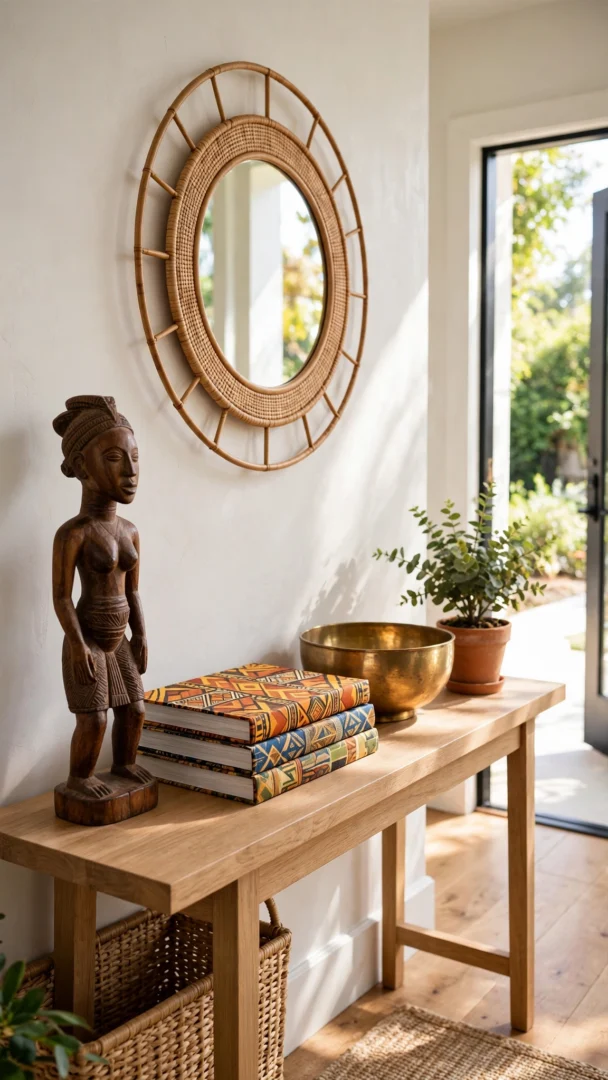
A console table styled with a curated mix of African artifacts — a carved figure, a brass bowl, a stack of art books on African design, a small potted plant — becomes a personal museum of the things you love. The key is curation: five to seven meaningful objects, not a crowded souvenir shelf.
Perfect for entryways, hallways, and behind-sofa consoles where a styled surface sets the tone. It suits collectors and travelers who want their pieces displayed with intention. Give each object space so visitors can appreciate them individually.
Work in a zigzag of heights — tall vase, medium sculpture, low bowl — and anchor the arrangement with a piece of art or a mirror above. Leave at least a third of the surface empty; negative space is what makes a styled console look expensive.
21. Afrohemian Bedroom Textile Layers
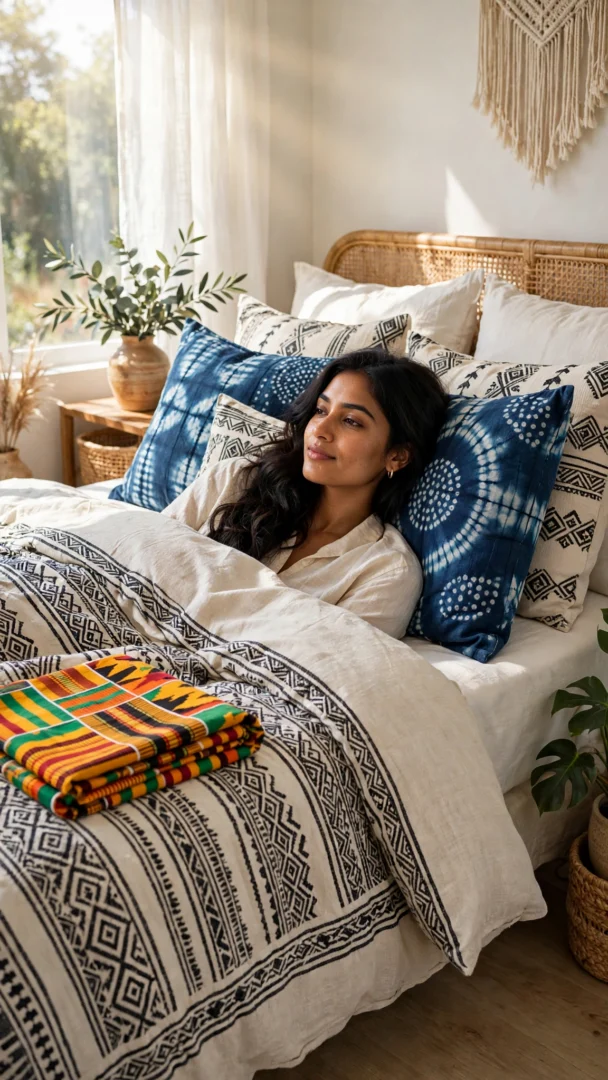
The Afrohemian bedroom is all about layers: a mudcloth duvet or coverlet, adire accent pillows, a folded kente-style throw at the foot, and a woven rug underneath. The bed becomes a tapestry of pattern and texture that feels collected over years, not bought in a set.
Ideal for anyone whose bedroom feels flat or hotel-generic. It suits all bed sizes, though the layering shows best on queen and king beds with room for the full pillow lineup. A young woman resting against the layered pillows shows how the textures invite touch.
Start with solid or subtly textured sheets, add the patterned duvet, then build pillows back to front: sleeping pillows, two Euro shams, two patterned shams, one lumbar. Fold the throw across the foot at a casual angle — never perfectly straight.
22. Entryway Basket and Coat Station
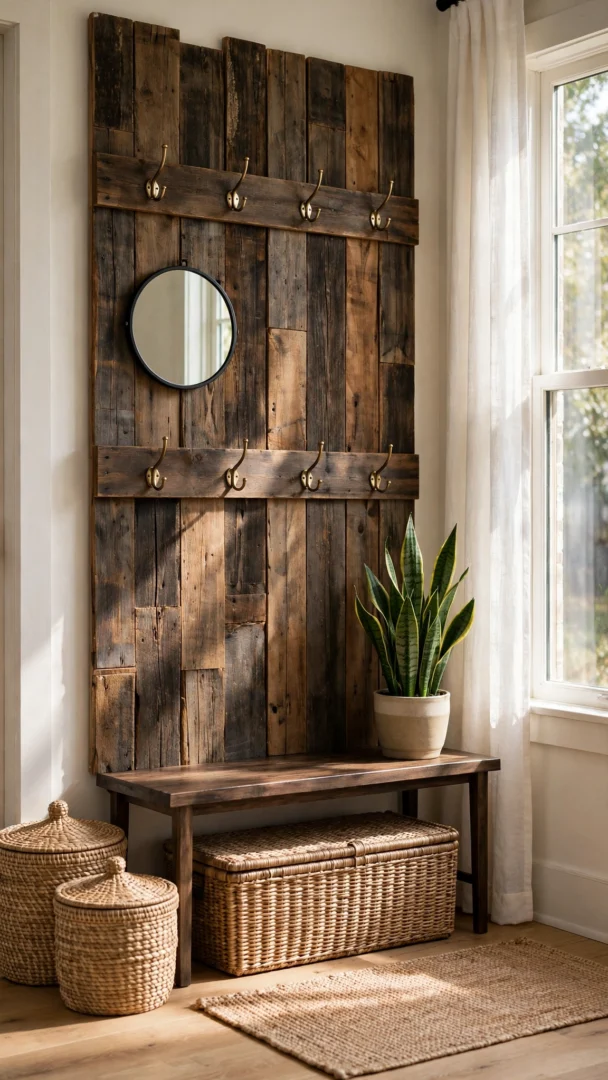
Turn the entryway into an organized Afrohemian moment with a row of lidded woven baskets for shoes and scarves, wall hooks in dark wood or brass, and a slim bench. Everything has a home, and the natural textures make even a hardworking mudroom corner look beautiful.
Perfect for busy households, families with kids, and small apartments where the entry must multitask. The baskets hide the visual chaos of daily life while the hooks keep coats accessible. Label baskets subtly or assign one per person to keep the system running.
Mount hooks at two heights — adult and kid — on a reclaimed wood board, and slide a long low basket beneath the bench for shoes. Add a small mirror and a potted snake plant so the station feels styled, not merely functional.
23. Dining Centerpiece With Natural Fibers
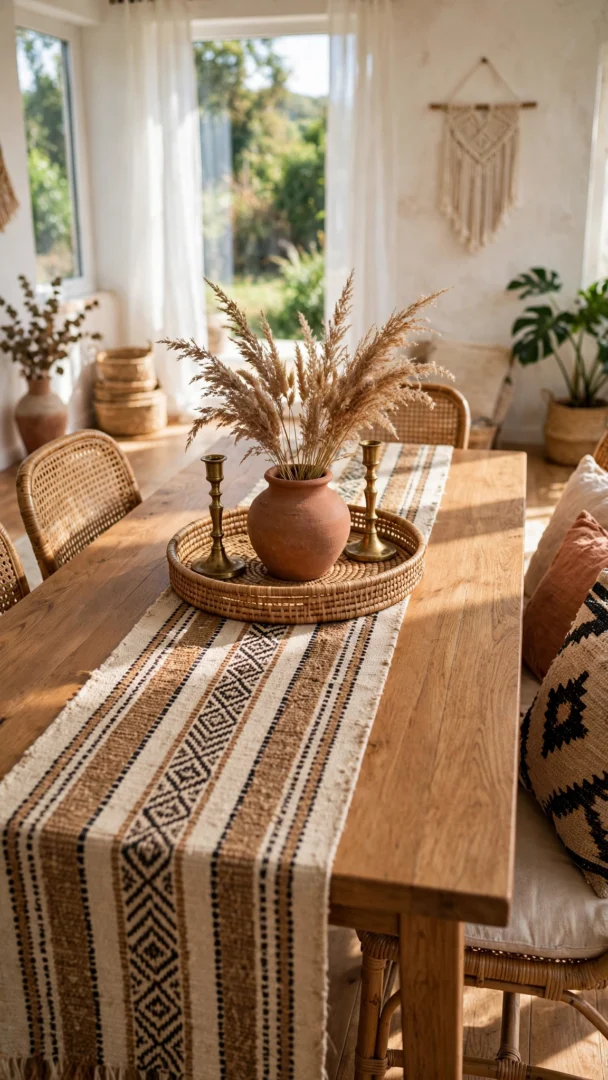
A dining centerpiece built from natural fibers — a long woven runner, a low rattan tray, dried grasses in a clay vessel, and a few brass candlesticks — brings Afrohemian warmth to the table without blocking conversation. It looks intentional every day, not just on holidays.
Ideal for open-plan dining areas and anyone who hates resetting a fussy centerpiece constantly. The low profile keeps sightlines clear, and the natural materials survive daily life far better than fresh flowers. Swap the dried grasses seasonally for a fresh feel.
Keep everything under twelve inches tall so guests can see each other, and contain the arrangement on a tray so the table can be cleared in one lift. A mix of three textures — woven, clay, metal — is the sweet spot.
24. Bookshelf With Curated Cultural Objects
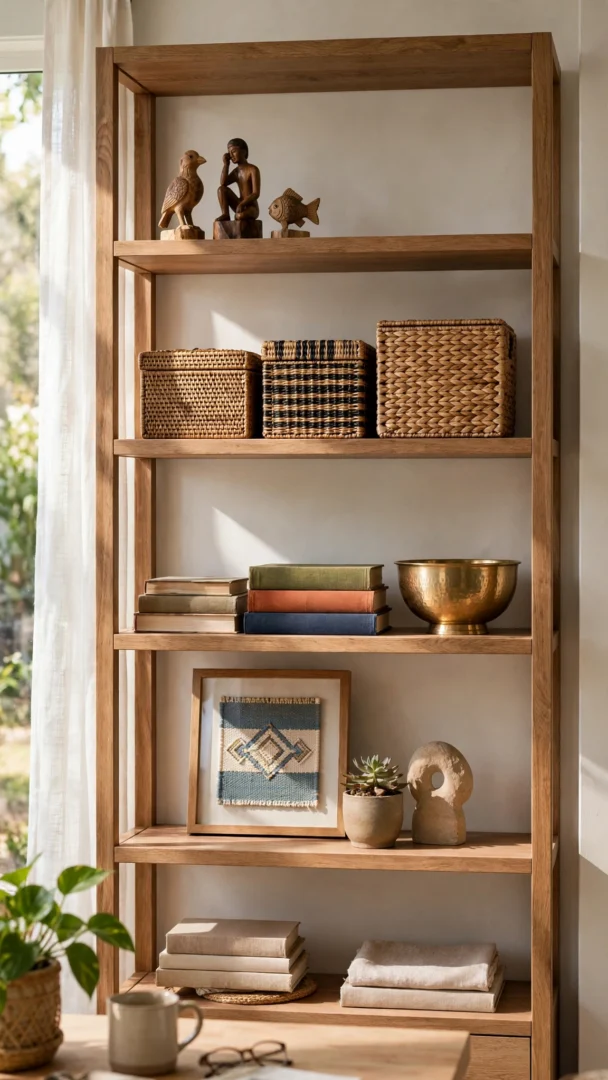
A bookshelf becomes Afrohemian art when books share space with curated cultural objects: small carved figures, woven boxes, a brass bowl, framed textile swatches. The mix of knowledge and craft tells a richer story than books alone ever could.
Perfect for home offices, living rooms, and studies where shelves are the main decor. It suits readers and collectors whose objects need a stage. The trick is restraint — leave breathing room so each piece gets its moment.
Style shelves in groups of three with varied heights, mixing vertical book stacks with horizontal ones topped by an object. Step back after each shelf and remove one thing; the edit is what separates styled from stuffed.
25. Sheer Linen Curtains With Wooden Rods
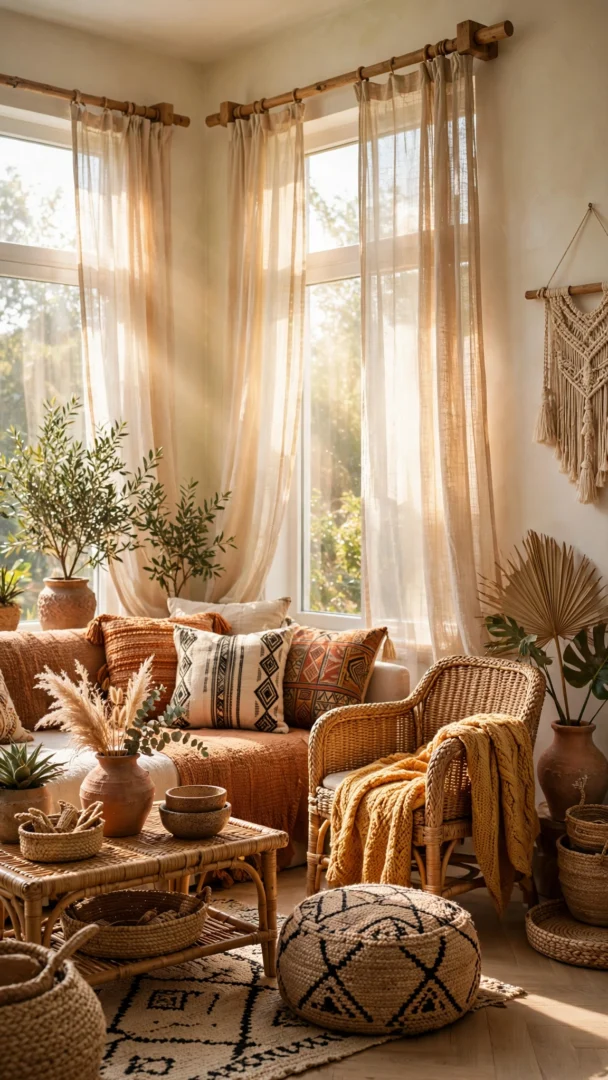
Sheer linen curtains on chunky wooden rods filter daylight into a soft golden haze that flatters every Afrohemian texture in the room. The linen’s natural slub and the rod’s handcrafted feel add quiet artisanal luxury to windows that bare blinds leave cold.
Ideal for living rooms and bedrooms where you want light without glare or exposure. Sheers suit renters since rods and curtains move with you, and they work over existing blinds for a layered window treatment. Choose warm white or flax tones, never stark white.
Hang the rod six inches above the frame and extend it six inches past each side so the window looks larger, and let the linen just kiss the floor. Two panels per window, even on narrow windows, looks fuller and more luxurious than one.
26. Patio Afrohemian Lounge Corner
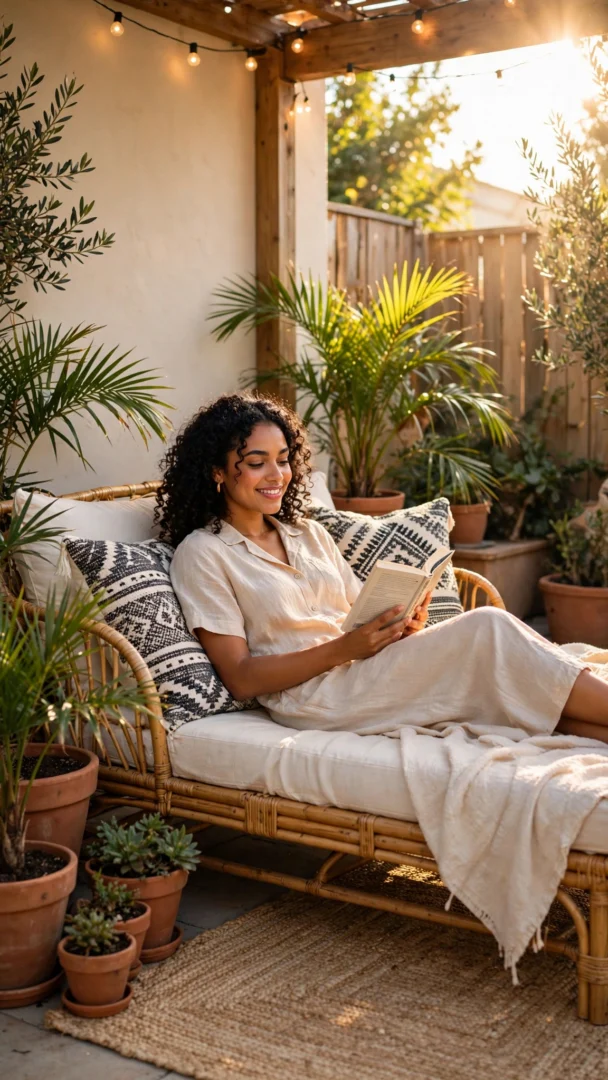
Extend the Afrohemian story outdoors with a patio lounge corner: a low rattan daybed or a pair of woven chairs, mudcloth outdoor pillows, potted palms in terracotta, and a jute outdoor rug. It becomes the golden-hour spot everyone gravitates toward.
Perfect for balconies, small patios, and anyone who loves outdoor living from spring through fall. A young woman lounging with a book shows how resort-like it can feel. Choose outdoor-rated textiles so the look survives weather.
Anchor the corner with the rug, angle the seating toward the best view, and string warm fairy lights overhead for evening magic. A side table for drinks and a basket for throws complete the lounge.
27. Bold Wallpaper With Textile Art
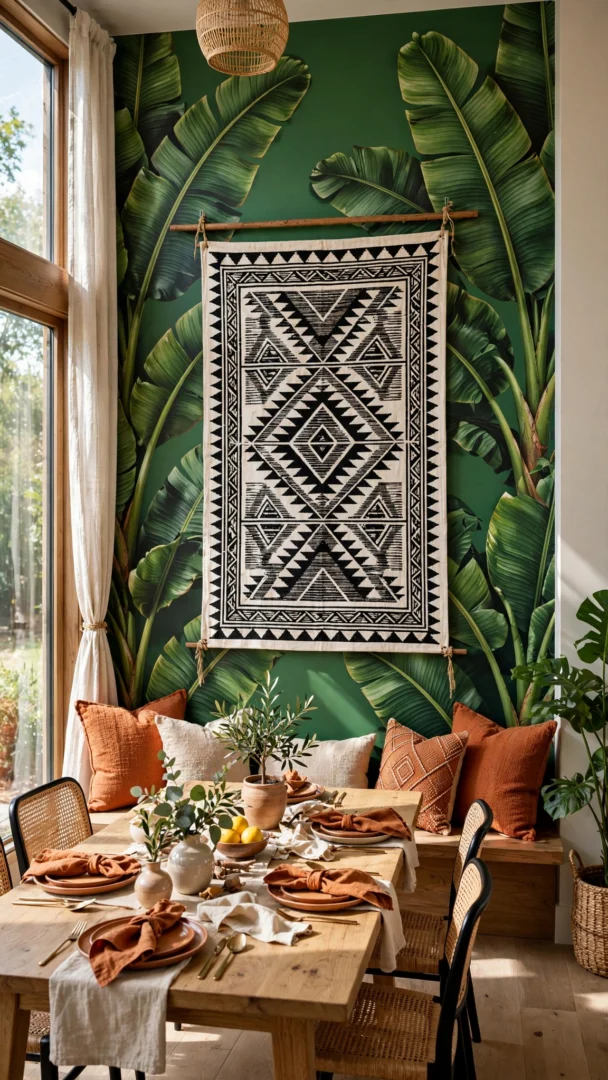
A bold wallpaper — think oversized banana leaves, tribal geometrics, or a painterly savanna scene — paired with a single large textile art piece creates a maximalist Afrohemian feature wall with real confidence. The wallpaper sets the scene; the textile adds handcrafted soul.
Ideal for dining rooms, powder rooms, and bedrooms where one dramatic wall can transform the space. It suits renters too, thanks to peel-and-stick options that remove cleanly. Keep the other walls calm so the feature wall stays the hero.
Hang the textile art — a mudcloth wall hanging or woven tapestry — centered on the wallpapered wall with simple wooden dowels. Pull one accent color from the wallpaper into nearby pillows or curtains to tie the room together.
28. Woven Wall Hanging Statement Piece
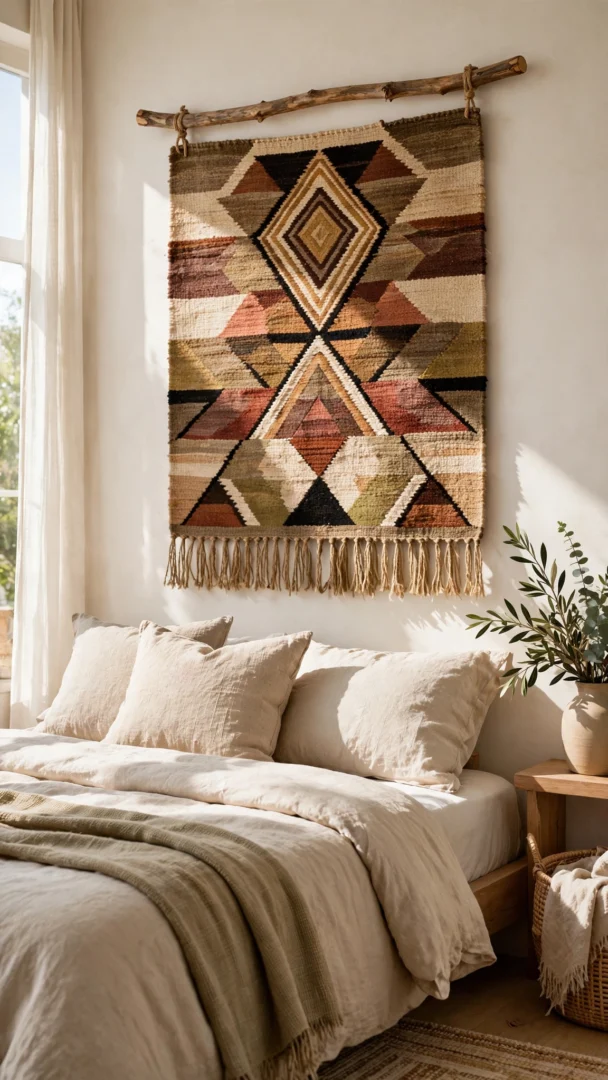
A large handwoven wall hanging in earthy tones and graphic African-inspired motifs softens hard walls while adding serious artisanal presence. Hung above a bed, sofa, or fireplace, it does the work of a painting with far more texture and warmth.
Perfect for rooms that feel echoey or stark, and for anyone who wants big art without a big budget. The textile absorbs sound, which makes it a smart pick for bedrooms and home offices. Choose natural fibers — wool, cotton, jute — for the richest texture.
Hang it from a simple wooden dowel or branch with the bottom edge at least six inches above the furniture. Let it be the only art on that wall so its scale and texture command full attention.
29. Wooden Bead Garland Accents
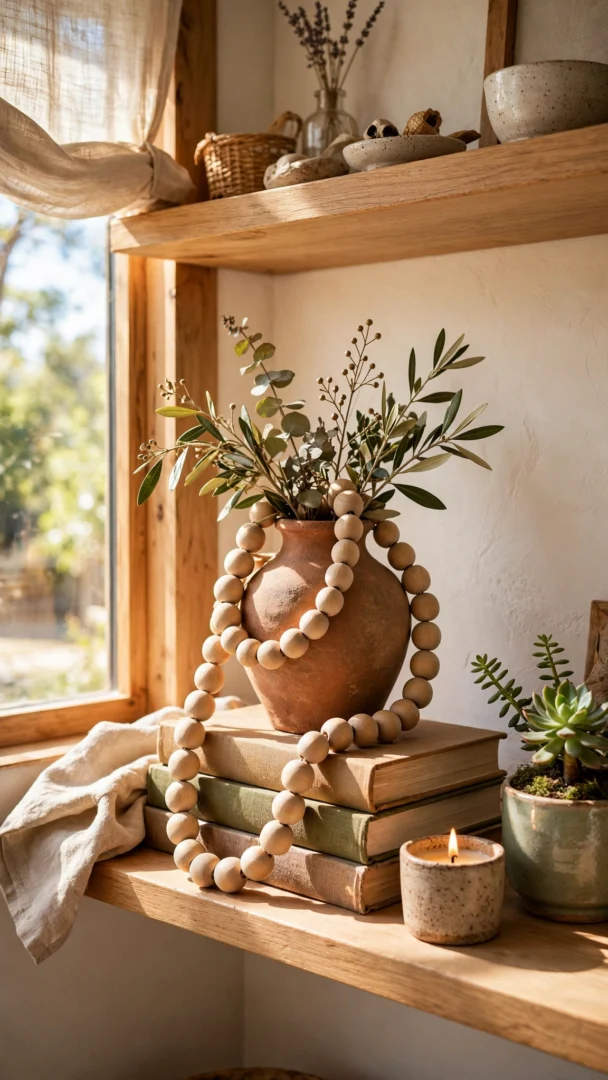
Strands of large wooden beads — draped over a vase, hung from a wall hook, or looped across a mantel — are the easiest Afrohemian accent you can add. Their organic rhythm and warm wood tones bring a handcrafted, almost jewelry-like detail to shelves and tables.
Ideal for minimalists who want texture without new furniture, and for styling open shelves that look bare. Bead garlands suit every room and every season, and they layer beautifully with books, candles, and small plants. Choose natural, stained, or whitewashed beads to match your palette.
Drape the garland in a loose swag rather than a tight coil, letting the ends hang at different lengths. Two strands of different bead sizes layered together look more collected than a single uniform strand.
30. Afrohemian Kitchen Shelf Styling
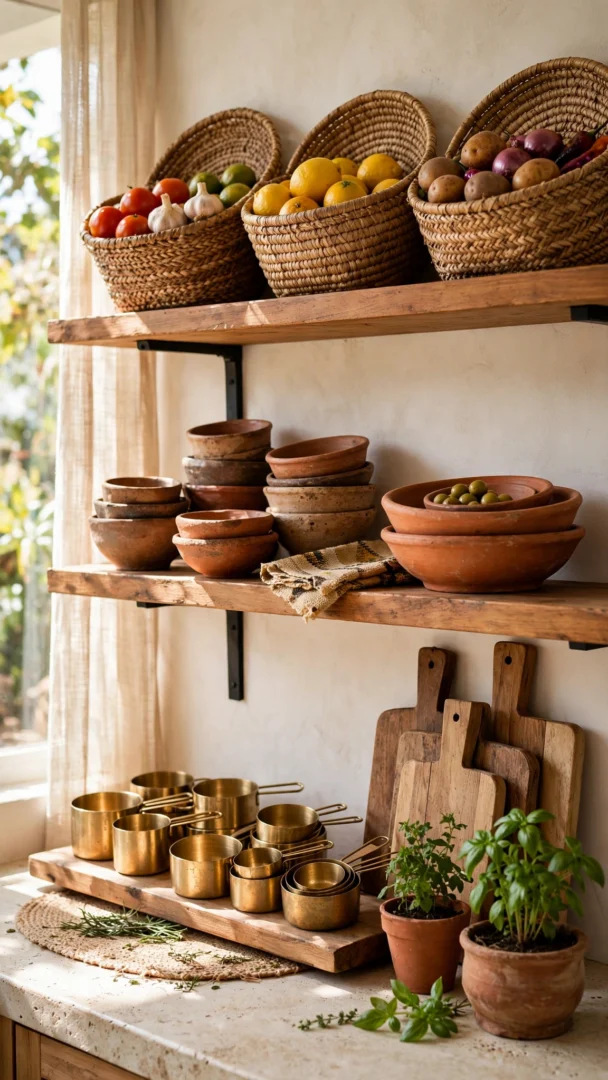
Open kitchen shelves styled the Afrohemian way — woven baskets for produce, handmade clay bowls, wooden cutting boards, a small potted herb, brass measuring cups — turn everyday storage into decor. The kitchen feels warmer, more personal, and effortlessly curated.
Perfect for kitchens with open shelving or glass-front cabinets where contents are always on display. It suits cooks who reach for these items daily, so the styling stays honest and functional. Corral small items in baskets so the shelves read as organized, not cluttered.
Group items by material — all the wood together, all the clay together — and repeat each material at least twice across the shelves for rhythm. Keep everyday dishes on the lowest shelf and decorative pieces up high where they stay clean.
Frequently Asked Questions
What is Afrohemian decor?
Afrohemian decor is a 2026 Pinterest-predicted trend that fuses African design heritage with relaxed bohemian style. It features vivid Nigerian textiles like adire and kente, Ethiopian wall art, handwoven natural-fiber baskets, rattan and bamboo pieces, earthy clay and terracotta, and warm metallic accents — all layered for a soulful, collected look.
How do I start decorating Afrohemian on a budget?
Start with textiles and small objects: mudcloth or adire throw pillows, a woven basket cluster on the wall, and a few brass candleholders. These three moves transform a room for very little money. Thrift stores and fair-trade marketplaces are excellent sources for authentic handmade pieces.
Can Afrohemian style work in a small apartment?
Absolutely. Afrohemian decor is naturally small-space friendly because it relies on textiles, wall baskets, and layered lighting rather than bulky furniture. A rattan beaded curtain can zone a studio, floor poufs add seating without footprint, and wall-mounted woven art adds impact without taking floor space.
What colors define the Afrohemian palette?
The palette centers on earthy neutrals — warm tans, clay, terracotta, natural jute — punctuated by rich indigo blues from adire fabric, the gold-green-red of kente cloth, deep blacks from mudcloth motifs, and warm brass and bronze metallics. Lush plant greens complete the picture.
Where can I buy authentic African decor pieces?
Look for fair-trade marketplaces, artisan cooperatives, and shops that name the makers and origins of their pieces — many specialize in Senegalese baskets, Malian mudcloth, and Ghanaian kente. Buying directly from artisans or certified fair-trade sellers ensures your decor supports the communities behind the craft.
How do I mix Afrohemian pieces with my existing furniture?
Afrohemian elements are natural mixers. Start by adding textiles — pillows, throws, a runner — to your current sofa and bed, then layer in a woven pendant light or basket wall. Because the palette is earthy and the materials are natural, these pieces harmonize with modern, Scandinavian, mid-century, and traditional furniture alike.
Is Afrohemian decor the same as boho decor?
Not quite. Classic boho is a free-spirited global mix with no single cultural anchor, while Afrohemian specifically centers African design heritage — Nigerian textiles, Ethiopian art, West African carving and weaving traditions — blended with bohemian ease. The result is more grounded, more storied, and more intentional than generic boho.
Conclusion
Afrohemian decor proves that the most beautiful rooms are the ones with a story to tell. By layering Nigerian textiles, handwoven baskets, carved wood, warm metals, and lush greenery, you can build a home that feels both deeply personal and effortlessly on-trend for 2026. Start with one or two ideas that speak to you — a mudcloth throw here, a basket cluster there — and let your collection grow organically. The beauty of this style is that it rewards slow, intentional curation over fast decorating, so take your time and enjoy building a space that is unmistakably yours.