There is a special kind of magic in a kitchen that smells like rosemary, beeswax, and simmering cinnamon — and this fall, the whole internet agrees. Pinterest named the “Kitchen Witch” one of its top fall 2026 trends, fueled by the much-anticipated Practical Magic sequel and a growing love for hands-on, old-fashioned kitchen rituals. Forget chasing the hottest new viral recipe: this is about slowing down, blending your own spice mixes, drying herbs from the garden, pouring your own candles, and turning your kitchen into a warm, fragrant apothecary.
Whether you rent a tiny apartment or tend a sprawling farmhouse kitchen, this guide rounds up 25 kitchen witch aesthetic ideas that bring the trend home — from vintage apothecary jars and hanging herb bundles to candle-making corners, kombucha stations, and moon-phase wall art. Scroll through, save your favorites, and get ready to make a little everyday magic.
1. Vintage Apothecary Jar Herb Collection
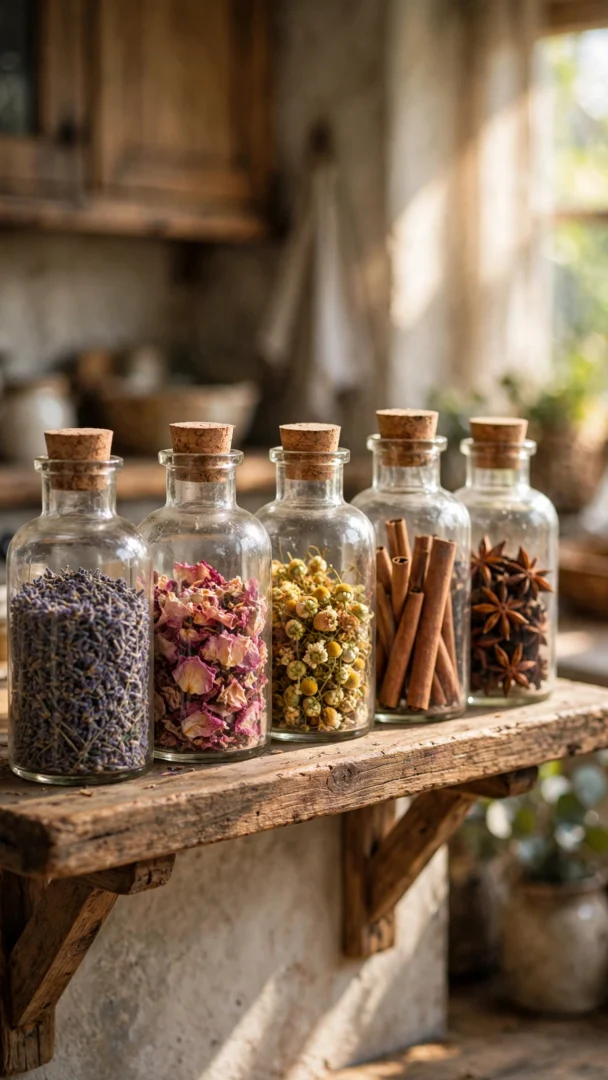
A row of vintage-style apothecary jars filled with dried herbs, flower petals, and spices is the signature look of the kitchen witch aesthetic. Hunt down mismatched glass jars with cork or glass stoppers at thrift stores and flea markets, fill them with lavender buds, rose petals, chamomile flowers, cinnamon sticks, and star anise, and line them up on a wooden shelf or windowsill where the light catches the colors. The layered textures and earthy tones instantly make the kitchen feel like a charming old-world apothecary.
This idea suits anyone who loves the look of a collected, storied kitchen rather than a showroom-perfect one. It is especially lovely for small kitchens, since a single shelf of jars delivers huge visual impact without taking up counter space. Renters love it too — no drilling, no paint, just beautiful jars you can take with you.
Keep herbs out of direct harsh sunlight so they do not fade, and replace the contents every few months if you are displaying real dried botanicals. For a zero-maintenance version, fill the jars with faux dried flowers and a few real cinnamon sticks or dried orange slices for scent.
2. Hanging Dried Herb Bundles
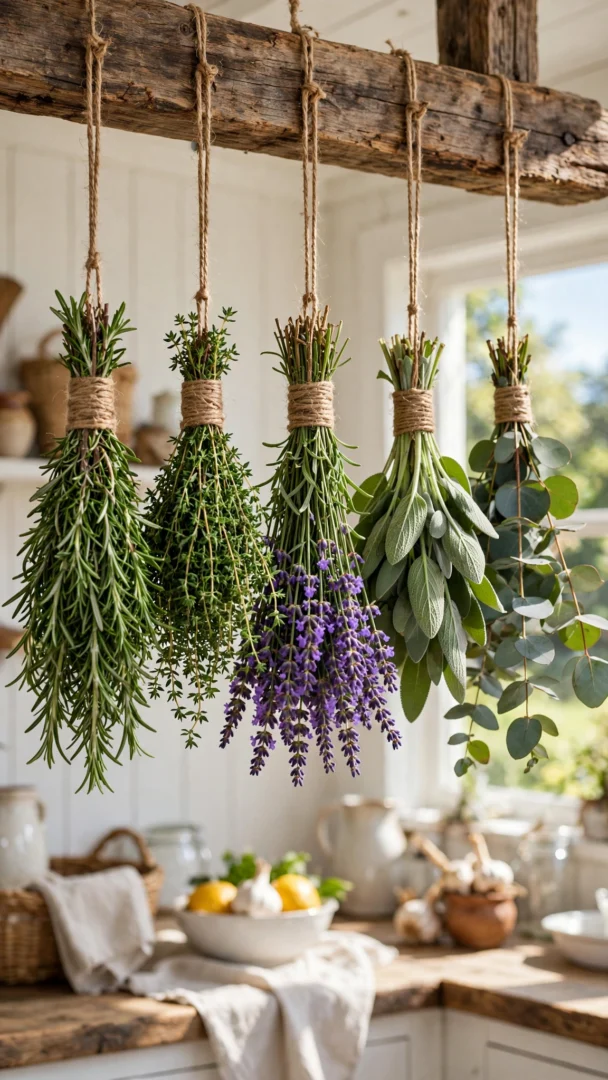
Nothing says kitchen witch quite like bundles of herbs hanging upside down to dry. Tie small bunches of rosemary, thyme, lavender, sage, and eucalyptus with twine, and hang them from a wooden beam, a copper rail, or simple wall hooks. As they dry over a week or two, they deepen in color and fill the kitchen with fragrance — and once crisp, the leaves crumble straight into your cooking.
This is a dream idea for gardeners and farmers-market regulars who end up with more fresh herbs than they can use. It also suits cooks who want beauty and function in one: the bundles are decoration first, pantry second. Even a single window with three or four bundles captures the look.
Hang bundles in a spot with good air circulation but away from the steamiest part of the stove, and give each bundle room to breathe so nothing molds. Snip a small bunch to start — ten sprigs tied at the stems is the perfect beginner size.
3. Windowsill Indoor Herb Garden

A sunny windowsill lined with potted basil, mint, chives, parsley, and thyme is the beating heart of a kitchen witch kitchen. Use terracotta pots, vintage tins, or ceramic planters in mismatched styles for that gathered-over-time feel, and keep a small pair of scissors nearby so snipping fresh herbs becomes part of your daily cooking ritual. The living green softens the whole room and gives you fresh flavor at arm’s reach.
This idea is perfect for apartment dwellers and beginner gardeners — if you have a bright window, you can do it. It suits cooks who are tired of buying sad plastic packets of herbs, and families love it because kids can help water and snip. South- or west-facing windows work best, but even an east window grows mint and chives happily.
Rotate the pots a quarter turn every few days so the plants grow evenly, and pinch basil regularly to keep it bushy instead of leggy. A shallow tray underneath catches water and protects the sill, and grouping pots close together raises humidity, which herbs love.
4. Moon-Phase Wall Decor in the Kitchen
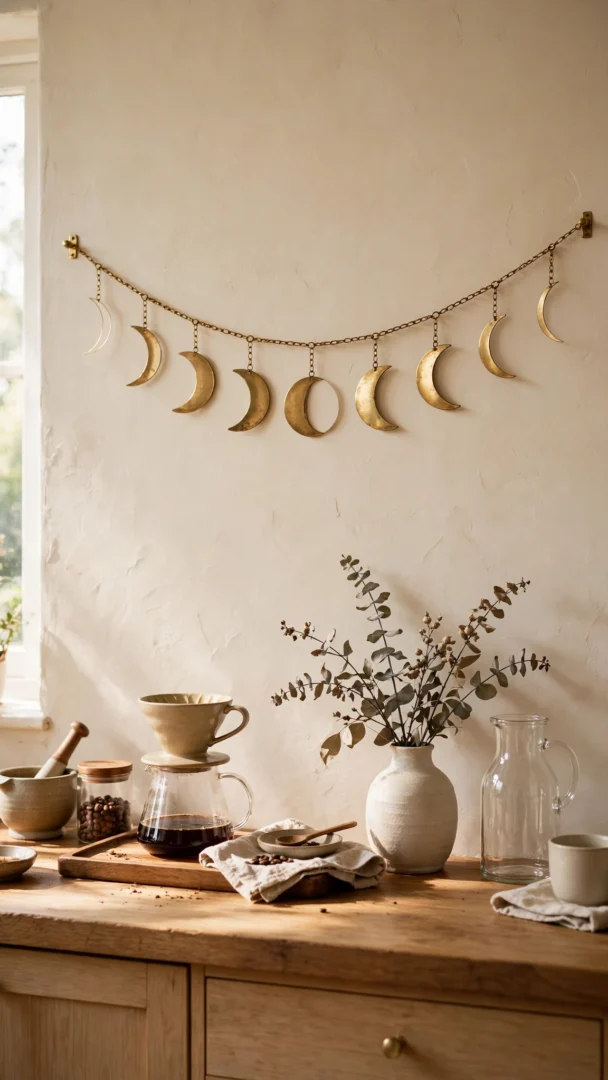
A string of moon-phase art — the waxing and waning cycle rendered in wood, brass, or ceramic — adds instant witchy charm above the coffee station or along an empty wall. The moon motif nods to the old rhythms of planting, harvesting, and preserving, and the symmetrical crescents read as elegant rather than kitschy when you choose natural materials. Hang a single horizontal garland or a vertical strand in a quiet corner.
This suits anyone who wants the aesthetic without committing to a full decor overhaul — it is one piece, hung in ten minutes. It is lovely in modern kitchens too, where the organic moon shapes soften all those hard lines. Night owls and astrology fans will feel right at home.
Keep the scale modest: a garland about two feet wide reads as art, while a wall-filling version can overwhelm a small kitchen. Hang it where it will not get splattered — above a coffee station or beside the pantry door is ideal.
5. DIY Candle-Making Corner
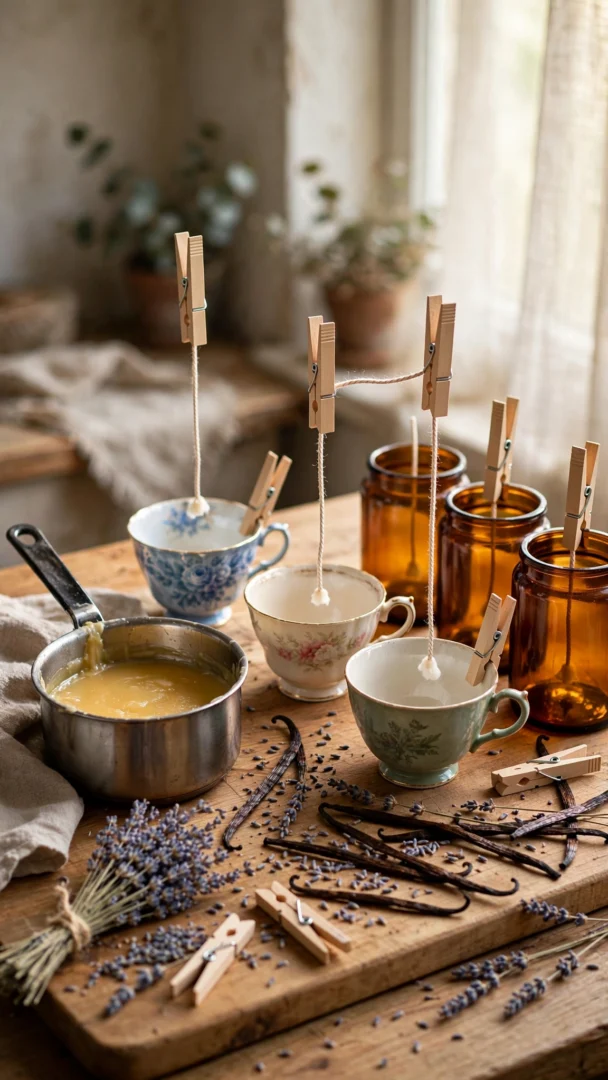
Carve out a small corner of the counter for candle making, and your kitchen doubles as a fragrant little workshop. A double boiler or old saucepan, a bag of soy wax flakes, cotton wicks, and a few vintage teacups or amber jars are all you need to start. Stir in dried lavender, a drop of vanilla, or a pinch of cinnamon, pour into your vessels, and let them set — homemade candles that smell like your kitchen’s soul.
This idea is made for crafty souls and gift-givers: a batch of poured candles becomes holiday and hostess gifts for months. It suits patient beginners too, since soy wax is forgiving and cleanup is easy. Anyone who loves a cozy, flickering kitchen in the evening will adore it.
Always secure the wick with a clothespin or chopstick laid across the jar mouth so it stays centered, and never leave melting wax unattended. Start with small 4-ounce vessels — they set faster and make the sweetest gifts.
6. Dried Citrus Slice Garland
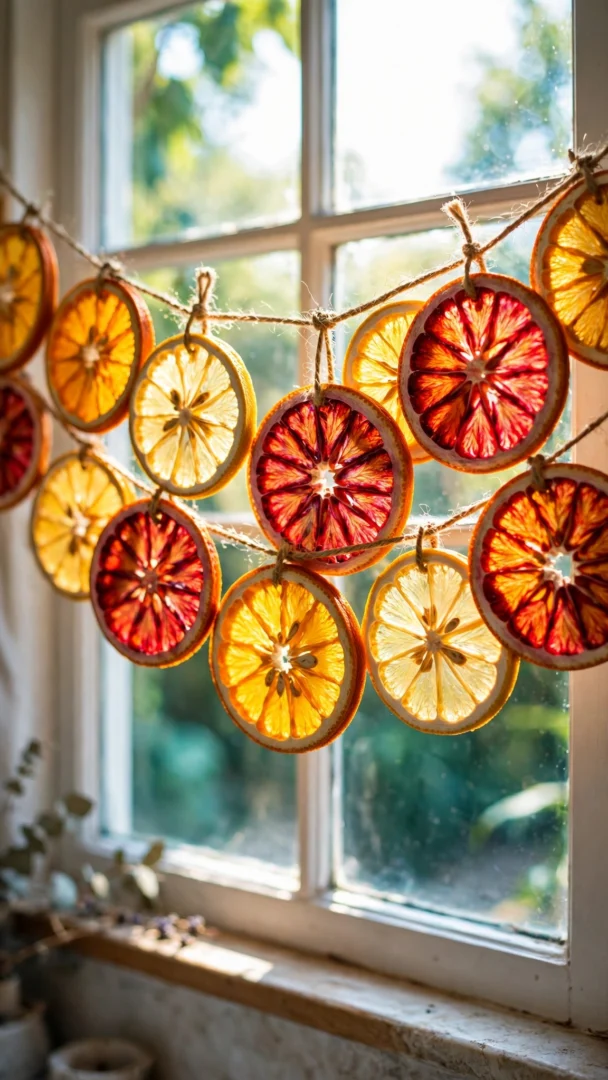
Thin slices of orange, lemon, and blood orange, dried low and slow in the oven until translucent and jewel-like, strung on twine into a garland — this is one of the prettiest kitchen witch crafts there is. Drape it across a window, along open shelving, or over the mantel of a kitchen fireplace. The slices glow like stained glass when backlit, and they smell faintly of citrus for weeks.
This suits the budget-conscious decorator: a bag of oranges and an afternoon is all it costs. It is wonderful for holiday decorating too, since the garland transitions seamlessly from fall into Christmas. Anyone who loves natural, plastic-free decor will be smitten.
Slice the fruit as thin as you can — about an eighth of an inch — and dry at 200°F for two to three hours, flipping once, until the slices feel leathery. Blot the slices with a paper towel first to speed things up, and store extras flat in a box for next season.
7. Spice Blending Station with Vintage Labels
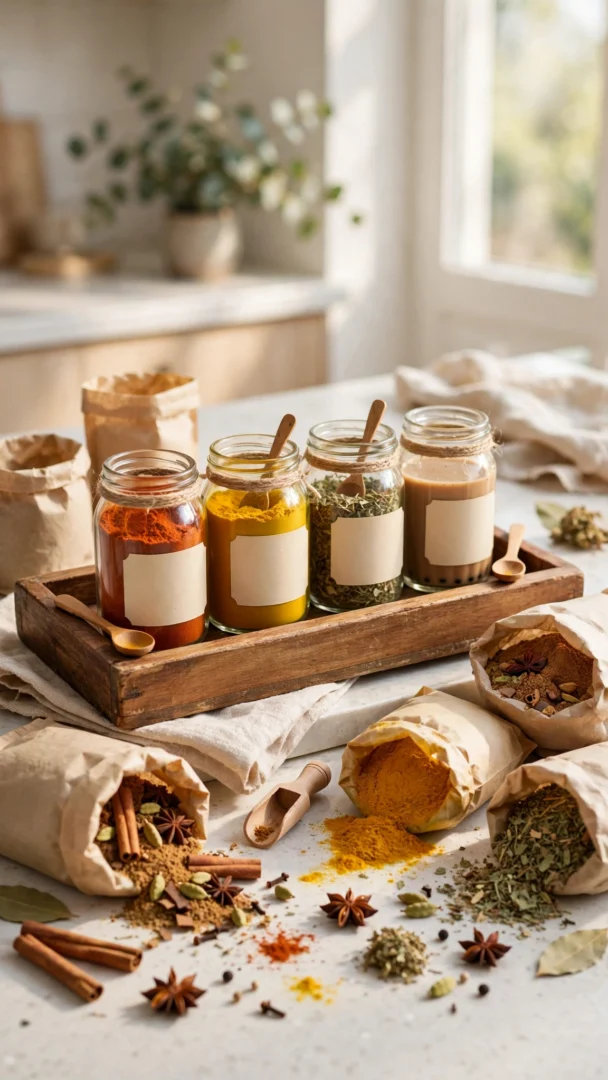
Set up a dedicated little station for blending your own spice mixes — pumpkin pie spice, herbes de Provence, chai masala, za’atar — in small glass jars with handwritten or vintage-style labels. A wooden tray corrals the jars, a set of tiny spoons, and a few bulk bags of whole spices, and suddenly seasoning dinner feels like mixing a potion. The labels are half the charm, so lean into beautiful handwriting or printable apothecary-style tags.
This is perfect for adventurous cooks who are tired of stale supermarket blends. It suits small kitchens because the whole station fits on one tray that can be tucked into a cabinet. Gift-givers love it as well — a trio of custom blends in pretty jars is a thoughtful present.
Toast whole spices in a dry skillet for a minute before grinding to wake up their flavor, and date your labels so you use blends within six months. A tiny funnel makes filling narrow jars mess-free.
8. Simmer Pot Ritual on the Stove
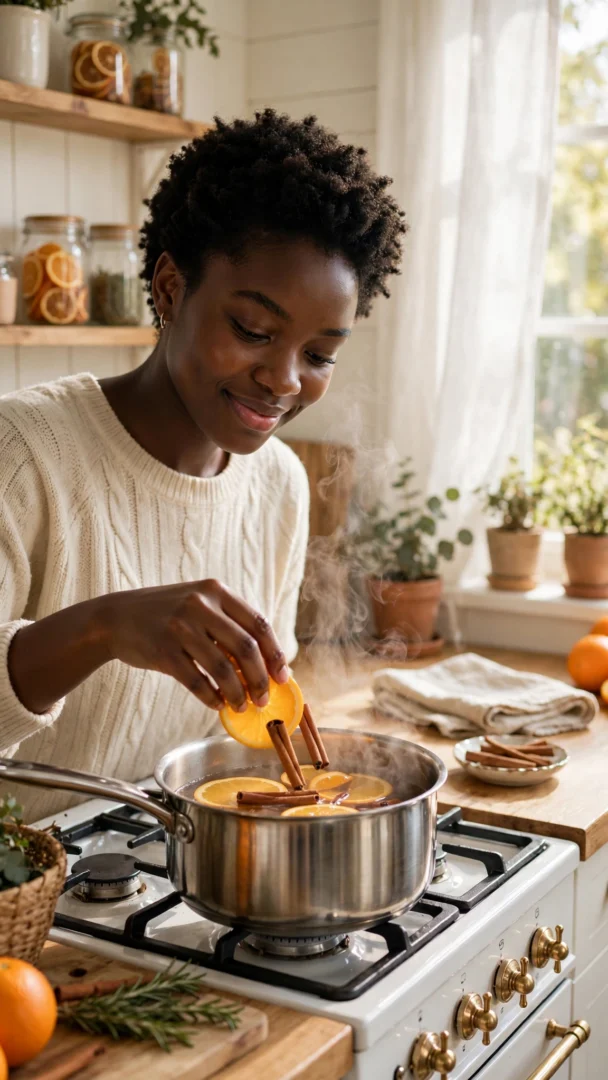
A simmer pot — a saucepan of water gently bubbling with orange slices, cinnamon sticks, cloves, rosemary, and vanilla — is the kitchen witch’s signature scent ritual. It perfumes the whole house better than any plug-in, costs almost nothing, and turns an ordinary afternoon into something ceremonial. Keep a “recipe” card on the fridge with your favorite seasonal combinations so guests can start one too.
This suits anyone who loves a fragrant home without synthetic fragrances. It is ideal for open-plan homes where cooking smells travel, and for hosts who want the house to smell incredible when guests arrive. Fall and winter are peak simmer-pot season, but a lemon-rosemary version is lovely in spring.
Never let the pot boil dry — set a timer and top up the water every hour or so. Save citrus peels and apple cores through the week in a freezer bag, and you will always have simmer-pot ingredients on hand.
9. Crystal Sun-Catcher in the Window
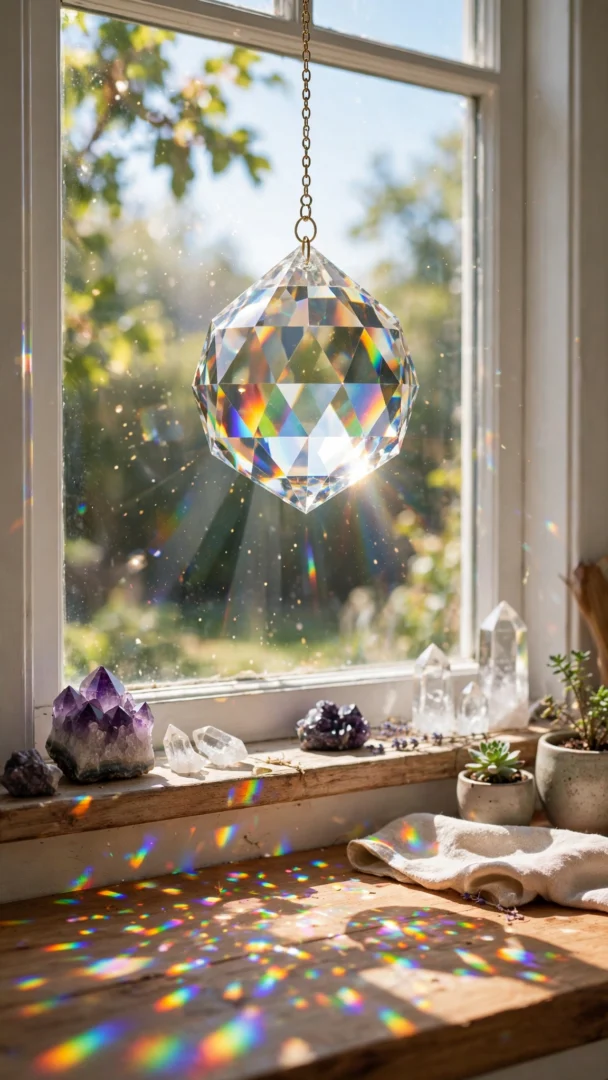
Hang a faceted crystal or a beaded sun-catcher in the kitchen window and watch rainbows dance across the counters every sunny morning. The refracted light feels quietly magical, and the crystals themselves — amethyst, quartz, citrine — echo the gemstone collections of old apothecaries. Choose a simple prism on a chain or a handmade beaded strand; either way, it is jewelry for the window.
This suits light-lovers and anyone whose kitchen needs a little sparkle without clutter. It is renter-friendly, costs very little, and takes seconds to hang. People who work from the kitchen table especially love the moving rainbows during the workday.
Hang the crystal where direct sun hits it for at least part of the day — east or south windows are best. Keep it out of reach of curious cats, who find dangling crystals irresistible, and wipe it occasionally so it keeps sparkling.
10. Botanical-Print Linen Collection
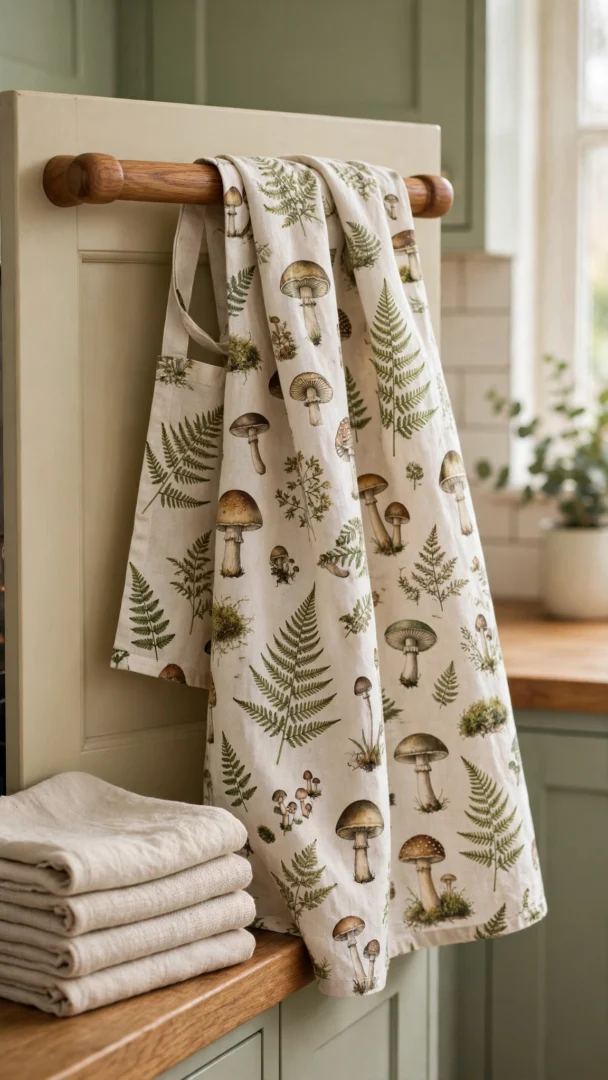
Swap plain kitchen linens for tea towels, aprons, and oven mitts printed with botanical illustrations — ferns, mushrooms, herbs, and wildflowers in the style of vintage field guides. The prints bring the apothecary aesthetic into the everyday tools of the kitchen, and they look beautiful folded over the oven handle or hanging from a hook. Choose natural linen or cotton in cream, sage, or charcoal for the most timeless feel.
This suits anyone who wants the kitchen witch look in the details rather than the big gestures. It is perfect for shared households where not everyone is on board with a full aesthetic overhaul — linens are an easy, low-commitment swap. Hosts love them because guests always comment.
Wash botanical linens inside out in cool water to keep the prints crisp, and buy a few extra tea towels — the pretty ones always seem to be in the laundry when you need them. A matching apron makes the set feel intentional.
11. Kombucha Brewing Corner
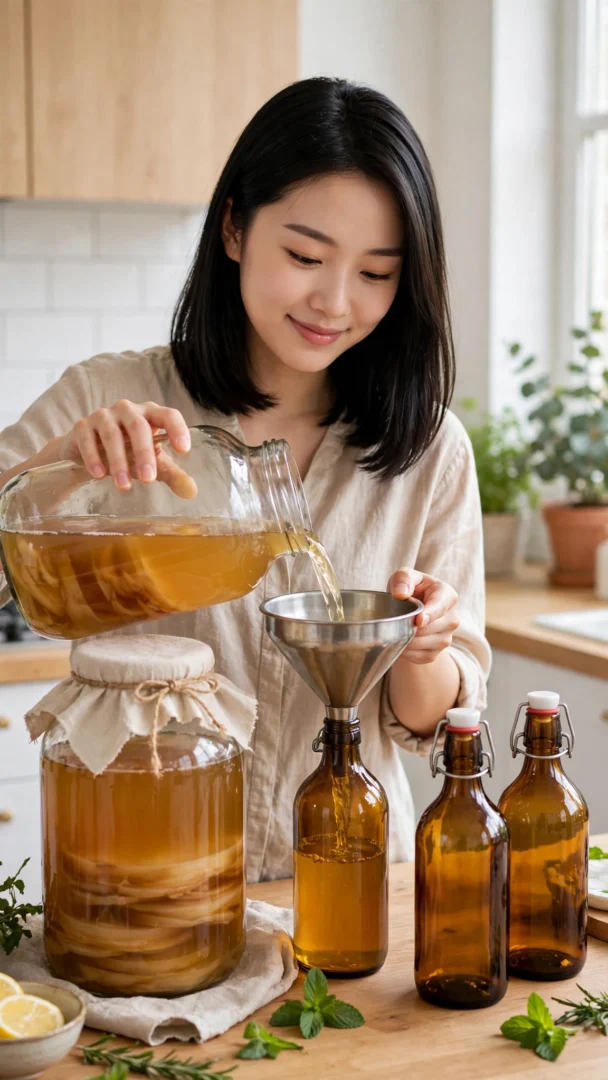
A gallon jar of kombucha quietly fermenting on the counter, draped with a cloth cover and tied with twine, is peak kitchen witch energy. The SCOBY floating inside looks wonderfully mysterious, and the ritual of brewing, tasting, and bottling your own fizzy tea connects you to one of humanity’s oldest kitchen crafts. Flavor the second ferment with ginger, berries, or lavender for bottles that feel like potions.
This suits the health-curious and the DIY-obsessed — if you drink store-bought kombucha regularly, home brewing pays for itself fast. It is great for patient personalities who enjoy slow projects, and for anyone who loves having a living, bubbling thing in the kitchen. Start with a kit if you are nervous.
Keep the brew between 68 and 80°F, away from direct sun, and always use clean hands and utensils to avoid mold. Taste daily after day seven — when it is pleasantly tart with a hint of sweetness, it is ready to bottle.
12. Brass Mortar and Pestle Vignette
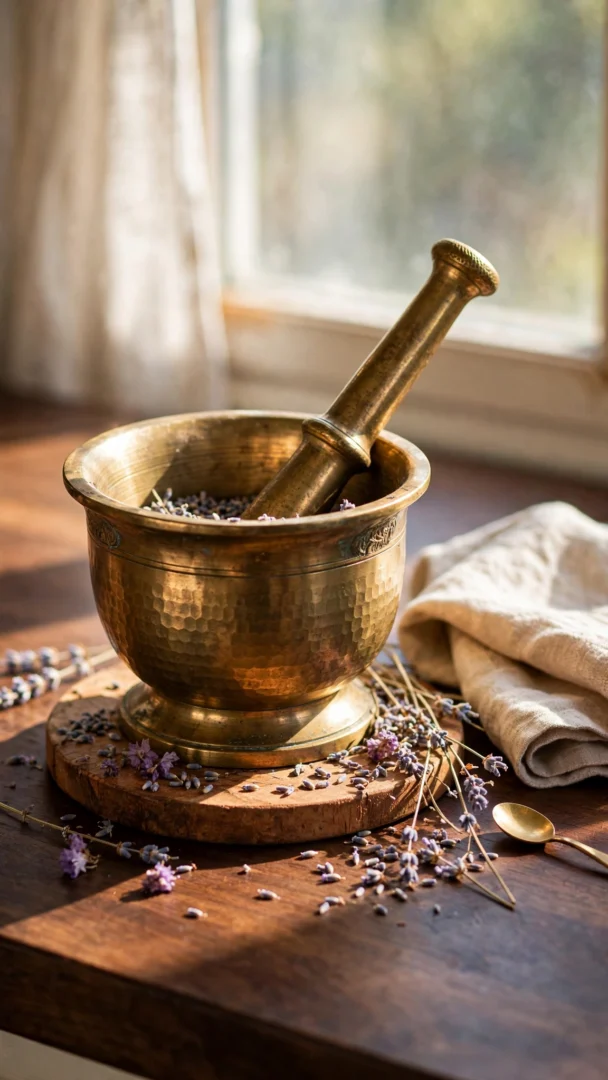
A heavy brass mortar and pestle, displayed on a small wooden board with a few dried botanicals and a linen cloth, is both sculpture and tool. Use it to crush spices, grind dried herbs, and muddle cocktail botanicals, then leave it out — the warm brass glows beautifully in kitchen light and instantly signals old-world craft. Pair it with a tiny brass spoon and a folded recipe card for a styled little corner.
This suits cooks who grind their own spices and cocktail lovers who muddle fresh herbs. It is ideal for small styled moments — a single shelf, the corner of the counter, beside the stove. Anyone drawn to vintage kitchenware will find it irresistible.
Season a new mortar by grinding plain rice to a powder and discarding it — this removes stone dust and smooths the interior. Rinse with warm water only, no soap, and dry it immediately so the brass keeps its shine.
13. Herbal Wreath on the Kitchen Door
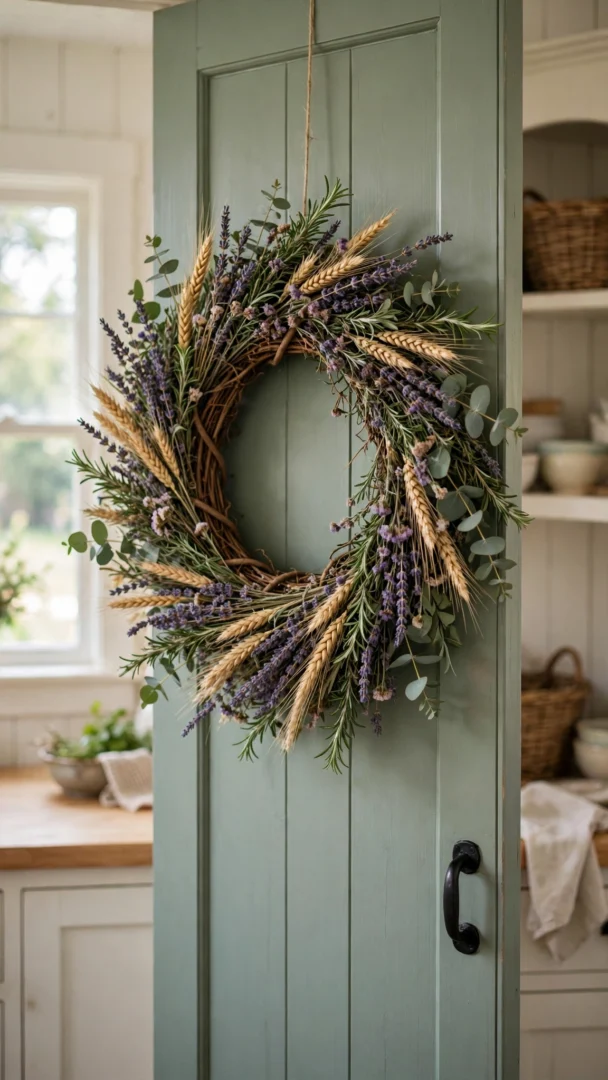
Trade the generic seasonal wreath for one woven from dried lavender, wheat, rosemary, and eucalyptus on a simple grapevine base. Hung on the pantry or kitchen door, it greets you with fragrance every time you walk in, and the muted purples, greens, and golds are beautiful against any door color. It reads as autumn-harvest rather than holiday-specific, so it works from September straight through winter.
This suits anyone who loves a fragrant entry and natural materials. It is wonderful for farmhouse and cottage kitchens, and for hosts who want the first impression of the kitchen to feel warm and intentional. Dried wreaths are also wonderfully low-maintenance — no watering, no wilting.
Hang dried wreaths away from the steamiest spots and direct rain if the door leads outside. A light spritz of hairspray helps loose buds stay put, and storing it in a box between seasons keeps it looking fresh for years.
14. Loose-Leaf Tea Blending Bar
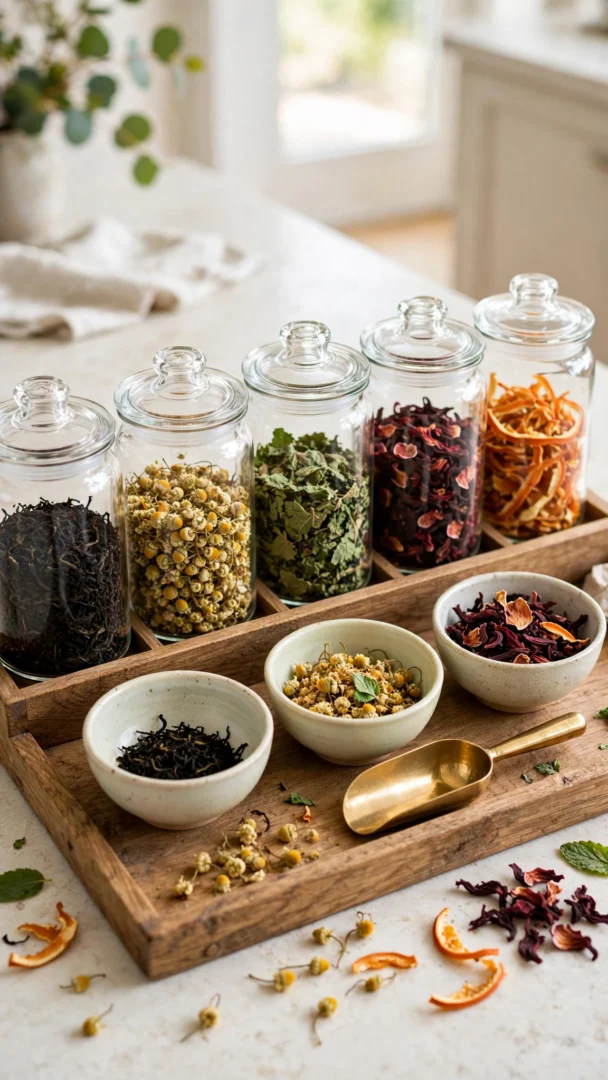
Line up glass canisters of loose-leaf teas — black, green, chamomile, peppermint, hibiscus — on a wooden tray with a few blending bowls, a scoop, and small tins for your custom mixes. Stirring together a “sleepy time” blend of chamomile, lavender, and lemon balm, or a “morning magic” mix of black tea and dried orange peel, feels wonderfully ritualistic. Label each tin with its name and purpose, and the bar becomes a daily moment of intention.
This suits tea lovers who have outgrown tea bags and anyone who finds comfort in small daily rituals. It is perfect for households with evening wind-down routines, and for gift-givers — a tin of custom blend is a lovely present. The whole bar fits on a tray, so small kitchens can play too.
Store loose tea away from light, heat, and strong kitchen smells — a cabinet near the kettle is ideal. Use one teaspoon of blend per cup plus one for the pot, and steep herbal blends a full five minutes for the deepest flavor.
15. DIY Beeswax Wrap Station
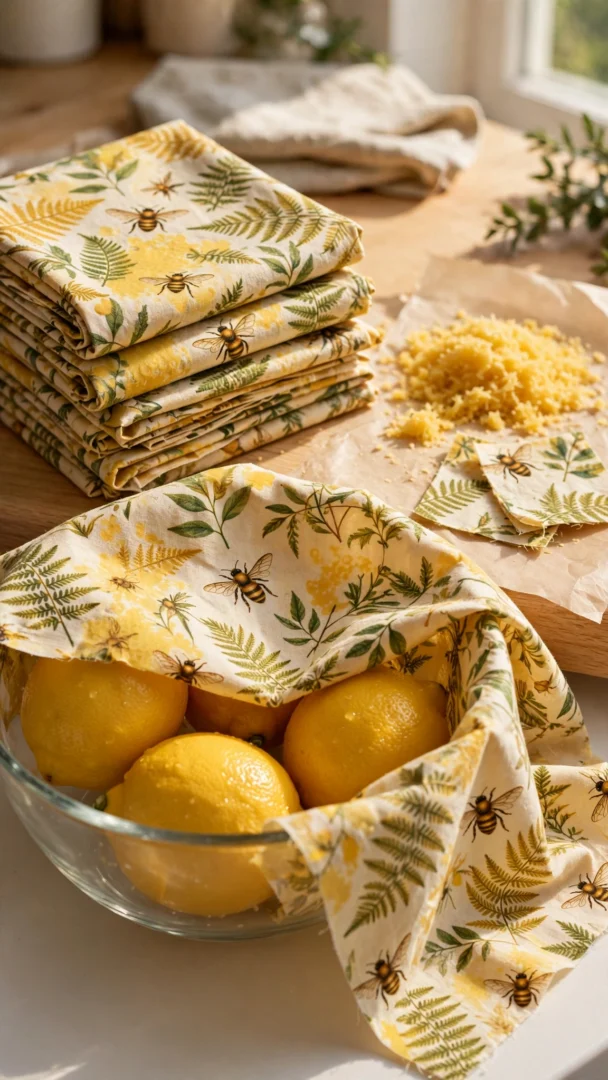
Melt beeswax onto squares of cotton fabric, and you have reusable food wraps that smell faintly of honey and look beautiful draped over bowls. Set up a little station with pre-cut fabric, grated beeswax, and parchment paper, and making a batch becomes a cozy weekend project. Choose fabrics in botanical or bee prints to lean into the aesthetic, and the finished wraps double as pretty kitchen decor stacked in a basket.
This suits eco-minded households working to cut plastic waste. It is a lovely project to do with older kids or friends — an afternoon, an iron, and a stack of fabric. Anyone who packs lunches or stores lots of leftovers will use them daily.
Use a dedicated old iron or a low oven (200°F) to melt the wax evenly, and refresh wraps every few months by rewaxing. Wash them in cool water only — hot water melts the coating right off.
16. Potion-Bottle Open Shelving

Turn a stretch of open shelving into a potion pantry: amber glass bottles, vintage decanters, and small vials filled with olive oils, vinegars, syrups, vanilla extract, and bitters. Backlit by under-shelf lighting or a nearby window, the amber and green glass glows like something from an apothecary’s cabinet. Decanting everyday staples into beautiful bottles makes even Tuesday-night cooking feel a little enchanted.
This suits style-lovers who cook daily and want their staples to look as good as they taste. It is ideal for kitchens with existing open shelving, and for anyone who buys quality oils and vinegars worth showing off. Minimalists beware — this one leans maximalist in the prettiest way.
Keep oils away from the hottest zone above the stove so they do not go rancid, and choose bottles with pour spouts for the ones you use daily. A small funnel and a free afternoon is all the decanting takes.
17. Sourdough Starter Shelf

A bubbling sourdough starter in a vintage glass jar, labeled with its name and feeding schedule, is a living centerpiece for the kitchen witch kitchen. Tending a starter — feeding it, watching it rise and fall, baking with it weekly — is one of the oldest kitchen rituals there is, and the jar itself, with its cloth cover and twine tie, looks right at home among the apothecary jars. Name it something whimsical; every good starter deserves a name.
This suits patient bakers and anyone who loves slow food. It is wonderful for families, since kids adore the “pet” aspect of feeding the starter. If you bake bread weekly, a starter pays delicious dividends; if not, it still makes a charming (if demanding) kitchen companion.
Feed on a consistent schedule — daily at room temperature, or weekly if refrigerated — and watch for the telltale doubling after feeding that signals a happy starter. If life gets busy, the fridge is a fine pause button for up to two weeks.
18. Amber Bottle Dried-Flower Arrangements
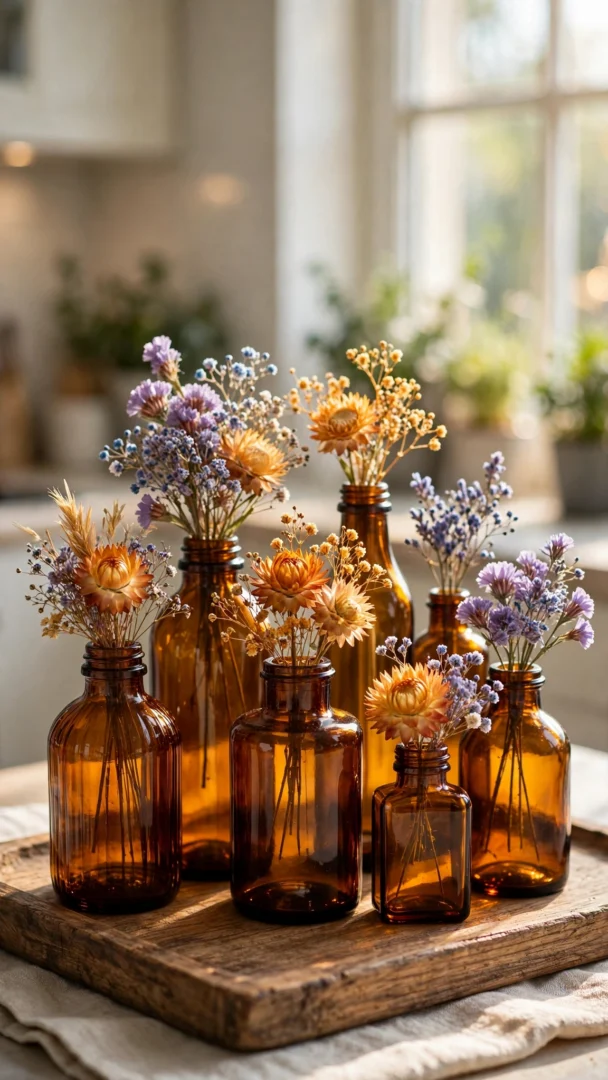
Cluster a few amber medicine bottles — tall, squat, mismatched — each holding a small bunch of dried flowers: strawflower, statice, baby’s breath, dried roses. Grouped on a tray or windowsill, they catch the light through the amber glass and look like a still life that never wilts. It is one of the easiest kitchen witch vignettes to assemble and one of the prettiest.
This suits anyone who loves flowers but not the maintenance. It is perfect for dark corners that need warmth, for rental kitchens that need personality without paint, and for seasonal refreshers — swap the flowers with the seasons. Allergy sufferers appreciate dried arrangements that do not shed pollen indoors the way fresh lilies do.
Keep dried arrangements out of steamy spots so they do not go limp, and dust them gently with a cool hairdryer every few months. Amber bottles are easy thrift finds — look in the glassware aisle, not the decor aisle.
19. Copper Pots and Black Kettle Display
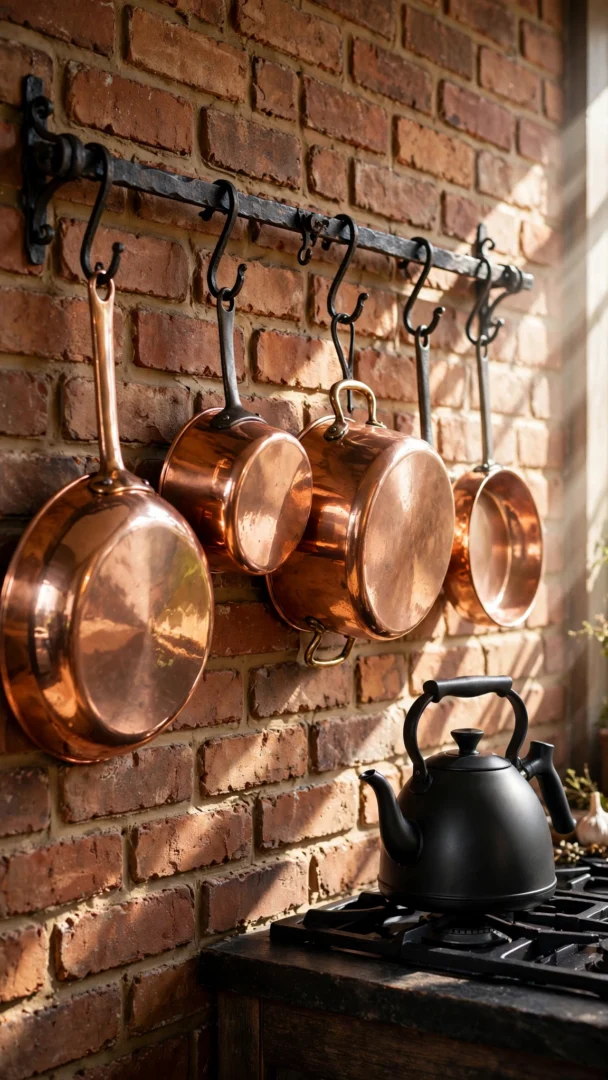
A rail of gleaming copper pots beside a matte black kettle is the kitchen witch’s answer to cookware storage. The warm copper against the dark kettle — hung from a ceiling rack or lined up on open shelving — looks straight out of a storybook kitchen, and both are workhorses: copper heats evenly, and a stovetop kettle is a daily ritual in itself. Polish the copper occasionally, or let it develop a rich patina for a more aged, collected feel.
This suits serious cooks who want their tools on display and anyone styling a rustic, cottage, or farmhouse kitchen. It is ideal over an island or against a brick or plaster wall, where the metals really sing. Vintage hunters will have a field day sourcing the pieces.
Hang the heaviest pieces from studs or a properly anchored rack — copper is not light. Line the kettle with a descaling solution monthly if you have hard water, and embrace the patina: polished copper is pretty, but aged copper tells a story.
20. Tarot-Inspired Table Setting
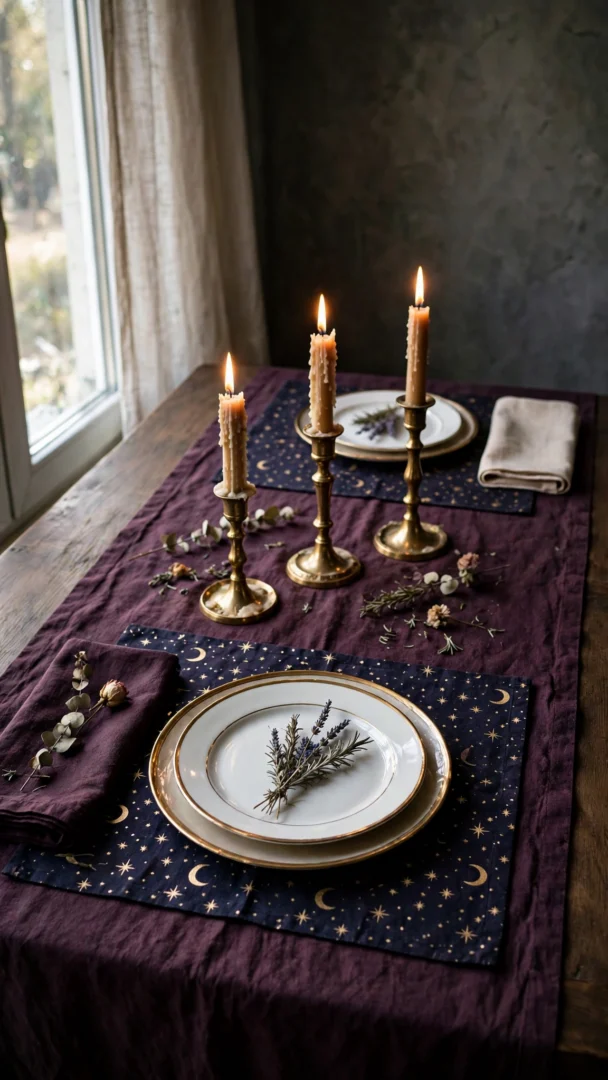
For a dinner party with a wink of magic, set the table with tarot-inspired touches: star and moon placemats, deep plum or forest-green linens, brass candlesticks, and a sprig of dried herbs at each place. It is festive without being costumey — more midnight garden party than Halloween — and guests always linger longer at a table that feels like an occasion. Finish with handwritten place cards in gold ink.
This suits the host who loves a themed table and anyone planning a fall dinner party, book club night, or birthday gathering. It is wonderful for small dining nooks that deserve dressing up, and for maximalists who believe more candles is always the answer.
Keep the centerpiece low so guests can see each other — a runner of eucalyptus and taper candles beats a tall arrangement. Battery-operated tapers in drafty rooms save you from relighting all evening.
21. Vintage Cookbook and Grimoire Shelf
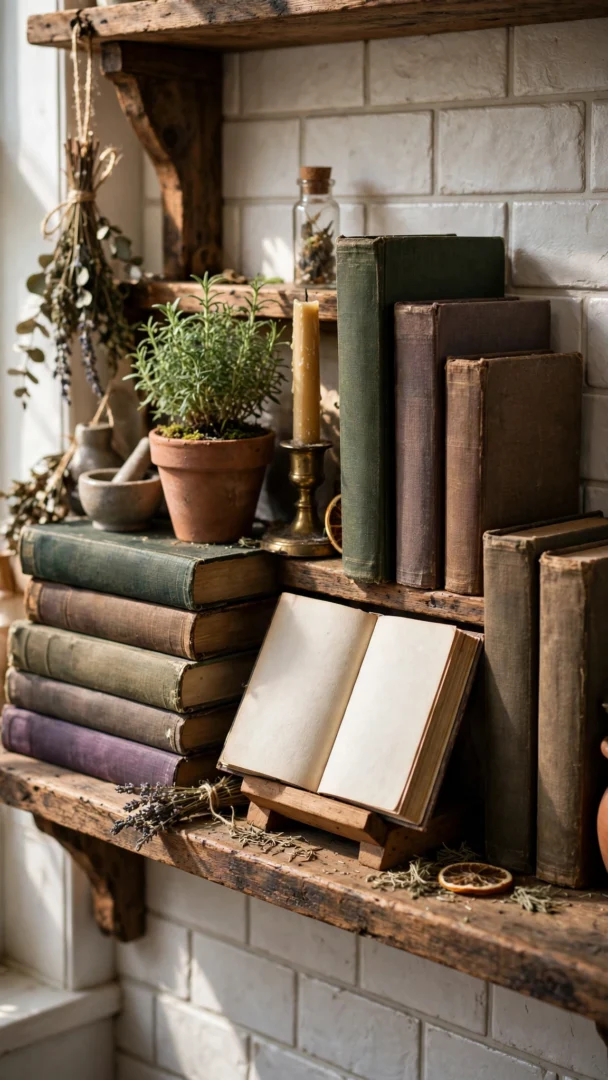
Dedicate one shelf to your most beautiful cookbooks — vintage editions with cloth bindings, illustrated herbals, and handwritten family recipe books — styled like a witch’s library. Stack them horizontally and vertically, tuck in a small plant or a brass candle holder, and keep your most-used volume open on a wooden stand. A shelf of well-loved books makes a kitchen feel wise and storied.
This suits cookbook collectors and anyone with inherited recipe boxes or grandmother’s handwritten cards. It is perfect for the wall beside the stove or above a coffee station, where the books are both decor and reference. Sentimental cooks will treasure having family recipes on display.
Photograph or scan fragile handwritten pages so the originals stay safe, and keep the shelf away from the splatter zone. A book stand for the current recipe keeps pages clean while you cook.
22. Pickling and Preserving Pantry
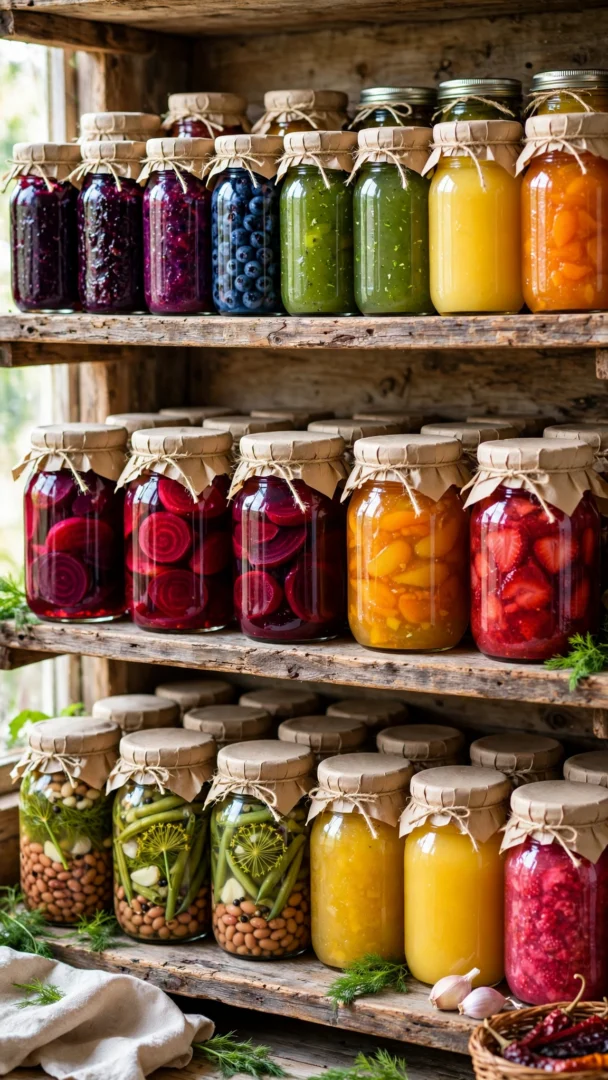
Devote a pantry shelf to the art of preserving: rows of mason jars filled with pickled beets, dilly beans, bread-and-butter pickles, and jewel-toned jams, each with a handwritten label and date. The rainbow of jars is as beautiful as it is practical — a whole season’s harvest, put by. Even a single afternoon of pickling fills a shelf and stocks months of condiments.
This suits gardeners with a bumper crop and farmers-market devotees who hate seeing produce go to waste. It is ideal for anyone who loves the satisfaction of a stocked pantry, and for gift-givers — a jar of homemade pickles is a beloved present. Start with refrigerator pickles if canning feels intimidating.
Always follow tested canning recipes for shelf-stable jars — food safety first, magic second. Label everything with contents and date, and store finished jars in a cool, dark spot. Refrigerator pickles are the perfect no-fear starting point.
23. Floating Candle Centerpiece
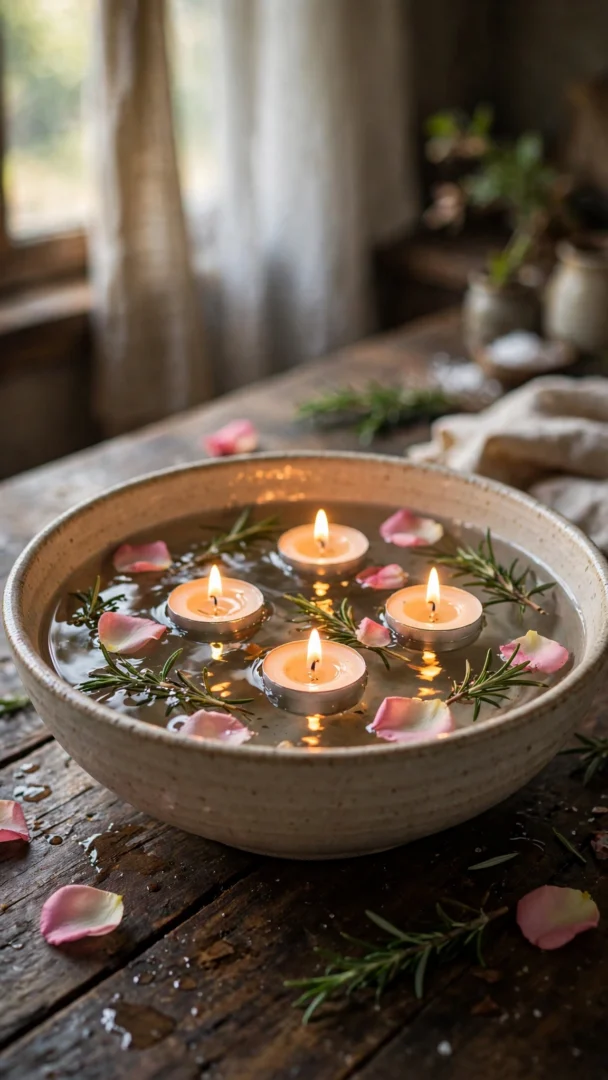
A wide, shallow bowl of water with floating candles, rose petals, and sprigs of rosemary makes a centerpiece that feels genuinely spellbound. Lit at dusk, the flames reflect on the water and the petals drift slowly — it is mesmerizing, costs almost nothing, and takes five minutes to assemble. Use it for dinner parties, quiet evenings, or whenever the kitchen needs a moment of calm.
This suits romantics and anyone who loves candlelight but not the commitment of a big arrangement. It is perfect for small tables where a tall centerpiece would crowd, and for renters — bowl, water, candles, done. Hosts love it because guests always photograph it.
Use a bowl with a wide, stable base and keep floating candles away from overhanging petals that could catch. Extinguish before bed, and change the water if you reuse the arrangement the next night.
24. Seed-Saving Station with Hand-Labeled Packets
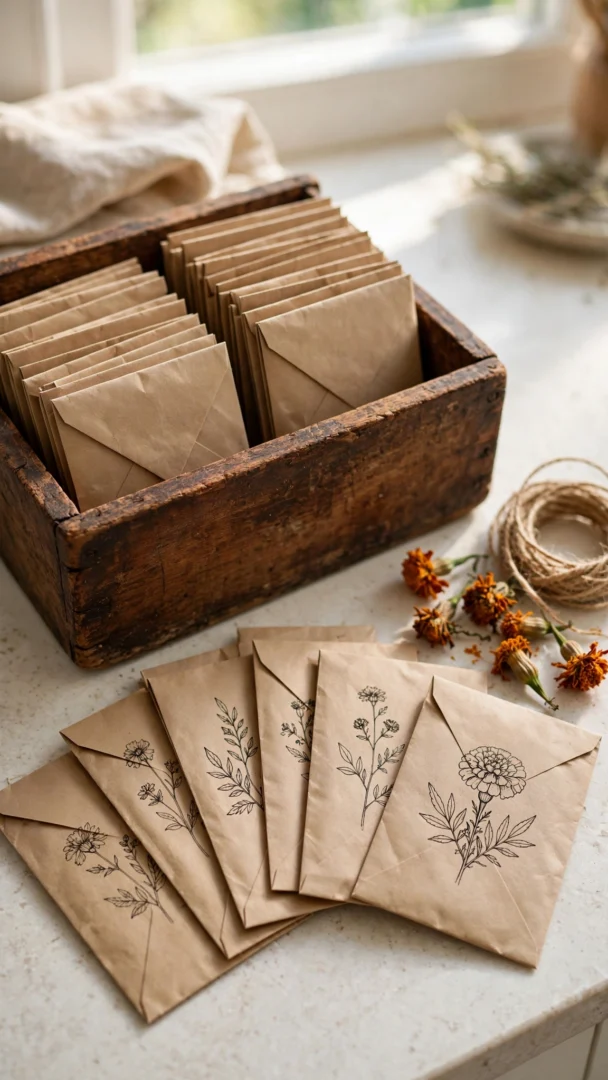
As the garden winds down, save seeds in hand-folded paper packets, labeled with the variety and year in your best handwriting, and store them in a vintage wooden box or card file on the kitchen counter. The little packets — tomato, basil, marigold, cosmos — are beautiful in their simplicity, and the station turns end-of-season cleanup into a ritual of hope for next spring. Tuck in a few packets of saved flower seeds as gifts for gardening friends.
This suits gardeners of every level, from windowsill growers to allotment keepers. It is wonderful for teaching kids where food comes from, and for planners who love organizing next year’s garden in the depths of winter. Even non-gardeners enjoy the vintage-stationery charm of the packets.
Let seeds dry fully on the plant or on a screen before storing, or they can mold in the packet. Keep the box cool, dark, and dry — a kitchen drawer works — and most vegetable seeds stay viable for two to three years.
25. Cozy Reading Nook with Herbal Books

Tuck a comfortable chair into a sunny kitchen corner with a small side table, a soft throw, and a stack of herbal wisdom — field guides, tea books, vintage herbals, a journal for your own blends and observations. A nook for slow reading and recipe-dreaming completes the kitchen witch kitchen: a place to plan the garden, learn a new preserve, or simply sip tea and watch the herbs grow. Add a small lamp for evening reading.
This suits the dreamers and planners — anyone who reads cookbooks like novels. It is perfect for kitchens with an underused corner, for slow weekend mornings, and for anyone who wants the kitchen to be a place of rest as well as work. Even a single good chair transforms the feeling of the room.
Keep the nook clear of cooking clutter so it stays inviting — a basket for the current books helps. A washable throw is wise this close to the kitchen, and a tiny tray on the side table gives your teacup a proper home.
Frequently Asked Questions
1. What is the kitchen witch aesthetic?
The kitchen witch aesthetic is a cozy, apothecary-inspired style named one of Pinterest’s top fall 2026 trends. It blends vintage kitchenware, dried herbs, homemade candles, preserved foods, and natural materials into a warm, slightly magical look — think a charming old-world apothecary meets a well-loved family kitchen, fueled lately by excitement for the Practical Magic sequel.
2. How do I start a kitchen witch kitchen on a budget?
Thrift stores are your best friend: mismatched glass jars, brass candlesticks, vintage linens, and old cookbooks cost very little secondhand. Start with one shelf of apothecary jars, a bundle of drying herbs, and a simmer pot on the stove — three nearly free projects that deliver the whole mood.
3. Is the kitchen witch trend the same as Halloween decor?
Not quite. While it shares some visual language — dried botanicals, candlelight, vintage glass — the kitchen witch aesthetic is a year-round lifestyle look rooted in real kitchen rituals like preserving, tea blending, and candle making. Think cozy apothecary, not spooky haunted house.
4. What herbs are best for a kitchen witch kitchen?
Rosemary, lavender, thyme, sage, mint, and chamomile are the classics — they dry beautifully, smell wonderful, and are genuinely useful in cooking and tea. Eucalyptus adds gorgeous silvery-green color to bundles and wreaths, and dried citrus slices bring jewel tones to garlands.
5. How do I keep dried herbs and flowers looking good?
Keep them out of direct harsh sun so colors do not fade, away from steamy spots so they do not go limp, and give bundles good air circulation while drying. Replace real dried botanicals every few months, and dust arrangements gently with a cool hairdryer now and then.
6. Can I do the kitchen witch aesthetic in a small apartment kitchen?
Absolutely — many of the best ideas are small-scale by nature. A windowsill herb garden, one shelf of apothecary jars, a tray-based tea blending bar, and a simmer pot on the stove need almost no space. Choose two or three vignettes rather than overhauling the whole room.
7. What is a simmer pot and how do I make one?
A simmer pot is a saucepan of water gently heated with fragrant ingredients — orange slices, cinnamon sticks, cloves, rosemary, vanilla — that perfumes your home naturally. Fill a pot two-thirds with water, add your ingredients, bring to a gentle simmer, then lower the heat. Top up the water hourly and never let it boil dry.
Whether you go all in with a kombucha corner and a pickling pantry or simply hang a bundle of lavender by the window, the kitchen witch aesthetic is really about one thing: slowing down and finding a little ritual in the everyday. Your kitchen already holds everything you need — the herbs, the jars, the candlelight, the warmth. All that is left is to make a little magic with it.